How to Block Blue Light and Protect Your Eyes

To get a handle on how to block blue light, it helps to know where it's coming from and how it impacts your day-to-day life, from eye comfort all the way to your sleep quality. This high-energy light isn't just a screen thing; its biggest source is the sun. The problem is, our constant exposure to digital devices has made its effects on our eye health and safety impossible to ignore.
Why Blue Light Is a Growing Concern for Your Eyes
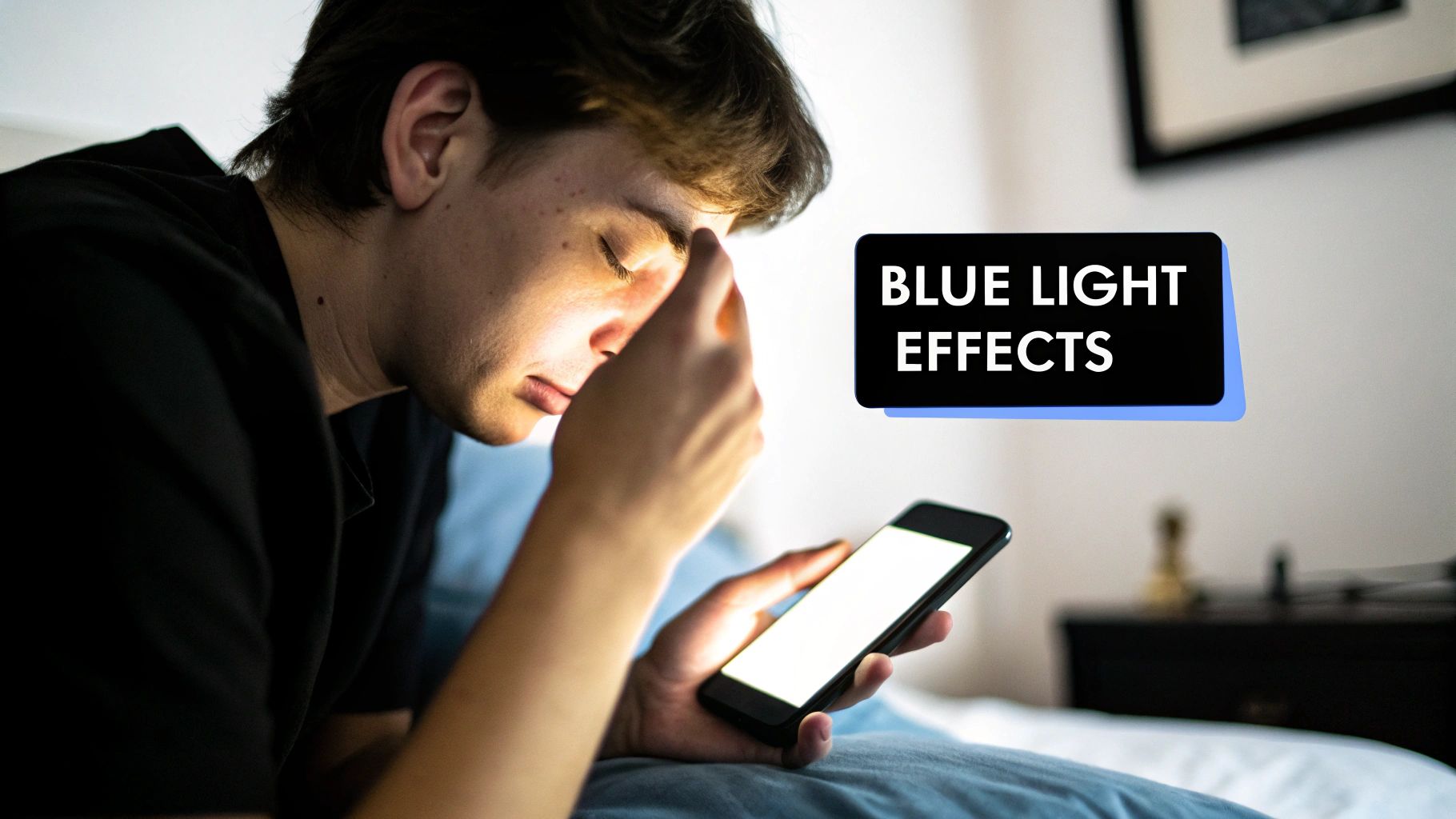
You know that tired, gritty feeling in your eyes after a day of video calls or a long night finishing a project on your laptop? That's a classic sign of digital eye strain, and blue light is a major culprit. Protecting your vision is a critical part of long-term eye health and safety.
Because blue light has a shorter wavelength, it scatters more easily than other colours of light. This makes it harder for your eyes to focus, creating a lack of contrast that forces them to work overtime just to see clearly. The result is that familiar discomfort and fatigue.
The Connection Between Screens and Sleep
Ever found yourself scrolling through social media in bed, only to be wide awake an hour later, wondering why you can't switch off? That’s no coincidence.
When you're exposed to blue light in the evening, it sends a powerful signal to your brain that it's still daytime. This messes with the production of melatonin, the hormone that tells your body it's time to sleep.
- A practical example: A graphic designer working late on a project with a bright, blue-white monitor at 11 PM is actively suppressing their melatonin. This makes it incredibly difficult to fall asleep quickly and reduces the quality of their rest, impacting their focus the next day.
In short, blue light tricks your brain into staying alert. This disruption is a key reason so many people who use screens before bed complain about poor sleep and struggle to wake up feeling refreshed.
Recognising the Symptoms of Overexposure
It’s not just about sleep. Too much blue light can show up as several physical symptoms that get in the way of your comfort and productivity. Looking after your vision is a non-negotiable part of your overall eye health and safety.
If any of these sound familiar, it might be time to get serious about blocking blue light:
- Persistent Headaches: Especially those tension-type headaches that seem to creep in after a few hours of screen time. For example, an office worker might notice a dull ache behind their eyes around 3 PM every day after staring at spreadsheets.
- Dry or Watery Eyes: A very common symptom. Our blink rate can drop by up to 66% when we're staring at screens, and the harshness of blue light just adds to the irritation.
- Blurred Vision: That temporary moment where you struggle to focus after looking away from your computer or phone.
Understanding these direct effects makes it crystal clear why managing your exposure is so important for your eye health. To learn more, you can explore the benefits of using blue light filters and exactly how they work.
Ultimately, recognising these daily struggles is the first step toward finding a real solution. At Prescript Glasses, we see these challenges every day, and we can customise an eyewear package to suit your requirements, making sure your eyes get the protection they deserve.
Mastering Your Device Settings to Filter Blue Light
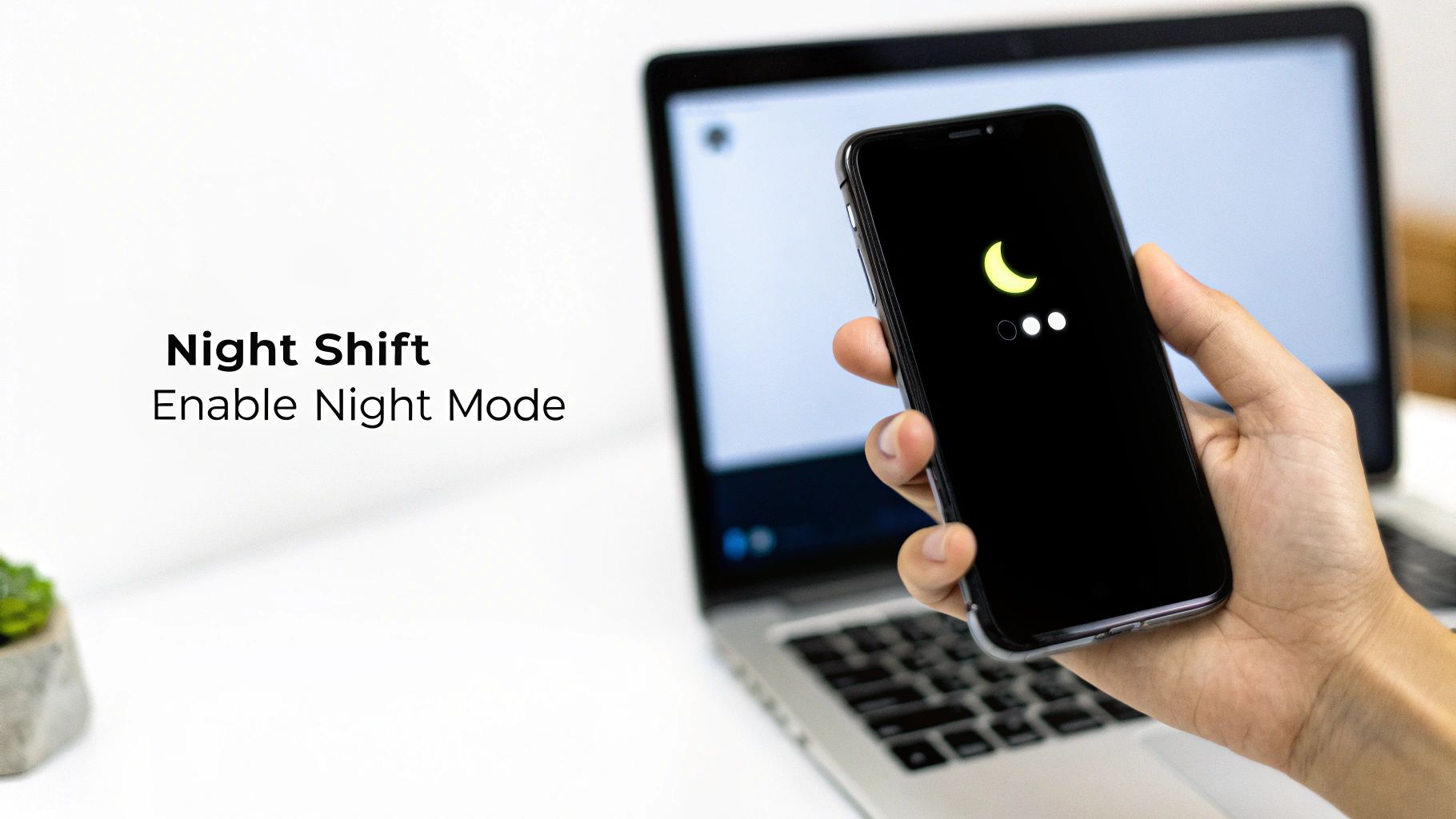
One of the easiest and most immediate ways to block blue light is probably already in your pocket. Most modern devices have built-in features designed to shift your screen's colour from harsh, cool blues to warmer, more eye-friendly tones.
Making this small adjustment can have a huge impact on your visual comfort and eye safety, especially in the evening. The best part? You can usually set them to turn on automatically, creating a seamless transition as your day winds down without you even having to think about it.
Activating Native Blue Light Filters
Just about every modern operating system comes with its own blue light filter glasses. They all have slightly different names, but they serve the same purpose: warming up your display to reduce eye strain.
Here's where to find them:
-
iPhone/iPad: The feature is called Night Shift. You’ll find it in
Settings > Display & Brightness > Night Shift. A practical way to use this is to schedule it to switch on automatically from sunset to sunrise. -
Android: Look for a setting called Eye Comfort Shield or simply Night Light. It’s typically located in
Settings > Display. Much like on Apple devices, you can schedule it and adjust how warm you want the screen to look. -
Windows: On your PC, it’s called Night light. You can access it by going to
Settings > System > Display. It lets you control the filter's strength and set a schedule, making those late-night work sessions much safer for your eyes.
Going a Step Further with Dedicated Apps
While the built-in settings are a fantastic start, some third-party apps give you even more control. One of the most popular choices for desktop and laptop users is f.lux.
This clever application goes beyond a simple on/off schedule. It automatically adjusts your screen’s colour temperature based on your location and the time of day, gradually removing blue light as the sun sets. It’s designed to mimic natural light patterns, which can help your brain get the signal that it's time to prepare for sleep.
The key takeaway here is that you have direct control over your digital environment. By using these settings, you are actively reducing the high-energy light that can disrupt your sleep and cause that familiar end-of-day eye fatigue.
Why Device Settings Are Just the Beginning
Adjusting your screen is a great first line of defence, but it's really just one piece of a bigger eye health and safety strategy. For anyone who spends a good chunk of their day staring at screens, combining these digital tools with physical protection is the most effective way to block blue light.
This is where high-quality eyewear comes into play, and the demand is growing fast. The global market for blue light blocking glasses was valued at around $2.7 billion in 2023 and is projected to hit $5.2 billion by 2032. With computer users making up 41.3% of this market, it's clear people are looking for real solutions. You can dive into the full blue light blocking glasses market research to see the trends for yourself.
Pairing software adjustments with the right glasses creates a powerful shield against digital eye strain. If you want to explore other helpful habits, our guide on how to reduce eye strain is packed with practical tips.
At Prescript Glasses, we can customise an eyewear package to suit your requirements, ensuring your eyes get the support they need throughout the entire day, not just after the sun goes down.
Simple Lifestyle Changes for Better Eye Health
It's not all about apps and screen settings. Some of the biggest wins in reducing eye strain come from small, conscious shifts in your daily routine and environment. Think of it as creating a more eye-friendly space around you, especially in the evenings when your body should be winding down.
Being more mindful of your surroundings and habits is a powerful way to block blue light and prioritise your eye health without having to rely entirely on technology. It’s about giving your eyes the breaks they desperately need.
Introduce Strategic Screen Breaks
If you do one thing for your eye safety, make it this: follow the 20-20-20 rule. It’s a simple, catchy way to remember to break the constant stare-down with your screen.
Here’s how it works. For every 20 minutes you’re glued to a screen, force yourself to look at something at least 20 feet (that’s about 6 metres) away for a full 20 seconds. That's all it takes to let your eye muscles unclench and relax, which helps fight off the fatigue that builds from hours of close-up focus.
- A practical example: Set a recurring calendar reminder for every 20 minutes during your workday. When it pops up, get up from your desk, walk to a window, and focus on a distant tree or building for 20 seconds before returning to your task. This simple habit can significantly reduce end-of-day eye fatigue.
Optimise Your Home Lighting
The light in your room sends powerful signals to your brain. Bright, cool-toned LED lights are great for a home office during the day because they mimic sunlight, but they're the last thing you want for your eye health in your living room at 9 PM.
- A practical example: Swap the cool, white light bulbs in your bedside lamps for warm, amber-toned LED bulbs. This creates a much softer, more relaxing atmosphere that helps signal to your brain that it's time to prepare for sleep, not to stay alert.
A "digital curfew" is another game-changer. By putting all screens away at least an hour before bed, you give your brain a crucial buffer from stimulating blue light. This allows your body's natural melatonin production to kick in right on schedule.
Establish a Digital Curfew
That habit of scrolling through your phone in bed? It's time to break it for the sake of your eye health. You don't have to just lie there in the dark; the goal is to swap the screen for something genuinely relaxing.
Instead of Instagram or emails, try one of these:
- Pick up a real, physical book.
- Listen to a calming podcast or an audiobook.
- Do some gentle stretching or a short meditation.
These aren't just about cutting blue light; they help quiet your mind and prepare you for a much deeper, more restorative sleep. And if you’re looking for eyewear to support these healthy habits throughout the day, remember we can customise an eyewear package to suit your requirements, including prescription lenses.
Choosing the Right Blue Light Glasses for Your Needs
Trying to figure out which blue light glasses to buy can feel a bit overwhelming, can't it? With so many different lens tints and technologies out there, the key is to match the right pair to your actual daily habits. This is how you really look after your eye health and safety.
The first thing to ask is: when and why do you need them? Your needs will be totally different if you're a student studying under fluorescent lights all day versus a gamer playing late into the night. Each scenario calls for a different level of protection.
Decoding Lens Types and Tints
It's a common misconception that all blue light lenses are the same. They generally fall into two main categories, and each one is designed for a very specific purpose to ensure your eye safety.
- Clear Lenses: Think of these as your ideal all-day companions. They're perfect for office workers, students, or anyone who spends hours staring at a computer screen. They filter out a portion of the most harmful blue light without distorting your colour perception. This means you can work on spreadsheets or design projects without everything looking yellow.
- Amber or Red-Tinted Lenses: These are the heavy hitters, designed for maximum protection. They block a much larger spectrum of blue light. These are best saved for the evening, especially in the one to two hours before you plan to go to sleep, as they will significantly alter colour. They’ve become a favourite among gamers and night owls who want to wind down without logging off.
The goal isn’t to block all blue light, all the time. Your body actually needs some natural blue light from the sun to help regulate your sleep-wake cycle. The real focus is on filtering the excessive, artificial blue light from our screens, especially after the sun goes down, to protect our eye health.
To make it easier, this handy decision tree can help you align your daily screen habits with the best eye protection strategies.
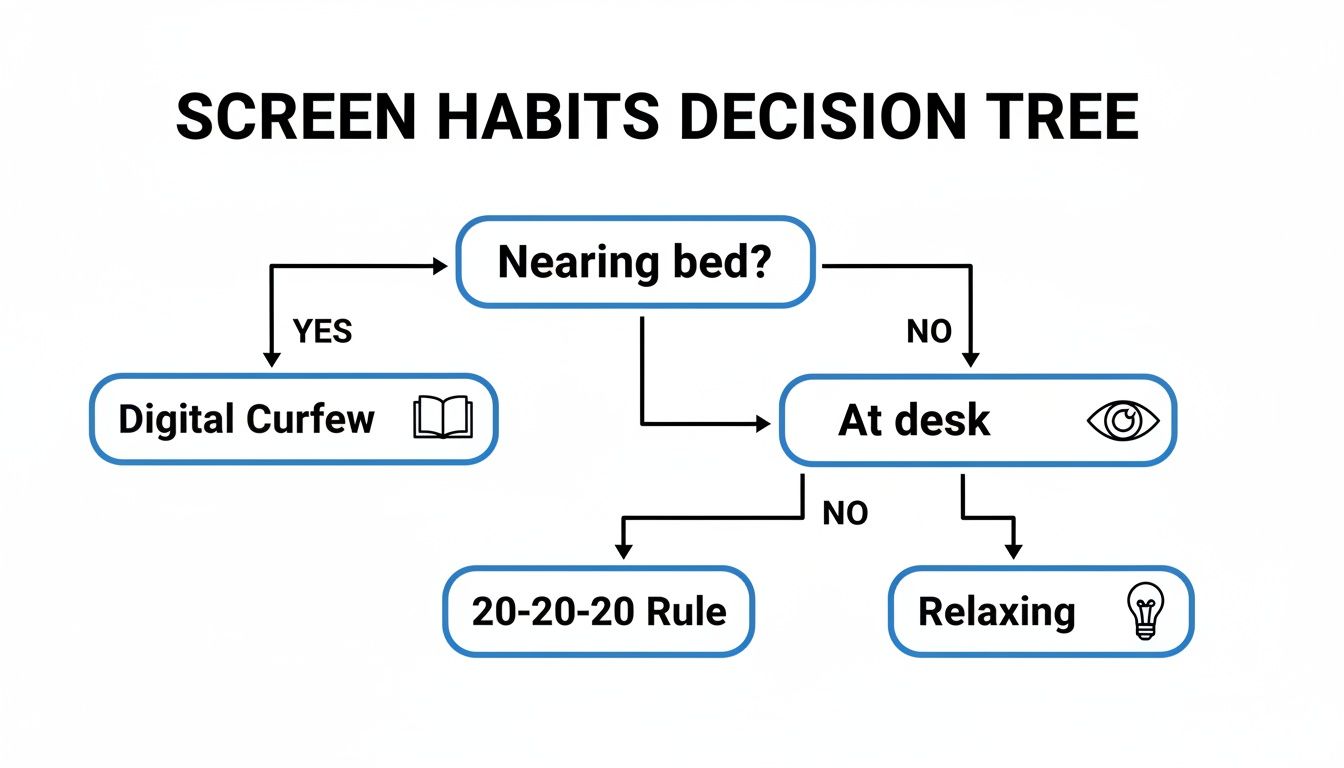
As you can see, your approach should change depending on what you're doing and the time of day. It might mean taking regular eye breaks during work or setting a firm digital curfew before bed.
Blue Light Lens Type Comparison
To help you decide, here’s a quick breakdown of the most common lens types and what they're best suited for.
| Lens Type | Best For | Blue Light Filtering Level | Appearance |
|---|---|---|---|
| Clear | All-day office work, general screen use | Low to moderate (filters 30-50% of high-energy blue light) | Virtually clear, slight yellow/blue reflection |
| Amber/Yellow | Evening use, gaming, reducing eye strain | High (filters 70-90% of blue light) | Noticeable yellow or amber tint |
| Red | Pre-sleep use (1-2 hours before bed) | Maximum (blocks up to 99% of blue and green light) | Dark red tint, significantly alters colour |
| Bluecromic | Moving between indoors and outdoors | Adaptive (clear indoors, darkens in sunlight) | Changes from clear to a tinted sun lens |
Ultimately, the best choice depends entirely on your lifestyle. A clear lens is great for daytime protection, while a stronger amber or red tint is your best bet for protecting your sleep cycle and long-term eye health at night.
Finding Quality and Customisation
For those who already wear prescription glasses, adding blue light protection couldn't be simpler for your eye safety. You don't need to juggle two different pairs. You can easily upload your current prescription and get a custom-made pair that corrects your vision and filters out harmful blue light.
The demand for these glasses is growing fast. In Australia alone, the non-prescription blue light blocking glasses market hit $223.39 million in sales in 2025. This boom is really driven by a growing awareness among Aussies about the long-term effects of screen exposure.
Here at Prescript Glasses, we know that one size definitely doesn't fit all. We can customise an eyewear package to suit your requirements, offering specialised lenses like our BlueRay for everyday use or adaptive Bluecromic lenses that change with different light conditions.
If you want to dive deeper, our guide to the best blue light blocking glasses is a great place to explore more options.
We're All Feeling the Strain: Australian Eye Health in the Spotlight
If you're worried about digital eye strain, you’re definitely not alone. It’s a huge conversation happening all over Australia right now. As our lives get more and more plugged in, taking care of our eyes has gone from a niche concern to a major priority for eye health and safety.
And it's not just a feeling. Market trends clearly show a massive uptick in demand for protective eyewear. You’re part of a growing wave of Aussies who get that investing in your vision is a smart, long-term move. Taking steps to block blue light isn't just about feeling better at the end of the day—it's a proactive choice for your overall health.
What's Happening in Our Corner of the World?
Australia's eye care market is right in the middle of a much bigger trend sweeping across the Asia-Pacific region. Demand for protective glasses is absolutely surging here.
To put some numbers on it, the Asia-Pacific anti-blue light glasses industry jumped from $564.74 million USD in 2021 and is expected to hit $843.06 million USD by 2025. That makes it the fastest-growing market for this kind of eyewear on the planet. This boom is being driven by huge urban populations and a real shift in how people think about their health. You can dig into the specifics in the full anti-blue light glasses market report.
What this data really does is confirm what so many of us are already feeling: the need for proper eye protection is real. As a key player in this market, Australia is seeing local providers like us stepping up with better, more accessible solutions.
This trend just goes to show that your focus on eye health is shared by millions. It’s a collective move towards putting long-term vision safety first in a screen-filled world.
Finding a Solution That Actually Fits Your Life
This growing awareness means people are looking for more than just a generic, one-size-fits-all product. You need something that works for your lifestyle, whether you're staring at spreadsheets all day, cramming for exams late at night, or locked into an intense gaming session.
That's where getting the right fit becomes so important. Everyone's daily routine is different, and your eyes need support that reflects that. Here at Prescript Glasses, we can customise an eyewear package to suit your requirements, making sure you get the exact level of protection you need for whatever your day throws at you.
Common Questions About Blocking Blue Light
It’s only natural to have a few questions when you first start digging into ways to block blue light. With so much information out there, it’s easy to feel a bit skeptical. Let's clear up some of the most common queries we hear all the time.
Our goal is to give you the confidence to make the best decisions for your eye health and safety. So, let's tackle these questions head-on.
Do Blue Light Glasses Actually Work?
Absolutely, but their effectiveness for eye health really comes down to using the right tool for the job. High-quality clear lenses are great for daytime use; they can filter a good portion of the harshest blue light wavelengths, which helps take the edge off digital eye strain that often leads to headaches and tired eyes.
For the evening, however, you’ll want to switch to amber or red-tinted lenses. These are the heavy hitters, blocking a much wider spectrum of blue light. This is crucial for protecting your body's natural production of melatonin, the sleep hormone.
- A practical example: Imagine a student studying late for an exam. An hour before they plan to sleep, they put on a pair of amber-tinted glasses. This allows them to finish their work on a laptop without the blue light disrupting their melatonin, making it easier to fall asleep and get restorative rest before the big day.
Can I Just Lower My Screen Brightness?
Lowering your screen brightness is a fantastic start—it definitely helps reduce glare and overall eye fatigue. But here’s the thing: it doesn’t actually change the colour of the light your screen is emitting.
Even on its dimmest setting, your screen is still emitting that high-energy blue light that can strain your eyes and tell your brain it's the middle of the day, compromising your eye safety.
- A practical example: Think of a bright, cool-toned kitchen light with a dimmer switch. Turning it down makes it less intense, but the light itself is still a harsh, cool colour. To truly protect your eyes and your sleep cycle, you need to filter out the blue wavelengths, not just reduce the brightness. The best approach is combining lower brightness with a "night mode" setting and a good pair of protective glasses.
The key takeaway is that managing brightness and filtering colour are two different, but equally important, parts of a good eye protection strategy. One tackles the intensity, while the other addresses the specific type of light that causes the most issues.
Are There Any Side Effects to Wearing Them?
For the vast majority of people, there are no negative side effects to wearing blue light filtering glasses. The biggest adjustment is just getting used to the slight change in colour perception, especially with the more heavily tinted amber or red lenses. Clear lenses have such a subtle tint that most people barely notice it, making them easy to wear all day long.
The trick is to use the right glasses at the right time for optimal eye safety. Wearing dark, amber-tinted lenses in a brightly lit office during the day would feel a bit strange and isn't really necessary. Stick to clear lenses for your daytime work and save the stronger tints for your evening wind-down routine. This helps you work with your body's natural rhythm, not against it.
Honestly, the only "side effect" most people report is a welcome drop in eye strain and a much better night's sleep.
At Prescript Glasses, we understand that everyone's needs are unique. We can customise an eyewear package to suit your requirements, ensuring you get the perfect protection for your daily routine. Explore our full range of customisable eyewear solutions at https://www.prescriptglasses.com.