Glass Photochromic Lenses: A Guide to Smarter, Safer Eyewear

Ever found yourself squinting as you step outside, fumbling to swap your regular glasses for sunglasses? Or walking indoors and being plunged into temporary darkness? That’s the exact hassle glass photochromic lenses are designed to eliminate, acting as a crucial tool for your daily eye health and safety.
Think of them as intelligent eyewear. They darken automatically when you’re in the sun and turn perfectly clear again when you’re indoors. It’s a seamless transition that provides constant visual comfort and 100% UV protection, all without ever needing a second pair of glasses.
Why Your Vision Deserves Intelligent Lenses
Glass photochromic lenses are far more than just a convenience—they represent a significant upgrade for your daily eye health. At their heart, they are two pairs of glasses expertly fused into one dynamic lens. This completely removes the need to juggle separate prescription glasses and sunnies, offering a refreshingly simple solution for modern life.
A great practical example is a parent at their child's weekend sports game. One minute they're under a shaded tent, and the next they're out in the bright sun. Their lenses adapt instantly, reducing glare and eye strain so they don't miss a single moment, all while providing continuous protection from harmful UV rays.
A Growing Trend in Eye Health
It's no surprise that demand for this kind of smart eyewear is on the rise. In fact, Australia's photochromic lenses market is tipped to hit AUD $130.211 million by 2026, a clear sign that people are moving towards eyewear that prioritises both function and wellbeing. You can dig deeper into the market growth of adaptive eyewear on Cognitive Market Research.
This trend highlights a crucial point about looking after your eyes: consistent protection is key. With glass photochromic lenses, you get that reliable shield against UV radiation no matter where you are, a critical factor for long-term eye health and safety.
At its core, this technology is about proactive eye care. It gives you an effortless way to protect your eyes from the cumulative damage of UV exposure, which is a major factor in preventing conditions like cataracts and macular degeneration.
Ultimately, the goal is to find eyewear that fits your life perfectly. We can customise an eyewear package to suit your requirements, blending this adaptive technology with other essentials like blue light filtering or anti-glare coatings. This ensures your glasses aren't just a tool for sight, but a personalised safeguard for your vision.
Ever wondered how your photochromic lenses magically darken in the sun and turn clear again indoors? It’s not magic, but some seriously clever chemistry at work on a microscopic level. The secret ingredient is trillions of tiny molecules, usually silver halides, which are mixed right into the glass itself.
Think of these molecules as tiny, light-activated switches. The moment you step outside, they get hit with the sun's ultraviolet (UV) radiation. This zap of UV energy causes the silver halide molecules to instantly change their shape, a reaction that makes them absorb visible light. As more and more of these molecules react, the entire lens darkens, turning your glasses into a pair of sunnies to shield your eyes from bright light. This isn't just for comfort; it's a vital process for your eye health and safety, giving you on-demand protection.
The Reversible Reaction Indoors
But what happens when you go back inside? As soon as you're away from the UV rays, the process flips into reverse. Without the UV energy to keep them activated, the molecules naturally relax back to their original, transparent state. This lets the maximum amount of light pass through, giving you perfectly clear vision for indoor tasks.
This constant, automatic adjustment is what makes glass photochromic lenses so incredibly convenient. A practical example is a gardener moving between a sunny patch and a shaded greenhouse. Their lenses will tint to a comfortable shade even under scattered clouds, reacting to the invisible UV radiation that cuts through cloud cover. This ensures their eyes are always protected from that hidden threat, reducing cumulative damage.
This responsive technology is fundamental to protecting your vision. By automatically blocking 100% of harmful UVA and UVB rays, these lenses reduce cumulative UV damage, a major factor in maintaining long-term eye health and preventing sun-related eye conditions.
Why This Matters for Your Eyes
This whole dynamic process is more than just a cool feature—it's a proactive way to look after your wellbeing. Because your glass photochromic lenses adapt on their own, your eyes are shielded from harsh glare and invisible radiation without you even having to think about it. The result? Less squinting, reduced eye strain, and far more relaxed vision all day long.
You can dive deeper into how this works by checking out our detailed guide on what transition lenses are and the benefits they bring to everyday life.
The beauty of this technology is just how reliable it is. Whether you're dealing with the intense midday sun or the softer light of early morning, the lenses deliver exactly the right level of tint you need. It's a sophisticated solution built right into your daily eyewear. And remember, we can customise an eyewear package to suit your requirements, blending this tech with other features to create the perfect pair for you.
Comparing Your Lens Options for a Clear Choice
Picking the right lenses can feel a bit overwhelming, but it gets a whole lot simpler when you see the options laid out side-by-side. Glass photochromic lenses offer a really unique mix of convenience and protection, but understanding how they stack up against other popular choices is the key to feeling confident in your decision.
Let's break down what each type of lens is really good at. Every lens is designed with a specific job in mind, whether that's cutting down harsh sunlight or filtering the light from your computer screen. Seeing them compared directly will show you which features truly match up with your day-to-day life and eye safety needs.
Eyewear Lens Technology Comparison
To help you choose the best option for your lifestyle and vision needs, here's a side-by-side comparison of different lens types. This table really highlights where glass photochromic lenses shine, especially for eye health and safety.
| Feature | Glass Photochromic Lenses | Standard Sunglasses | Blue Light Lenses | Clear Lenses |
|---|---|---|---|---|
| UV Protection | Excellent (Automatic 100%) | Excellent (Constant Tint) | Minimal to None | Minimal (Some have coatings) |
| Light Adaptability | Automatic (Darkens & Clears) | None (Fixed Dark Tint) | None (Always Clear) | None (Always Clear) |
| Convenience | High (All-in-one pair) | Low (Requires switching) | Moderate (Single purpose) | Moderate (Single purpose) |
| Scratch Resistance | Very High (Glass material) | Varies by material/coating | Varies by material/coating | Varies by material/coating |
| Best For | All-day, indoor/outdoor use | Bright, sunny conditions only | Extended screen time | General indoor vision needs |
This table shows the clear advantage of photochromic lenses for anyone who moves between different environments. The real magic, though, is how it all works.
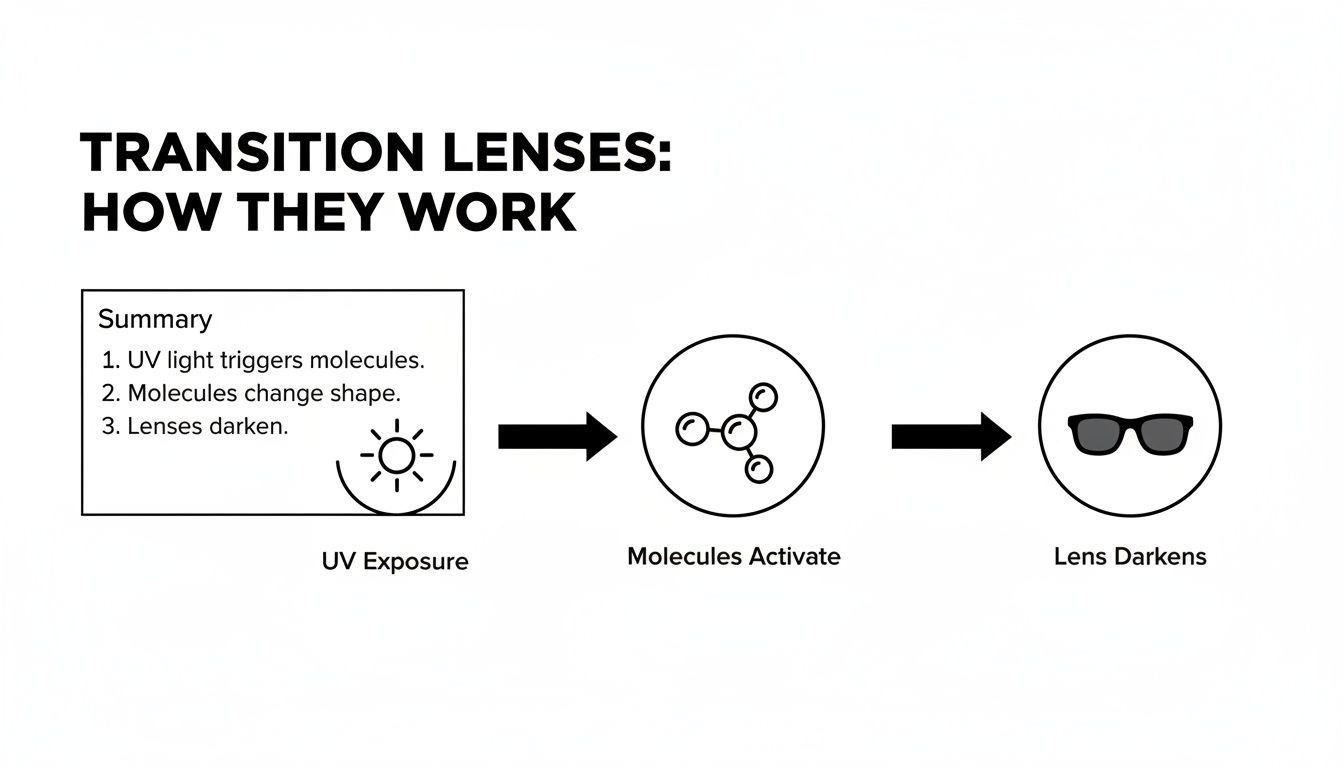
As you can see, it's a clever chemical reaction that gives you an automatic, on-demand shield against glare and harmful UV rays the second you need it, prioritizing your eye safety.
Making the Choice for Your Lifestyle
A great practical example is a delivery driver who is constantly hopping in and out of their vehicle. Juggling a pair of prescription glasses and separate sunglasses is inefficient and unsafe. Glass photochromic lenses completely solve this by adapting seamlessly, giving them crisp, clear vision indoors and comfortable, glare-reducing protection outside—all in one tough pair of glasses.
This all-in-one functionality is the primary advantage. It eliminates the need for multiple pairs of glasses, offering continuous comfort and protection without any effort from the wearer, which is a cornerstone of proactive eye care.
This incredible adaptability is what truly sets photochromic technology apart. If you're curious about how these lenses compare to big-name brands, our article on photochromic lenses vs Transitions gets into even more detail.
Ultimately, the best choice really does come down to your daily routine. If your days are dynamic and you’re always on the move, the convenience and safety of adaptive lenses is hard to beat. Because we can customise an eyewear package to suit your requirements, you can even combine photochromic technology with other features like blue light filtering for a solution that’s truly made for you.
Are Glass Photochromic Lenses Right for Your Lifestyle?
The real test of any eyewear technology is how well it slots into your everyday life. Glass photochromic lenses are no different. Their secret weapon is their adaptability, offering some pretty compelling advantages for different routines and making them a brilliant choice for anyone after convenience and serious eye protection.

Whether you're a busy professional, a dedicated student, or even a serious gamer, these lenses are a practical solution that puts your eye health and safety first. Honestly, the simple convenience of having one pair of glasses that does it all can't be overstated.
For Busy Professionals and Students
Here's a practical scenario: a university student walks from a dimly lit lecture hall out into the bright campus quad. Their lenses darken automatically, shielding their eyes from sudden, harsh glare without a second thought. This reduces squinting and eye fatigue, allowing them to focus better.
It's the same deal for professionals zipping between indoor meetings and outdoor site visits. A single, sophisticated pair of glasses handles every lighting change, so you always look sharp and your vision stays comfortable. It’s the ultimate set-and-forget solution for a dynamic day.
The core benefit here is seamless convenience and protection. By automatically adapting to your environment, these lenses slash the eye strain that comes from constant light changes and get rid of the hassle of juggling multiple pairs of glasses.
For Gamers and Heavy Screen Users
If you spend hours staring at a screen, you know the toll it can take on your eyes. This is where combining glass photochromic lenses with a blue light filter creates the ultimate defensive eyewear. Indoors, the blue light filter helps cut down on digital eye strain and fatigue during those long gaming marathons or work sprints.
Then, when you step outside for a well-earned break, the photochromic tech kicks in, giving you instant UV protection. This dual-purpose setup is a perfect example of how we can customise an eyewear package to suit your requirements, tackling both digital and natural light challenges in one go. This combination offers a comprehensive approach to modern eye health and safety.
This trend towards versatile, all-in-one protective eyewear is taking off. The Asia-Pacific region, Australia included, is the fastest-growing market for photochromic lenses, with a projected growth rate of 10.29% annually through 2031. This booming demand means Aussie consumers get better product availability, more competitive prices, and access to the latest and greatest in lens technology. You can read up on these global market trends for photochromic lenses to see where things are headed.
How to Choose and Customise Your Perfect Pair
Choosing the right glass photochromic lenses isn't about picking a product off the shelf; it's about matching the technology to your real life. The journey begins with your prescription.
If you have a script from your optometrist, you can simply upload it directly to our site. From there, we'll craft your lenses to those exact specifications, making sure your vision correction is spot-on.
Next up, think about the tint. The classic grey and brown tints are favourites for a reason—they keep your colour perception true to life. But there are other options to explore. The darkness level is another key choice. For a practical example, someone who enjoys hiking in exposed, sunny areas would benefit from extra-active lenses that get even darker, providing superior glare protection and comfort.
No matter which tint you choose, the most important thing is ensuring your lenses provide 100% protection against UVA and UVB rays. This isn't just a feature; it's the foundation of long-term eye health and a critical safety standard.
Enhancing Your Lenses with Protective Coatings
To really dial in a pair of glasses that works for you, let's talk about coatings. Think of these as thin, powerful layers that add durability and boost visual clarity. They can take a good pair of lenses and make them truly exceptional. Each coating has a specific job, and when combined, they create a seriously robust, high-performance lens.
Here are the most beneficial coatings for your glass photochromic lenses:
- Anti-Reflective Coating: Honestly, this is a must-have. It cuts down on those distracting reflections from both sides of your lenses. For night driving, this is a major safety benefit, as it reduces glare from oncoming headlights. Indoors, it means clearer, far more comfortable vision.
- Scratch-Resistant Coating: While glass is naturally tougher than plastic, this hard coating gives you an extra shield against the bumps and scrapes of daily life. It's the kind of practical protection that saves you from a minor scuff if you accidentally drop your glasses.
- Hydrophobic Coating: This clever coating repels water, making raindrops or moisture bead up and slide right off. For someone working outdoors, this means clearer vision in wet weather, enhancing both convenience and safety.
Customisation is all about building a complete vision solution. By combining your prescription with the right tint, darkness level, and protective coatings, you create eyewear that’s perfectly aligned with your lifestyle and visual demands.
Building your ideal pair is a straightforward process. By carefully considering each element, you end up with glasses that are more than just a tool for seeing—they become a crucial part of your daily comfort and protection. Remember, we can customise an eyewear package to suit your requirements, making sure every last detail is perfect for you.
Caring for Your Adaptive Lenses
You’ve invested in some pretty clever lens technology, so it makes sense to look after it. With just a few simple habits, you can keep your glass photochromic lenses performing at their best for years to come, ensuring they continue to protect your eyes and provide crystal-clear vision.
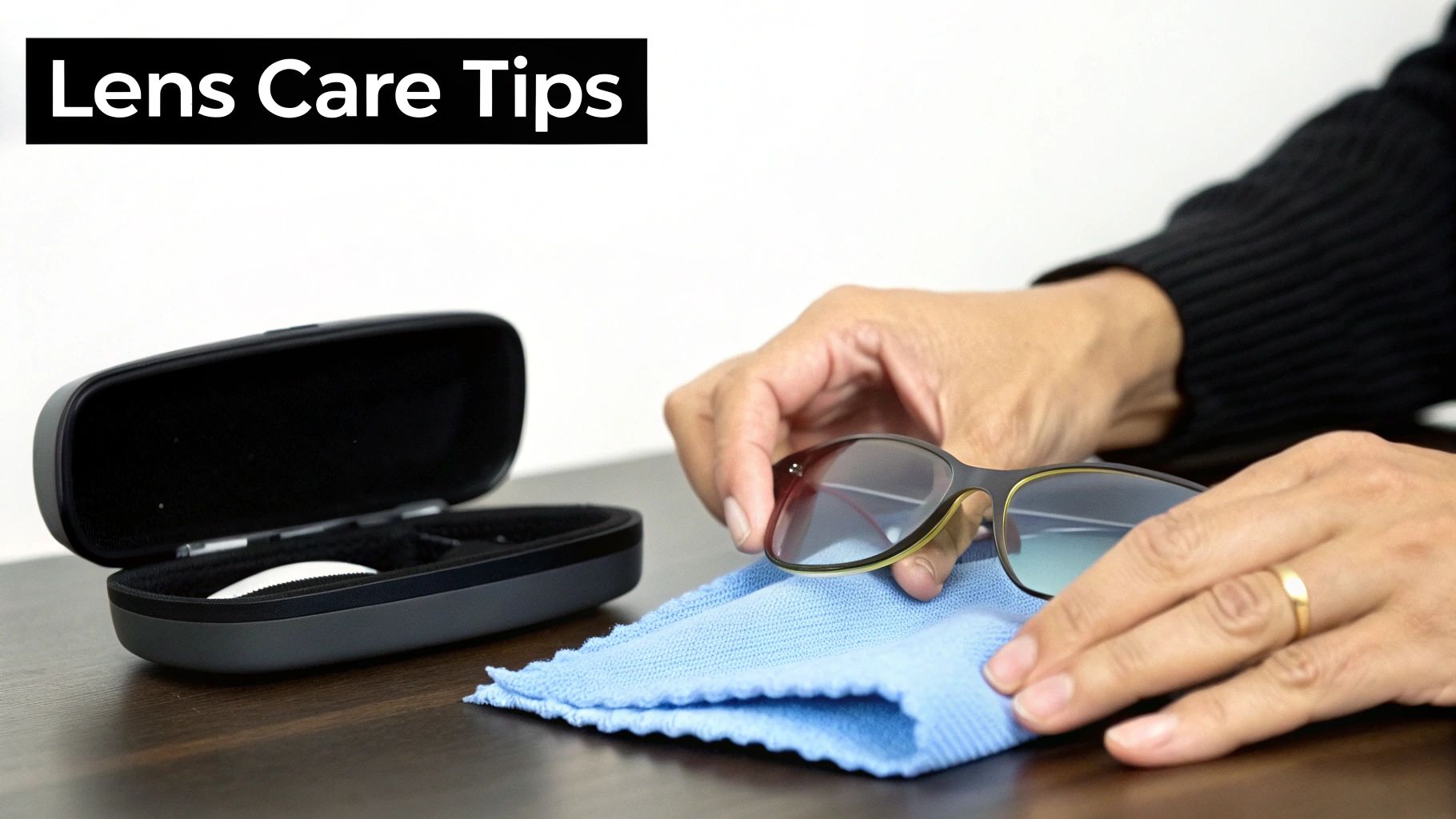
The best way to get rid of smudges is with a dedicated lens cleaning spray and a clean microfibre cloth. Steer clear of household chemicals like window cleaner or paper towels—their abrasive fibres can easily scratch the coatings on your lenses. Just a gentle wipe in a circular motion is all it takes to lift away grime without applying too much pressure.
Protecting Your Lenses from Damage
Beyond just cleaning, how you store and handle your glasses makes a huge difference. The special photochromic molecules that allow your lenses to adapt are actually quite sensitive to extreme temperatures.
Here’s a crucial safety and longevity tip: never, ever leave your glasses on a hot car dashboard. That kind of intense, direct heat can permanently damage the photochromic molecules, making them less effective at darkening over time and reducing their protective capability.
Another vital step is to always store your eyewear in its protective case when you’re not wearing it. A practical example is putting them in their case before tossing them into a handbag or backpack. This simple habit prevents accidental scratches and protects the frame and lenses from being crushed or bent out of shape. Following these small guidelines ensures your lenses continue to give you reliable protection and clear vision.
By taking these small steps, you’re protecting the advanced technology built right into your eyewear. And remember, we can customise an eyewear package to suit your requirements, which can include durable coatings that make maintenance even easier and extend the life of your perfect pair.
Got Questions About Photochromic Lenses? We've Got Answers
Even after getting the rundown on how great these lenses are, you probably still have a few things you're wondering about. Let's tackle some of the most common questions we hear, so you can feel completely confident about your choice.
How Fast Do the Lenses Actually Change Colour?
Modern glass photochromic lenses are impressively quick on the uptake. They’ll usually start to darken within 30-60 seconds of you stepping into the sun. To get to their darkest tint, give them about ten minutes – the exact time depends on how bright the sunlight is.
Then, when you head back inside, they get to work clearing up almost right away. Within just a couple of minutes, they’ll be mostly clear again, making the transition super smooth and easy on your eyes.
Will My Photochromic Lenses Work Inside the Car?
This is a really important safety question for anyone who drives. Standard photochromic lenses need UV light to trigger their colour change. The catch? Modern car windscreens are already treated to block nearly all UV rays to protect you and your car's interior. As a result, your lenses won't darken much, if at all, when you're behind the wheel.
For optimal driving safety, you might want to look at specialised photochromic lenses that react to visible light, or simply keep a dedicated pair of prescription sunnies in the car. It’s often the simplest and safest solution.
Here's the key thing to remember: the performance of your lenses is directly tied to UV exposure. This is why they darken even on cloudy days (UV rays cut right through clouds) but won’t activate behind that UV-blocking windscreen in your car.
Do Photochromic Lenses Wear Out Over Time?
Like anything, they do have a lifespan. The special light-sensitive molecules that make the magic happen can lose a bit of their oomph over the years. That said, high-quality glass photochromic lenses are built tough and typically perform brilliantly for around three years.
After that time, you might notice they don't get quite as dark as they used to, or they take a little longer to fade back to clear. Looking after them properly, such as following the safety tip of never leaving them on a hot car dashboard, will definitely help them last as long as possible. Extreme heat can speed up the breakdown of those clever molecules.
Your vision needs are totally unique, which is why we can customise an eyewear package to suit your requirements, making sure you get the perfect blend of lens technology and durability.
Ready to experience the convenience and protection of lenses that adapt with you? At Prescript Glasses, we can build the perfect pair for your lifestyle. Upload your prescription today and customise your eyewear package on our website.