A Guide to Colored Eyeglass Lenses

When you think of coloured eyeglass lenses, your mind might jump straight to fashion. But there's a whole lot more going on behind that tint than just style. Think of them less as a fashion accessory and more as a high-performance filter, a specialised tool designed to protect your eyes and sharpen your vision by carefully managing the light that gets through.
More Than Meets the Eye: An Introduction to Functional Tints
Let's get one thing straight: coloured lenses are not just for looks. Each colour is engineered to interact with light in a very specific way, offering real-world benefits that can reduce eye strain, improve safety during activities, and even make your world look clearer. This guide will walk you through the science of how these tints work and why choosing the right one is a crucial decision for your eye health.
At its core, the concept is beautifully simple. Different colours in a lens absorb certain wavelengths of light while letting others pass through. By strategically filtering parts of the light spectrum, a tinted lens can cut down on harsh glare, boost contrast, and make your vision much more comfortable in different settings.
The Science of Selective Light Filtering
Picture yourself driving at dawn. The sun is low, the glare is intense, and seeing the road clearly is a struggle. Standard grey sunglasses will dim everything equally, which helps, but a brown or amber lens does something smarter. It specifically filters out the scattered blue light that creates that blinding haze and glare, making everything in the distance appear sharper. That’s functional tinting in action, a clear example of prioritizing your safety on the road.
This clever bit of science applies to all sorts of situations:
- Beating Eye Strain: Tints designed to block the intense, high-energy blue light from our screens can be a game-changer, helping to reduce the digital eye strain that causes headaches and that tired, gritty feeling in your eyes.
- Boosting Safety: For a cyclist or skier, the right tint can make subtle changes in the terrain pop. Potholes, icy patches, and bumps become much easier to spot when contrast is enhanced.
- Managing Light Sensitivity: Anyone dealing with photophobia knows how painful bright light can be. Specific tints can make bright days and indoor lighting far more manageable. We dive deeper into this in our article on glasses designed for light sensitivity.
The real goal isn’t just to make the world darker. It’s about making it clearer, safer, and more comfortable for your eyes. Choosing the right coloured lens means optimising your vision for what you do every day.
Customisation for Your Unique Needs
Ultimately, the best thing about coloured lenses is how versatile they are. While we're talking about glasses, the principles of light filtering are universal. Just look at the benefits of advanced tinting films used for cars; concepts like UV protection and glare reduction are just as vital for high-quality eyewear.
Your lifestyle is the key to finding the perfect tint. A graphic designer needs pure colour perception, so a neutral grey lens is the way to go. But a fisherman will get far more out of a polarised brown lens that cuts straight through the glare on the water's surface. At Prescript Glasses, we can customise an eyewear package to suit your requirements, making sure your lenses don't just look great—they work for you.
Understanding the Spectrum of Lens Technologies
Diving into the world of coloured eyeglass lenses can feel a bit overwhelming at first, but it gets much easier when you think about it in terms of function. Not all tints are just for looks; each one is a specific piece of tech designed to manage light and sharpen your vision in different situations. Getting a handle on these differences is the key to finding the perfect pair for your needs.
The most common type everyone knows is the standard sunglass tint. These lenses have a static colour, meaning their shade doesn’t change. Their main job is to cut down the overall brightness of your surroundings, making those blindingly sunny days a lot more comfortable on the eyes.
Even within this category, you have options. A solid tint gives you a consistent colour from the top of the lens to the bottom, offering uniform light reduction. Then there's the gradient tint, which is darker up top and fades to a lighter shade at the bottom. This is a brilliant choice for drivers, as it blocks the harsh sun from above while keeping the view of the dashboard perfectly clear.
Sunglass Categories and Your Eye Safety
One of the most critical things to understand about sunglass tints is their category rating. This number tells you how dark the lens is and how much light it allows to pass through, which is directly tied to your eye health and safety.
- Category 1: A very light tint, perfect for overcast days or when the light is low.
- Category 2: A medium tint that’s a great all-rounder for partly sunny conditions.
- Category 3: A dark tint, ideal for bright, sunny days. This is the most common category for general-purpose sunnies.
- Category 4: These are exceptionally dark, special-purpose lenses for extreme conditions like high-altitude climbing or glacier trekking. It’s important to know these are not safe for driving.
It's absolutely crucial to remember that the darkness of a tint has nothing to do with its UV protection. For your eyes to be properly shielded, a lens must be rated UV400. This guarantees it blocks 100% of harmful UVA and UVB rays, no matter how light or dark the tint is. This is non-negotiable for your long-term eye health.
The diagram below shows how different lens technologies are engineered not just to protect your eyes, but to actually enhance your vision and performance.
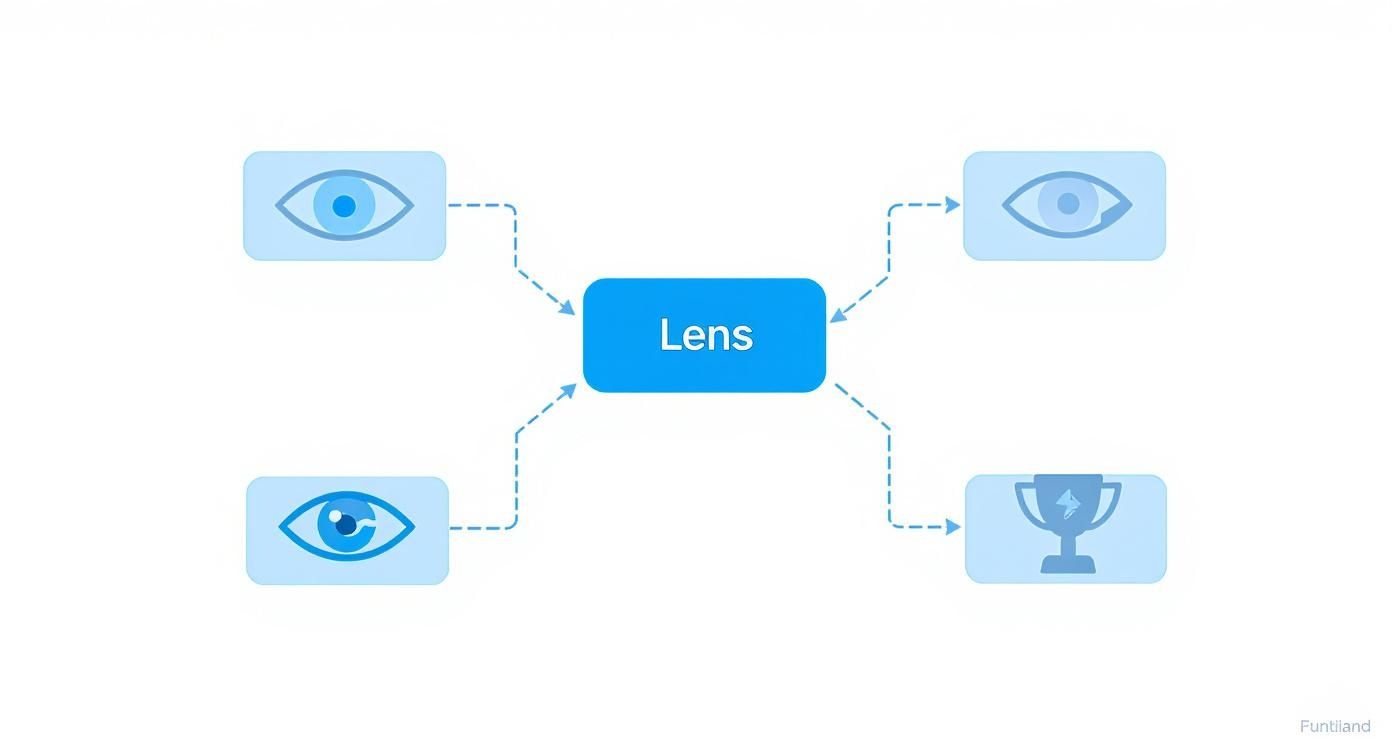
As you can see, a single lens can do a lot more than just block the sun. Depending on the tech applied, it can become a specialised tool for specific activities.
To help you get a quick handle on these options, here's a simple breakdown of the main lens tint types and what they're best for.
Comparing Lens Tint Types and Their Primary Use
| Lens Type | Primary Benefit | Best For |
|---|---|---|
| Fashion Tint | Subtle style and light filtering | Indoor use, overcast days, or making a style statement |
| Sunglass Tint | Reduces overall brightness and glare | Everyday outdoor activities in sunny conditions |
| Photochromic | Adapts from clear to dark automatically | People who move between indoors and outdoors frequently |
| Blue-Light Filter | Reduces digital eye strain from screens | Office work, gaming, and heavy screen use |
| Polarised | Eliminates harsh, reflective glare | Driving, fishing, skiing, and activities near water or snow |
This table is just a starting point, of course. Many of these technologies can be combined to create the perfect custom lens for your lifestyle.
Smart Lenses That Adapt to You
Moving beyond fixed tints, we get into some really clever tech like photochromic lenses. You can think of these as intelligent lenses that do the work for you, automatically adjusting their tint based on the light around you. Inside, they’re perfectly clear. The moment you step into the sun, they darken to become full-fledged sunglasses.
This magic happens because the lenses contain molecules that react to UV light. The brighter the sun, the darker they become, giving you a completely seamless and comfortable visual experience. If you want to get into the nitty-gritty of how they stack up against brand names, our guide on photochromic lenses versus Transitions breaks it all down.
Specialised Tints for Modern Life
Lens technology has also evolved to solve very specific modern-day problems. Take blue-light filtering lenses, for instance. These are engineered to help fight the digital eye strain that comes from staring at screens all day. They usually have a very faint tint that selectively filters out a portion of the high-energy blue light from our devices, which can be a real lifesaver for office workers and gamers dealing with headaches and tired eyes.
Then there are performance tints, which are fine-tuned for athletes. A golfer might go for a brown or copper lens to make the white ball pop against the green fairway. A cyclist, on the other hand, might choose a rose-coloured tint to boost contrast on the road and spot potholes or debris more easily.
Finally, one of the most game-changing technologies is polarisation. Picture it like a microscopic venetian blind for your eyes that only lets in vertical light. It works by completely blocking the blinding horizontal glare that bounces off flat surfaces like a wet road, the surface of a lake, or snow.
This makes polarised lenses a must-have for activities like driving, fishing, and skiing, where reflective glare isn’t just annoying—it’s dangerous. By slicing through this specific type of harsh light, they deliver incredible clarity and dramatically reduce eye strain. The best part is that many of these technologies can be combined, and we can customise an eyewear package to suit your requirements, giving you the perfect mix of protection, performance, and comfort.
How Different Lens Colours Impact Your Vision
The colour of your eyeglass lenses does way more than just make a fashion statement. Think of it as a specialised filter that fundamentally changes how you see the world around you. Each tint is carefully engineered to tweak the light spectrum, dialling up certain aspects of your vision while toning down others. Getting your head around this colour science is the first step to picking a lens that truly works for you.
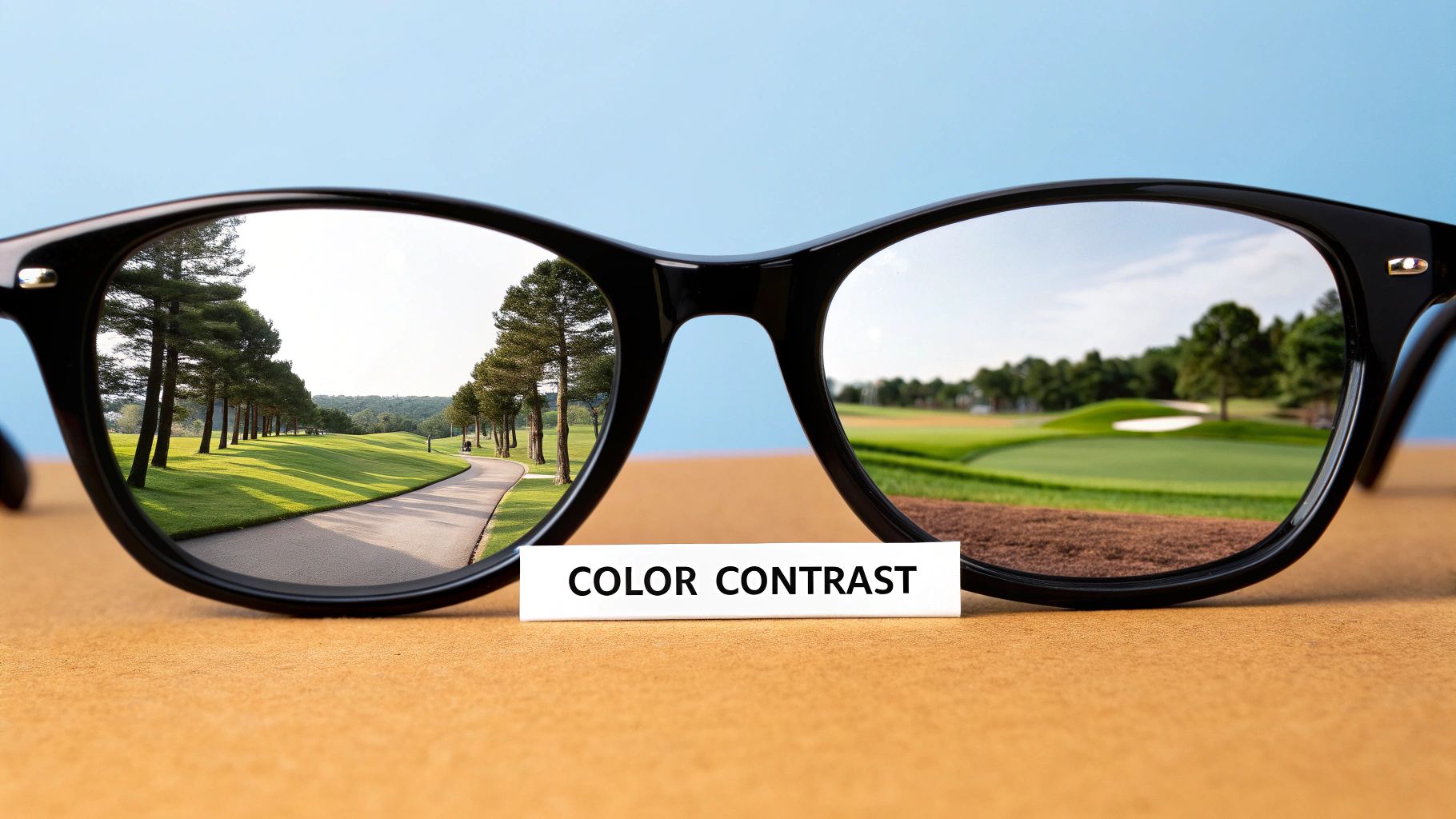
It’s a bit like playing with the settings on a high-end camera. Some colours will boost contrast, making things pop. Others are all about keeping colours true to life. Then you have tints designed to shine in specific lighting conditions. This targeted light filtering is what gives functional coloured eyeglass lenses their real power.
Neutral Tints for True Colour Perception
For everyday, do-it-all use, grey lenses are the undisputed champion. They cut down the overall brightness of your surroundings without messing with your colour perception. It’s like turning down the volume on a speaker without changing the song itself.
This makes them the perfect go-to for any activity where seeing colours accurately is non-negotiable.
- Practical Example: A landscape photographer needs to see the fiery reds of a sunset and the deep greens of a forest exactly as they are. A neutral grey lens gives them glare protection without distorting that natural palette. The same goes for driving, where knowing the true colour of a traffic light is a matter of safety.
Contrast-Enhancing Tints for Clarity and Depth
On the flip side, brown and amber lenses are absolute masters of contrast. They work by filtering out a huge chunk of the scattered blue light that causes haze and glare on bright, sunny days. By cutting through all that visual noise, they make your environment look sharper and much more defined.
This boost in depth perception is a complete game-changer for a lot of outdoor activities.
For drivers and golfers, this is a significant advantage. A brown tint can make the white lines on the road or the contours of a green fairway stand out with incredible clarity, helping you judge distances more accurately and react faster.
While we're often talking about performance, it's impossible to ignore the fashion side of things. The Australian coloured contact lenses market, for instance, was valued at USD 47.61 Million and is projected to skyrocket to USD 132.35 Million by 2033, mostly driven by people wanting to change their look. It just shows how much aesthetics influence our eyewear choices.
Brightening Tints for Low-Light Conditions
When the sun starts to dip or the clouds roll in, yellow and orange tints come to the rescue. These colours are brilliant at maximising whatever light is available and cranking up the contrast, making your surroundings feel brighter and sharper. They're especially effective in foggy, hazy, or overcast conditions.
This is exactly why they’re a favourite for indoor sports and certain outdoor scenarios. A cyclist out on a misty morning, for instance, gets a massive benefit from yellow lenses that help them spot potholes and road debris that might otherwise be invisible. If you want to dive deeper into this, check out our guide on the benefits of yellow lens glasses.
Calming and Specialised Functional Tints
Beyond the big three, other colours offer their own unique perks. Green lenses, for example, can have a really calming visual effect. They filter some blue light and reduce glare while still offering high contrast and pretty good colour accuracy, making them a comfortable all-rounder.
And then you get into the really specialised stuff. There are highly advanced functional tints, like those using EnChroma Lens Technology for color vision, which are designed to help people with colour blindness perceive a wider spectrum of colours. These options show just how sophisticated coloured lenses have become.
The key takeaway here is that the right tint depends entirely on what you're doing. The great news is we can customise an eyewear package to suit your requirements, ensuring your vision is always optimised for whatever you're up to.
Choosing the Right Tints for Your Lifestyle
Picking the perfect coloured lenses isn't just about aesthetics; it's about matching the lens technology to your actual life. Think of it like choosing the right shoes for an activity. The tint that helps a gamer see every detail on screen is completely different from what a fisherman needs to cut through glare on the water. This is where your daily needs meet smart lens design, with a sharp focus on your long-term eye health and safety.
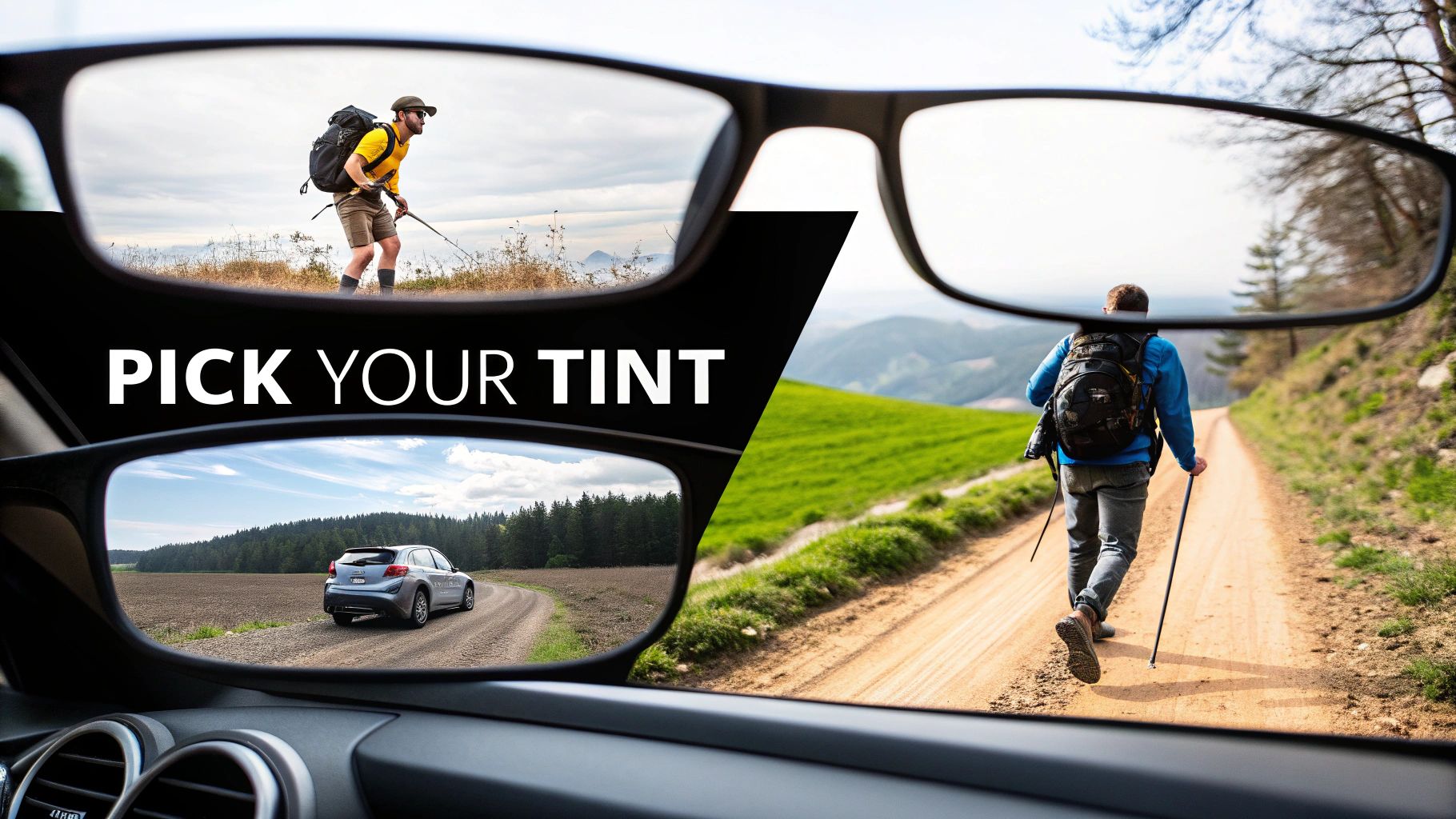
By looking at a few real-world situations, we can easily see which colours and tints will give you the biggest advantage. It's this practical approach that is central to how we can customise an eyewear package to suit your requirements, making sure your glasses actively boost your comfort and performance.
For the Dedicated Screen User
If your day is spent staring at a computer, tablet, or phone, you know the feeling of digital eye strain all too well. That tired, gritty sensation, often joined by headaches and blurry vision, is usually caused by the high-energy blue light blasting from our screens. In this scenario, a functional tint isn't a luxury—it's essential for your eye health.
Lightly tinted blue-light filtering lenses are engineered specifically for this problem. They work by selectively blocking the most intense blue-violet light, which can ease visual fatigue and even help regulate your sleep cycle.
- Practical Example: An office worker who spends eight hours a day on spreadsheets and video calls will notice a huge drop in end-of-day headaches by wearing glasses with a subtle blue-light tint. The slight yellow or amber hue also boosts screen contrast, making everything a bit easier to read.
- For Gamers: The perks are even more noticeable. Gamers need to spot tiny details in dark digital environments and react in a split second. A specialised gaming lens doesn’t just block harmful blue light; it cranks up the contrast, making shadows and in-game details pop.
This isn't just about feeling more comfortable. It's about protecting your eyes from the cumulative damage of non-stop screen time. A simple, functional tint is one of the smartest safety moves you can make in your digital life.
For the Weekend Adventurer and Outdoor Enthusiast
The moment you step outside, the challenges for your eyes change completely. You're now dealing with intense sunlight, reflective glare, and the need for razor-sharp contrast. The coloured eyeglass lenses you choose should be tailored to the specific environment you're heading into.
A weekend hiker and a keen angler face totally different conditions, and each needs a different lens to see clearly and stay safe.
- For the Hiker or Cyclist: A polarised brown or amber lens is an incredible choice. These colours are masters of enhancing contrast, making it much easier to see the difference between textures on a trail. Roots, rocks, and uneven ground will stand out, which is a massive safety feature for avoiding a stumble. The polarisation cuts right through the glare bouncing off wet leaves and paths.
- For the Angler or Boater: Glare coming off the water's surface isn't just annoying; it can be dangerously blinding. In this case, a dark, polarised grey or blue mirror lens is non-negotiable. Polarisation acts like a smart filter, wiping out the horizontal glare so you can see straight into the water. The dark grey base tint keeps your eyes comfortable in the brightest sun without messing with natural colours.
For the Athlete Seeking a Competitive Edge
In sports, the tiniest visual advantage can be the difference between winning and losing. Performance tints are specifically tuned to help athletes see more clearly and react faster, directly impacting their safety and success. The trick is to pick a colour that makes the most important object in your sport stand out against its background.
Think about these sport-specific examples:
- Tennis Players: A tennis ball is optic yellow. Lenses with a rose, vermilion, or brown tint are designed to mute competing background colours—like the blue sky and green court—which makes that yellow ball look more vibrant and far easier to track.
- Golfers: Reading the subtle contours of a green is everything. A copper or brown-tinted lens enhances contrast and depth perception, helping a golfer see the breaks and slopes of the putting surface with much greater clarity.
Each of these examples demonstrates how a smart lens choice is about so much more than looks. It’s about customising your eyewear to give you a real, tangible benefit—whether that's less eye strain, better safety on a trail, or that crucial competitive edge. This is exactly what we mean when we say we can customise an eyewear package to suit your requirements.
Can You Get Coloured Lenses with Your Prescription?
It’s one of the first questions we get asked: "Can I get these amazing lens technologies with my prescription?" The answer is a big, resounding yes. Gone are the days when needing vision correction meant you had to miss out on the benefits of advanced coloured eyeglass lenses.
Today, pretty much every functional tint and coating we offer is fully compatible with prescription lenses. Whether you need single-vision, bifocals, or progressive lenses, you can easily add features like polarisation, blue-light filtering, and photochromic technology without sacrificing even an ounce of visual clarity.
This seamless integration means you never have to choose between performance, eye health, and safety on one hand, and clear vision on the other. Your prescription and your preferred lens tech can work together perfectly in a single, high-performance package.
Getting Your Prescription Right is Step One
Before anything else, the most important step is to have an up-to-date prescription from a qualified optometrist. Think of it as the foundation of your eyewear—without an accurate script, even the most advanced tints won't perform the way they should.
A comprehensive eye exam is about more than just checking your vision. It's a crucial health check-up for your eyes, helping to catch potential issues early. This focus on health is simply non-negotiable.
Your prescription is the blueprint for your lenses. We take that blueprint and combine it with the right functional tint to build eyewear that not only helps you see clearly but also protects your eyes and enhances how you see the world in specific situations.
Building Your Perfect Eyewear Package
Once you've got your current prescription in hand, the fun part begins: customisation. This is where we work with you to match your vision needs with your lifestyle, making sure your new glasses are a perfect fit for everything you do.
Here are a few real-world examples of how it all comes together:
- For the Active Individual: If you’re playing sports like cricket or tennis, we can combine your prescription with polycarbonate lenses. This material is incredibly impact-resistant, giving your eyes a vital layer of safety. Pair that with a contrast-enhancing tint, and you've got the ultimate performance eyewear.
- For the All-Day Driver: A truck driver who needs progressive lenses can get a massive benefit from adding a polarised coating. This combination corrects their vision at every distance while cutting out the dangerous, blinding glare from wet roads and oncoming traffic.
- For the Office Professional: Someone who uses bifocals for reading documents and looking at their screen can add a blue-light filtering tint. This helps dial down digital eye strain and headaches without interfering with the corrective power of their lenses.
While glasses are one path, the demand for combining vision correction with personal choice is huge. Just look at Australia's contact lenses market, which includes a big coloured lens segment and was valued at USD 252.0 Million. This shows a widespread desire for eyewear that meets both functional and aesthetic needs. You can find more insights about the Australian contact lens market on imarcgroup.com.
Our goal is to make this process simple. By talking through your daily activities and visual challenges, we can customise an eyewear package to suit your requirements, ensuring every single element—from the prescription to the lens material and the functional tint—works together to support your vision and long-term eye health.
Keeping Your Coloured Lenses in Top Condition
Think of your new coloured lenses as an investment in your vision. To get the most out of them and protect all that clever tech—like the specialised coatings for UV protection and glare reduction—a little bit of regular care goes a long way.
The golden rule? Never, ever wipe your glasses on your t-shirt. It might be tempting, but rough materials like clothing, paper towels, or tissues are full of tiny fibres that can create micro-scratches. Over time, those little scratches build up and can permanently damage the anti-reflective and UV-protective coatings, which compromises your eye safety.
The Right Way to Clean and Store Them
Properly cleaning your glasses is a quick habit that takes less than a minute. Just follow these simple steps to safely get rid of smudges and dust without causing any harm.
- Give them a quick rinse: Start by running your glasses under a gentle stream of lukewarm water. This washes away any grit or dust that could scratch the lenses.
- Lather up: Use a tiny drop of pH-neutral dish soap or a proper lens cleaning spray on each side of the lens.
- Gently rub: With your fingertips, gently clean both sides of the lenses and the rest of the frame.
- Rinse it all off: Make sure you rinse them thoroughly to get rid of any soap residue.
- Dry with the right cloth: Pat them dry with a clean, soft microfibre cloth. These are specifically designed to be lint-free and won't scratch your lenses.
When you’re not wearing your specs, where you put them matters just as much. Always store them in a sturdy, hard-shell case. Tossing them in your bag or leaving them on a desk is just asking for them to get scratched, bent, or even crushed.
Dodging Everyday Hazards
Beyond just cleaning, you need to watch out for a few environmental traps. Extreme heat is a major enemy of lens coatings, as it can cause them to crack or peel. A classic practical example is leaving your glasses on the dashboard of your car on a sunny day. The inside of a car can get incredibly hot, fast, causing irreversible damage.
Harsh chemicals are another no-go. Things like hairspray, acetone, and even some household cleaners can strip away the protective coatings on your lenses. It’s always a good idea to take your glasses off before using any of these products. This little bit of caution is all about maintaining your long-term eye health and safety.
At the end of the day, proper care is all about preserving the integrity of your lens coatings. Those layers are what deliver the UV protection and visual clarity you paid for, making them essential for your eye safety.
It’s interesting to see how much people value these features. For example, Australia's contact lens market shows a huge demand for UV-blocking lenses, which makes sense given the sunny climate, especially in places like Queensland. It shows that people really understand the importance of protection. You can read more about Australia's contact lens market trends on openpr.com.
At Prescript Glasses, we can customise an eyewear package to suit your requirements, and we want to see it last. Following these simple steps will protect your investment and keep your vision sharp for years to come.
Your Questions About Coloured Lenses Answered
Dipping your toes into the world of coloured eyeglass lenses can definitely bring up a few questions. To help you feel confident and safe in your choices, we’ve tackled some of the most common queries with clear, practical answers.
Can I Wear Any Colour Tint for Night Driving?
Absolutely not. This is a huge one for your eye health and safety. In Australia, any lenses you wear for driving at night have to let a very high percentage of light through to your eyes. Tints like grey, brown, and green are extremely dangerous and illegal for night driving because they crush your ability to spot hazards.
Just imagine trying to see a pedestrian or a cyclist on a dimly lit street. A dark tint could make them practically invisible until it’s far too late. While some very light yellow tints might give you a bit more contrast in low light, you absolutely must check with your optometrist to make sure any lens is legally rated and safe for nighttime use.
Do Darker Lenses Offer Better UV Protection?
This is a really common and potentially harmful myth. The darkness of a lens tint is all about visual comfort—it just reduces brightness. It has nothing to do with UV safety. The real hero is an invisible coating applied to the lens that blocks out harmful ultraviolet radiation.
A very light fashion tint with a proper UV400 rating can offer 100% UV protection, while a pair of extremely dark, untreated lenses from a novelty store might offer zero. Always look for a certified "UV400" or "100% UVA/UVB protection" label to ensure your eyes are properly shielded.
Are Tints Only for Sunglasses?
Not at all! While sunnies are the first thing that comes to mind, tints are incredibly versatile. You could add a light "fashion tint" to your everyday indoor glasses just to soften the glare from harsh office lighting—a great practical example of how a subtle tint can boost your comfort.
And it doesn't stop there. Blue-light filtering lenses designed for screen time often have a noticeable, functional tint. Photochromic lenses are another perfect example; they’re clear indoors but cleverly transform into sunglasses the moment you step outside, giving you a brilliant all-in-one solution. This versatility is key to how we can customise an eyewear package to suit your requirements, no matter where you are.
Ready to find the perfect pair of functional tinted lenses for your lifestyle? At Prescript Glasses, we combine your prescription with cutting-edge lens technology to create eyewear that protects your eyes and enhances your vision. Explore our customisable lens options at https://www.prescriptglasses.com today.