Finding Relief with Glasses for Migraines

For the millions of Aussies who deal with migraines, a brightly lit room or the glow from a computer screen isn't just a mild inconvenience—it can be a direct trigger for severe pain. Specialised glasses for migraines are designed to tackle this head-on. They work by filtering out the specific types of light that tend to aggravate the brain during an attack, offering a simple, practical way to manage one of the most disruptive migraine symptoms while prioritising your long-term eye health and safety.
The Link Between Light and Migraine Pain
If you live with migraines, you’re almost certainly familiar with photophobia, the clinical term for a powerful sensitivity to light. For many people, it’s one of the first warning signs that a migraine is on its way, and often one of the last symptoms to finally disappear.
But this isn't just about light feeling "too bright." During a migraine, the brain's pathways for pain and vision get hyper-excitable and essentially cross-wired. Imagine a faulty electrical circuit where flicking a light switch doesn't just turn on a bulb—it also sets off a piercing alarm. For someone with migraine, incoming light signals don't just travel to the visual cortex; they also trigger the pain centres in the brain.
This neurological reality is why managing your light exposure is so crucial for migraine care. It’s a proactive step that puts your long-term eye health and comfort first by reducing the constant strain on an already sensitive system. Understanding this connection is the first real step toward getting back some control.
Why All Light Is Not Created Equal
You've probably noticed that not all light sources feel the same. The harsh, flickering light from fluorescent tubes in an office or the intense blue glow from our smartphones and computer screens are notorious culprits. These artificial sources pump out specific wavelengths of light that are particularly aggressive to a sensitised brain.
The challenge of migraines is immense in Australia, affecting approximately 4.9 million people, with women disproportionately impacted. The condition costs the national economy an estimated $35 billion annually in healthcare and lost productivity. You can explore more about these significant findings on migraine.org.au.
This is exactly why your standard sunnies often don’t quite cut it. While they do a great job of reducing overall brightness, they don’t selectively block out the most problematic wavelengths. Specialised glasses for migraines, on the other hand, are engineered to do precisely that, acting as a crucial safety tool for your eyes.
Gaining Control Over Your Environment
Managing photophobia isn't just about retreating to a dark room and waiting for the pain to pass. It's about equipping yourself with the right tools to navigate the world comfortably. Once you understand how light affects your neurology, you start to see that specialised eyewear is more than just an accessory—it's a vital part of your migraine management toolkit.
Here are a few practical examples of how people use them:
- An office manager puts on her filtered lenses before walking into a brightly lit supermarket, preventing the immediate shock of the overhead lights.
- A university student wears them during long hours of screen time for remote learning, reducing the eye strain that often precedes a headache.
- A tradesperson keeps a pair in their vehicle for driving into the morning sun, a known trigger, ensuring their vision is protected and safe.
Beyond just glasses, other strategies can make a big difference. Learning general methods for controlling light in your home, like finding out how to reduce glare from windows, helps create a more complete approach to managing your triggers. Our own guide on light sensitivity glasses also dives deeper into this topic.
Ultimately, we know the right solution is a personal one. Here at Prescript Glasses, we understand that everyone's needs are unique. That’s why we can customize an eyewear package to suit your requirements, making sure you get the precise protection and comfort you need to get on with your day.
How Migraine Glasses Filter Painful Light
Ever wondered what makes migraine glasses so different from a standard pair of sunnies? It's all about precision.
Picture a sound engineer in a recording studio. They don't just turn down the volume on everything to hear a single voice clearly; they use specialised equipment to filter out the specific, disruptive background frequencies.
That's the exact principle behind how glasses for migraines work. They're not just tinted plastic. They are carefully engineered tools designed to selectively manage the light that reaches your eyes, offering a targeted approach that provides real neurological relief.
This precision is critical because not all light is a trigger. Certain wavelengths are known culprits for a migraine-sensitive brain. The technology in these lenses acts like a gatekeeper, specifically blocking these painful wavelengths while letting other, more soothing light through, which is a key aspect of maintaining eye health under challenging light conditions.
Targeting the Troublemakers in the Light Spectrum
The light we see every day is made up of a whole spectrum of colours, each with its own wavelength. Over the years, research has zeroed in on specific bands of blue, amber, and red light as the primary triggers that can intensify headache pain and other migraine symptoms.
You'll find these wavelengths are pretty common in our modern world. They're emitted by:
- Digital Screens: Our computers, smartphones, and tablets are massive sources of high-energy blue light.
- Fluorescent Lighting: Often found in offices, schools, and shops, these lights can flicker and emit harsh wavelengths.
- LED Bulbs: While energy-efficient, many common LED lights also produce light within these trigger zones.
Migraine glasses are built with advanced filters that absorb these specific problematic wavelengths before they can reach your eyes and overstimulate your brain's pain pathways. They effectively dial down the "noise" while keeping the "signal." For a deeper dive into how screen light impacts you, check out our guide on the benefits of blue light filters.
Letting the Good Light In
Blocking harmful light is one half of the equation, but the other is allowing beneficial light to pass through. The same research that identified painful light also discovered a surprising ally in the light spectrum: a narrow band of green light.
A groundbreaking 2016 study revealed that while white, blue, amber, and red light often made headaches worse for migraine sufferers, a specific low-intensity green light could actually decrease pain. This was a huge finding, showing that light can be part of the solution, not just the problem.
With up to 60% of migraine attacks being triggered by light exposure, this science is vital. Modern lenses are now designed to filter as much as 97% of harmful wavelengths while allowing this soothing green light to reach your eyes.
This dual-action approach—filtering out the bad and welcoming the good—is what sets medical-grade migraine eyewear apart. It’s a sophisticated balance designed to calm your neurological system and provide a more comfortable visual experience.
This precise manipulation of light is an amazing application of science. To further appreciate the sophisticated design of migraine glasses, you can delve into the science behind how LED light therapy works, which reveals how different light wavelengths can stimulate the body's natural repair mechanisms.
Ultimately, your well-being is our priority. We understand that finding the right solution requires a personal touch, which is why we can customise an eyewear package to suit your requirements. Whether you need protection from office fluorescents or digital screens, we can help you find the perfect balance of filtering for your daily life.
Finding the Right Lens for Your Daily Life
Choosing the right lens for your glasses for migraines is a bit like picking the right shoes for the day. You wouldn't wear hiking boots to a dinner party or thongs for a long run. The same logic applies here: your lifestyle dictates the kind of light you’re exposed to, so your lenses need to be perfectly matched to those daily demands.
Not all migraine lenses are the same, simply because not every day looks the same. The real trick is matching the technology in the lens to your specific environment and triggers. When you get this right, you create a seamless layer of protection that fits naturally into your routine, keeping your eye health and safety front and centre.
This simple flowchart helps break down whether migraine glasses could be a good fit for your light-triggered symptoms.
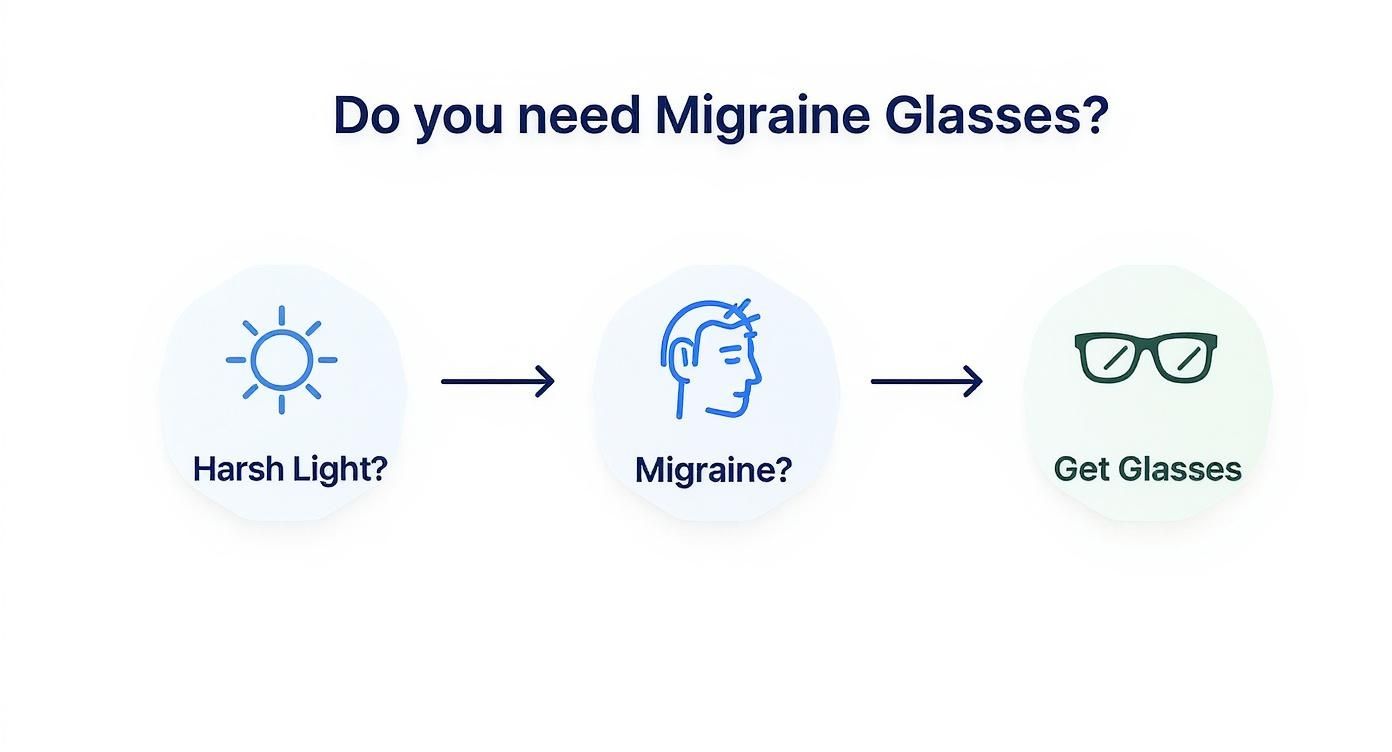
As you can see, the path is pretty clear: if you’re dealing with harsh light and suffering from migraines, specialised glasses are a highly recommended step to take.
Matching Lens Technology to Your Needs
So, how do you find the perfect fit? Let's walk through some of the most effective lens options out there. Each is engineered for a particular set of circumstances, offering unique benefits for different people. The best place to start is by thinking about what a typical day looks like for you.
Consider these real-world examples:
- The Office Professional: A graphic designer spending eight hours a day in front of a monitor under fluorescent lights has a very consistent, predictable light trigger. Their main goal is filtering the specific, harsh wavelengths from their screens and overhead office lighting.
- The On-the-Go Sales Rep: Someone who is constantly moving between their car, outdoor client visits, and their office faces a completely different challenge. Their light environment is always changing, so they need a flexible solution that can handle bright sunlight and indoor glare without forcing them to swap glasses all day.
- The Dedicated Student or Gamer: A student cramming for exams or a gamer locked into a session needs serious protection from intense, prolonged digital light. It's all about preventing that cumulative eye strain that can easily spiral into a full-blown migraine.
Each of these people needs a different type of lens to get the best protection and comfort.
Comparing Lens Options for Migraine Relief
To help you choose the best fit for your daily activities and light triggers, let's break down the different lens technologies available. This table compares five key types of lenses, explaining what they do best and who stands to benefit the most.
| Lens Type | Best For | Key Migraine Benefit | Ideal User Scenario |
|---|---|---|---|
| Indoor / Clear Lenses | Consistent indoor environments with artificial light (screens, LEDs, fluorescents). | Filters the most painful wavelengths from digital devices and overhead lighting, reducing constant neurological strain. | An accountant working long hours in an office or a writer spending all day in front of their laptop. |
| Photochromic Lenses | Moving between indoor and outdoor environments frequently. | Automatically darkens in sunlight and lightens indoors, providing continuous, adaptive protection from all light triggers. | A teacher who moves between the classroom and the playground or a delivery driver constantly in and out of buildings. |
| Sunglass Lenses | Bright, outdoor conditions and intense sunlight. | Provides maximum filtering of all harsh light, including UV rays, to prevent outdoor triggers from causing a migraine attack. | Someone spending the day at the beach, gardening, or driving in full sun. |
| Blue Light Filter Lenses | Heavy screen users who need to reduce digital eye strain and block specific blue light. | Targets the high-energy blue-violet light from screens that is a known migraine trigger and source of eye fatigue. | A student attending online lectures or a gamer engaged in a long session. |
| Bluechromic Lenses | Users who need both powerful blue light filtering indoors and sunglass-level protection outdoors. | Combines the benefits of a dedicated blue light filter with photochromic technology for an all-in-one solution. | A software developer who works in a bright, window-filled office and takes outdoor lunch breaks. |
Ultimately, choosing a lens is a personal decision, driven entirely by your daily routine and specific light sensitivities. There's no single "best" option—just the one that's best for you.
Understanding these differences is the first step toward finding lasting relief. At Prescript Glasses, we know the right fit is about much more than just a frame. That’s why we can customise an eyewear package to suit your requirements, making sure your lenses provide the exact protection your life demands.
Creating Your Custom Pair of Migraine Glasses
Getting a pair of glasses designed specifically around your migraine triggers should feel straightforward and reassuring. After all, the whole point is to create a personalised tool that gives you maximum relief without making you compromise on clear vision, comfort, or your personal style. It’s all about combining the right prescription with specialised lenses, fitted into frames you actually love wearing.
At the heart of it all is your long-term eye health and safety. That journey always starts with a valid prescription from a qualified eye health professional. A current, accurate script is non-negotiable—it ensures your new migraine glasses don't just filter out painful light, but also correct your vision perfectly.
Your Prescription and Customisation Options
Think of your optical prescription as the foundation for your relief. This vital document ensures your vision is sharp, which helps prevent the kind of eye strain that can easily spiral into a headache or full-blown migraine. You can use your existing script or grab a new one from your local optometrist.
Once you have your prescription, the real customisation begins. This is where we work with you to build a solution that fits seamlessly into your life. As we often tell our clients, we can customise an eyewear package to suit your requirements. This isn’t just a slogan; it’s the philosophy behind every choice you’ll make.
Here’s what that looks like in practical terms:
- For the Office Worker: An accountant spending their day under harsh office lights and staring at multiple screens might go for an indoor lens with an FL-41 tint, plus an anti-glare coating to cut down on distracting reflections.
- For the Student: A uni student bouncing between online lectures and late-night study sessions could opt for a lens with a strong blue light filter to reduce digital eye strain and help protect their sleep schedule.
- For the Frequent Driver: Someone who drives for a living would get huge benefits from photochromic lenses that adapt to changing light, maybe combined with a polarised sunglass tint for maximum glare reduction on the road.
Building your ideal pair is a collaborative effort. By bringing together your prescription, lifestyle needs, and personal style, we can create glasses that are so much more than a medical device—they become a crucial part of your daily comfort and wellness.
How to Order Your Personalised Eyewear
Getting your own tailored pair of glasses is a simple process. We’ve designed it to be as clear and easy as possible, so you feel confident every step of the way. While we guide you through everything on our website, knowing the basics beforehand always helps.
Our online system makes it easy to upload your script and pick out your options. For a more detailed guide, our article on how to order custom prescription glasses online walks you through the entire process, from uploading your prescription to finalising your order. It's everything you need to know to create the perfect pair of glasses for your migraines.
Making the Most of Your New Eyewear
So, you've got your new glasses for migraines. Think of them as a powerful tool in your symptom-fighting kit. But like any good tool, you need to know how to use it right to get the full benefit. It’s all about shifting from a reactive mindset to a proactive one.
The real trick is to anticipate your triggers. Don't wait for the pain to hit. For instance, if you know the harsh fluorescent lights at the supermarket are a problem, pop your glasses on before you even walk inside. It's a simple habit, but it stops that painful light from reaching your already sensitised brain, potentially heading off an attack before it even gets a chance to start.
Protecting Your Investment with Proper Care
The magic of these glasses lies in their specialised filters and lens coatings. They're precision-engineered, and that means they need a bit of TLC to keep them working their best. Look after them, and they'll look after you for years to come. Neglect them, and you risk scratches or damage that could compromise the very technology designed to give you relief.
Keeping your glasses in top shape is easy—it just takes a few simple habits. Think of it as a quick checklist for making sure your eyewear continues to provide the maximum protection you need.
Simple Do's and Don'ts for Your Lenses
Here are a few practical tips to keep your new glasses performing perfectly:
- DO use a microfibre cloth and a proper lens cleaning solution. Other fabrics might feel soft, but they can be abrasive enough to leave tiny scratches that mess with the filters.
- DON'T reach for harsh chemicals like window cleaner, or use saliva or the hem of your shirt. These can strip away the protective coatings and permanently damage the lens surface.
- DO store your glasses in their protective case whenever they're not on your face. This is easily the best way to prevent accidental drops, pressure damage, and scratches.
- DON'T leave them lens-down on a rough table or on your car dashboard. The extreme heat in a car can warp the frames and ruin the delicate lens coatings.
Following these simple steps isn't just about cleaning your glasses—it's about preserving a vital piece of equipment designed for your well-being. Good maintenance ensures they function exactly as intended, giving you reliable protection every time you need it.
Ultimately, your eyewear is a personal solution. As we always say, we can customise an eyewear package to suit your requirements, and that includes making sure you have everything you need to care for it properly from day one.
Your Questions About Migraine Glasses, Answered
It's only natural to have a few questions when you're looking into a new way to manage your health. We get it. Here, we'll tackle some of the most common queries we hear about glasses for migraines, giving you clear, straightforward answers to help you feel confident about your choice.
Can I Wear Migraine Glasses All Day Long?
Absolutely. Many of the indoor lenses are specifically designed for all-day wear. Think of them as a preventative measure, especially if you're in an environment like an office with harsh fluorescent lighting. They work by reducing your cumulative exposure to the types of light that can trigger an attack.
A great practical example is an office worker who slips them on first thing in the morning and keeps them on until home time. If you’re often moving between inside and outside, photochromic lenses that adapt to changing light are a brilliant solution for continuous protection. Ultimately, the best advice is to listen to your body and chat with your eye health professional to figure out what works for you.
How Are These Different From Regular Blue Light Blockers?
This is a great question, and there's a key difference. While both types of glasses filter light, they're built for very different jobs. Standard blue light glasses are designed to filter a slice of the blue light spectrum, mostly to help with digital eye strain from screens.
Glasses for migraines, on the other hand, use much more sophisticated, precision tints like the well-researched FL-41. These filters are engineered to block a wider, more specific range of painful wavelengths—including certain shades of blue, amber, and even red—while letting through more of the soothing green light. It’s a much more targeted approach aimed at providing neurological relief, not just visual comfort.
How Soon Can I Expect to Feel a Difference?
Everyone's experience is a little different. Some people feel an immediate sense of relief the moment they put the glasses on, especially when walking into a trigger environment. For example, the jarring brightness of a supermarket might instantly feel more manageable.
For others, the real benefit unfolds over a few days or weeks of consistent use. You might notice that your migraine attacks become less frequent or not quite as severe. We usually suggest wearing them consistently in your known trigger environments for at least one to two weeks to give them a fair shot and really gauge their impact.
The goal is to find a solution that integrates seamlessly into your life. Whether you need relief from screen time or changing light conditions, the right pair of glasses for migraines can make a significant difference.
At Prescript Glasses, we know that everyone's needs are unique. That's why we can customise an eyewear package to suit your requirements, ensuring you get the perfect combination of prescription, lens technology, and frame style. Explore our options and build your personalised pair today at https://www.prescriptglasses.com.