Clear Blue Light Glasses an Essential Guide

Clear blue light glasses are a straightforward and incredibly useful tool for protecting your eyes from the high-energy light pouring out of our digital screens. They work like a transparent shield, filtering out the harsh blue light to cut down on eye strain and boost comfort, all without messing with how you see colours. This focus on eye health and safety is crucial in our screen-filled world.
The Hidden Strain of Modern Screens
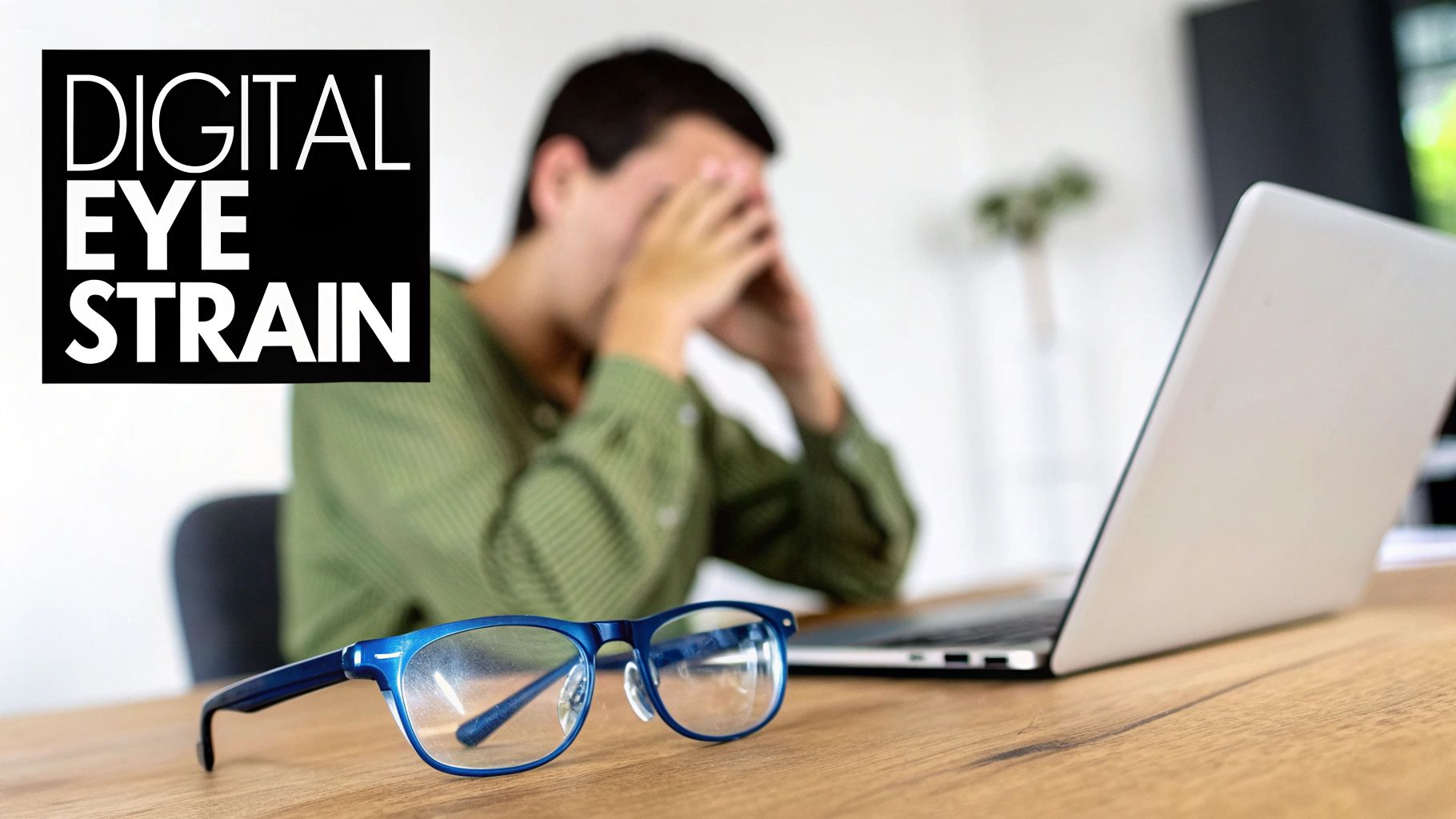
Staring at a screen all day can feel like a marathon for your eyes—one you definitely didn't sign up for. From that first email in the morning to the last social media scroll at night, our eyes are constantly bombarded with high-energy visible (HEV) blue light from phones, tablets, and laptops. This constant exposure is a major culprit behind digital eye strain, a condition that brings a whole host of uncomfortable symptoms and can impact long-term eye health and safety.
This is exactly where clear blue light glasses come into play as an essential part of your daily kit. Think of them as an invisible bodyguard for your vision. They're specifically engineered to selectively block the most taxing wavelengths of blue light before they ever get a chance to hit your eyes, providing a critical layer of protection.
Why Screen Time Is So Taxing
The light from our screens isn't like the soft, diffused light you find in nature; it's direct, concentrated, and intense. This is what leads to those all-too-common complaints after a long day of work or study. For example, an office worker might notice their vision getting blurry by 3 p.m. after hours of staring at spreadsheets, or a student might grapple with nagging headaches after a few hours of online research for an essay.
These symptoms are the direct result of your eyes working overtime to process that harsh light. Filtering it out can lead to some immediate benefits for your eye health:
- Reduced dryness and irritation
- Fewer tension headaches linked to screen use
- Less visual fatigue and blurriness
- Better focus and comfort during long tasks
By getting on top of this exposure, you're not just looking for a bit more comfort. You're taking a vital step towards your long-term eye health and safety. With our growing reliance on digital devices, this has become more critical than ever. In fact, Australia's eyewear market is projected to hit US$2.89 billion in 2025, with a huge part of that growth coming from blue light protection as more people seek relief.
At its core, the job of clear blue light glasses is to create a safer viewing experience. They let you get on with your work and leisure without forcing your eyes to constantly fight against fatiguing light.
A Clear Solution for Modern Life
Unlike the old-school blue light glasses that had a noticeable yellow tint, modern clear lenses give you protection without distorting your colour perception. This makes them perfect for everyone, from graphic designers who depend on colour accuracy to professionals who need to look sharp on video calls.
For those dealing with regular discomfort, our guide on how to reduce eye strain offers even more practical tips.
Ultimately, making clear blue light glasses a part of your daily routine is a simple, proactive way to look after your vision. To ensure you get the perfect blend of style and protection for your specific needs, we can customize an eye wear package to suit your requirements.
How Blue Light Affects Your Eyes and Sleep
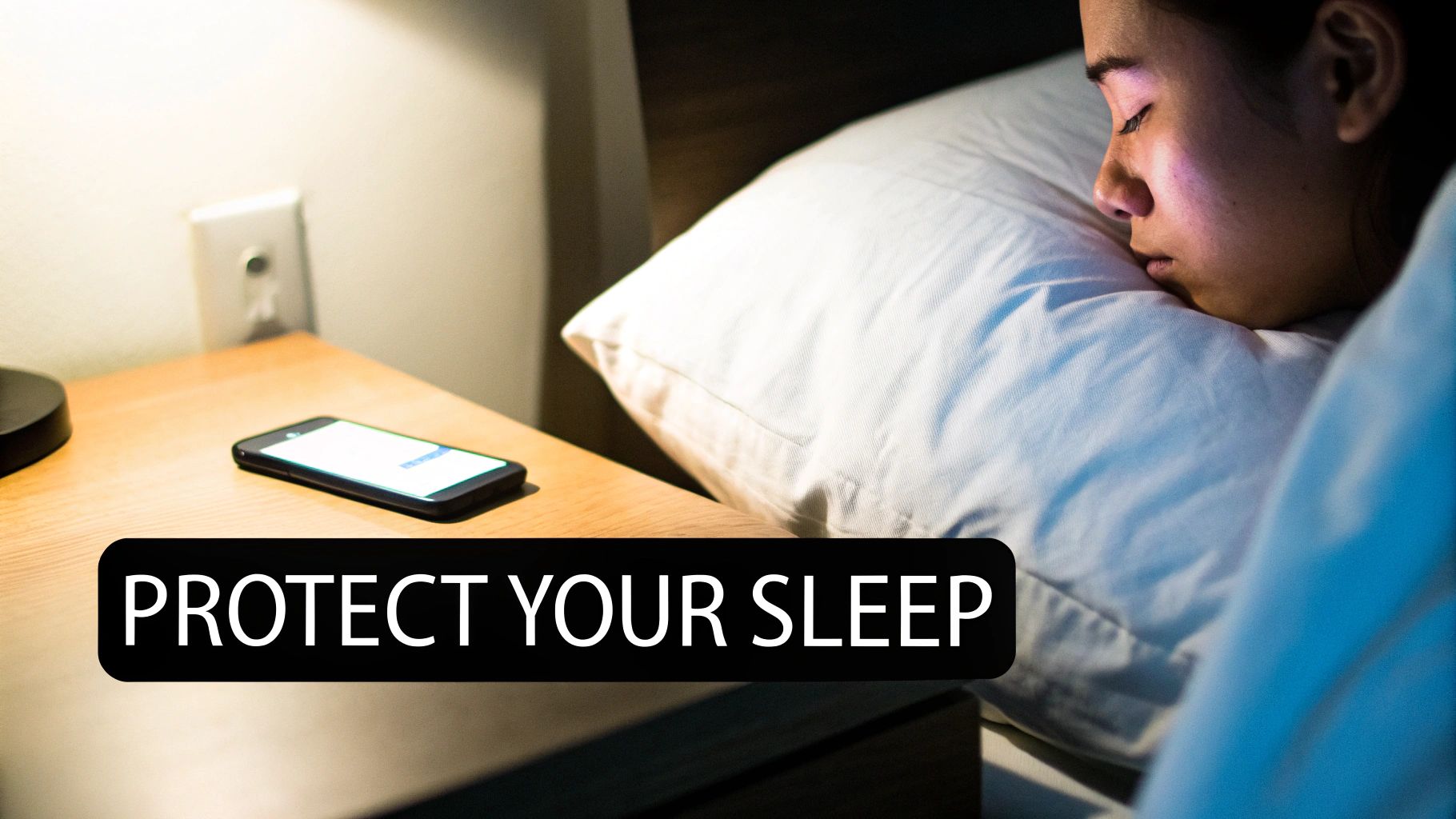
Ever found yourself scrolling on your phone in the evening, feeling exhausted but somehow unable to switch off? That "tired but wired" feeling isn't just your imagination. It's a real biological response to the type of light beaming from our screens, with significant implications for your eye health and safety.
The main offender here is high-energy visible (HEV) blue light. It's a powerful slice of the light spectrum that our digital devices emit in spades.
While the sun is easily the biggest source of blue light out there, the way we interact with our screens creates a whole different problem. We're not just glancing at them; we're holding them centimetres from our face for hours on end. This creates a concentrated, prolonged exposure our eyes simply weren't built for.
This constant close-range assault forces your eyes to work overtime. Blue light has a very short, high-energy wavelength, which makes it scatter more easily once it enters the eye. This scattering makes it tough for your eyes to hold a sharp focus, leading straight to those all-too-familiar symptoms of digital eye strain—think blurry vision, dryness, and nagging headaches. This is a direct threat to your immediate eye health.
The Sleep Disruption Cycle
But the impact of blue light goes way beyond just tired eyes. One of its most significant tricks is messing with your body's internal clock, also known as your circadian rhythm. This is the natural, internal process that tells you when to feel sleepy and when to feel alert, and it takes its cues from the light in your environment.
When you're exposed to blue light in the evening, it sends a loud and clear signal to your brain: "It's still daytime!" So, when you’re watching a movie on your tablet late at night, your brain is interpreting that light in the same way it would the midday sun.
This confusion throws a spanner in the works of a crucial biological process. It actively suppresses the production of melatonin, the hormone that tells your body it's time to sleep. With melatonin levels down, you'll likely find it harder to drift off, or you might have a restless night that leaves you feeling groggy in the morning.
Your brain doesn't know the difference between blue light from the sun and blue light from your phone. By filtering it out in the evenings, you're essentially helping your body realise it's time to wind down and get ready for rest.
Taking Proactive Steps for Better Rest
Understanding how blue light works is the first step toward getting your evenings back and improving your sleep. The goal isn't to ditch screens completely—that's just not realistic for most of us. It's about managing their impact safely.
By wearing a pair of clear blue light glasses, you can filter out these disruptive wavelengths without turning your screen a weird orange colour.
This one simple change can make a huge difference. For instance, a student burning the midnight oil before an exam can feel more relaxed before bed. An office worker catching up on emails after dinner can do so without wrecking their sleep cycle. If you're curious about the tech, you can take a deeper dive into the different types of blue light filters available.
Ultimately, protecting your eyes is about ensuring both immediate comfort and long-term wellness. Because everyone’s needs are different, we can customize an eye wear package to suit your requirements, getting you the perfect level of blue light filtering combined with any other features you need.
What Filtering Blue Light Actually Feels Like
Moving beyond the science, let's talk about what filtering blue light feels like in the real world. The biggest, most immediate change? A massive reduction in the symptoms of digital eye strain. It’s the difference between ending your workday with that familiar tired, gritty feeling and closing your laptop feeling fresh.
Think of a graphic designer finishing a huge project with sharp focus instead of a pounding tension headache. Or a student wrapping up an online assignment feeling clear-headed, not completely wiped out. These are the practical, day-to-day wins that clear blue light glasses bring to the table for your eye health.
Better Sleep and Protecting Your Eyes for the Future
But it’s not just about easing daily discomfort. These glasses are a game-changer for your overall wellbeing, especially when it comes to sleep. By filtering out that disruptive blue light in the hours before bed, you’re basically telling your brain it’s time to wind down. This helps your body naturally produce melatonin, setting you up for a deeper, more restorative night’s sleep.
The benefits don't stop there, though. Think of wearing these glasses as a smart, preventative measure—an investment in the long-term health and safety of your eyes.
By consistently cutting down your cumulative exposure to high-energy visible (HEV) light, you’re taking a proactive step to protect your vision for years to come. It’s not just about feeling better today; it’s about safeguarding your eye health for the future.
Why Everyone's Talking About Eye Health
This focus on preventative care is a big reason why blue light protection has become a major focus in Australia's eyewear market. As more of us become aware of the health impacts of non-stop screen time, Aussies are turning to these glasses to help with everything from preventing dry eye syndrome to improving sleep quality. You can dive deeper into the Australian eyewear market and its growth on expertmarketresearch.com.au.
Ultimately, adding clear blue light glasses to your daily routine is a simple tweak with some pretty profound effects on your comfort and long-term wellness. Because everyone’s life is different, we can customize an eye wear package to suit your requirements, making sure you get the perfect level of protection. This tailored approach means we can build a solution that fits your specific lifestyle, whether you're a professional chained to a desk, a student, or a dedicated gamer.
How to Choose the Right Clear Lenses
It's easy to assume all clear blue light glasses are the same, but once you start looking, you realise there's a bit more to it. Getting the right pair isn't just about style; it’s about making sure you’re getting effective protection that prioritises your eye health and safety, not just falling for some clever marketing.
When you dive into the options, you'll find two main technologies at play. Knowing the difference is the key to picking lenses that genuinely look after your eyes.
The most common type you’ll come across has a surface coating. You can think of it like a very thin, specialised film applied to the outside of the lens. This coating is designed to reflect a portion of the high-energy blue light away before it ever reaches your eye. It's a proven and popular method for cutting down on that end-of-day digital eye strain.
The other approach is a bit different. Here, the blue light filtering technology is embedded directly into the lens material itself. The filtering polymers are mixed into the lens’s core structure from the get-go, allowing them to absorb the harsh wavelengths as light passes through.
Coated vs. Embedded Lenses
So, which one is for you? It really boils down to what you do every day and what you need from your glasses. A good-quality coated lens is a fantastic choice for general daily use—think writing, studying, or typical office work where your main goal is to reduce eye fatigue. They offer solid protection and are often easier on the wallet.
But for some jobs, seeing colours exactly as they are is everything. This is where an embedded lens really shines, ensuring both safety and accuracy.
For a graphic designer, photographer, or video editor, colour accuracy is non-negotiable. An embedded lens usually provides the most neutral colour perception, making sure their work stays true-to-life while still delivering that crucial blue light defence.
This little decision tree shows some of the common frustrations that lead people to look for blue light glasses in the first place.
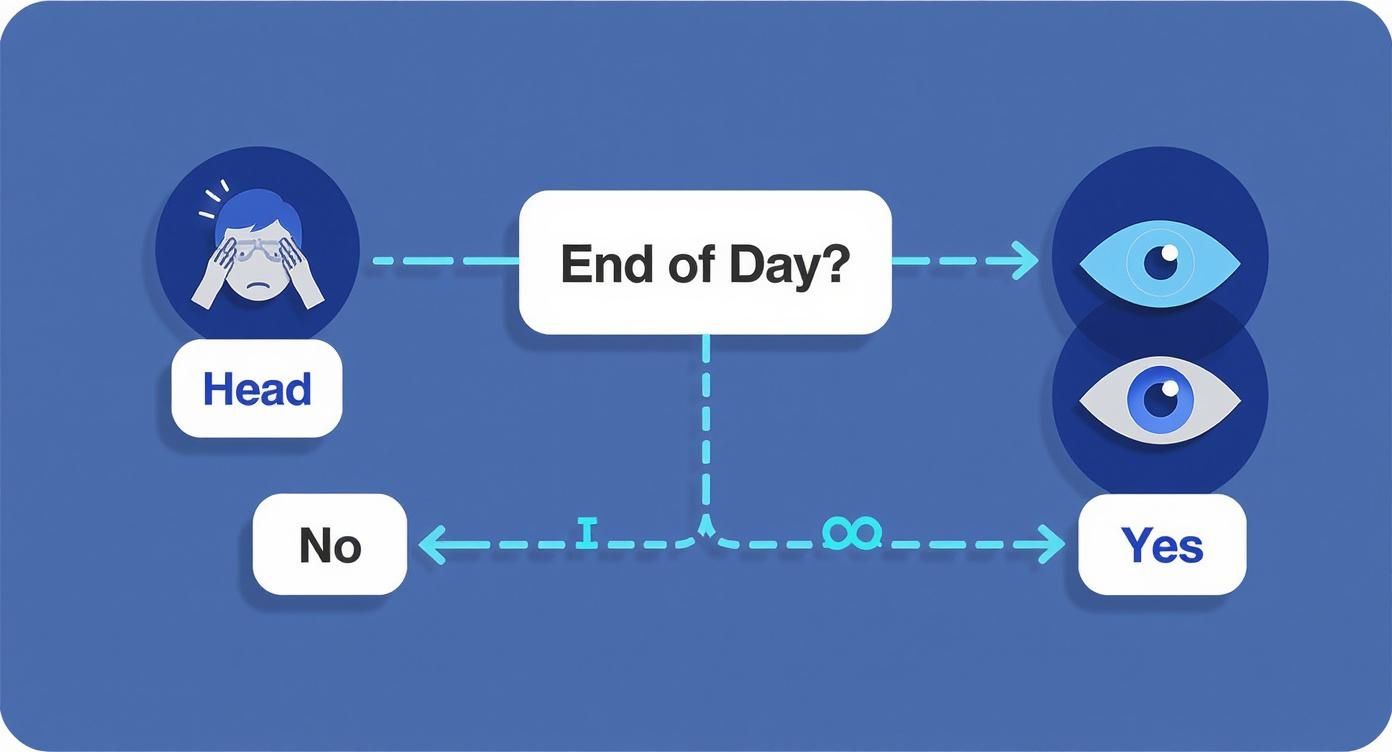
Whether it’s nagging headaches or that gritty, tired-eye feeling, both are big signs that your eyes are struggling against the constant glare from your screens.
To help you weigh up the options, here’s a quick comparison of the two lens technologies.
Comparing Clear Blue Light Lens Technologies
This table breaks down the two main types of clear blue light lens technology to help you decide which is best suited for your needs.
| Feature | Surface Coated Lenses | Substrate Embedded Lenses |
|---|---|---|
| How It Works | A thin, transparent film is applied to the lens surface to reflect high-energy blue light. | Blue light filtering polymers are mixed directly into the lens material to absorb high-energy blue light. |
| Colour Perception | May have a very slight, often unnoticeable, colour tint. Some can have a noticeable blue or purple reflection. | Typically offers the most neutral and accurate colour perception with minimal tint. |
| Best For | General daily use, office work, studying, and reducing digital eye strain. A great all-rounder. | Professionals who require precise colour accuracy, like graphic designers, artists, and video editors. |
| Durability | The coating can be susceptible to scratches or wear over time, which may reduce its effectiveness. | The filtering properties are part of the lens itself, so they won't scratch off or wear away. |
| Cost | Generally more budget-friendly and widely available. | Can be a more premium option due to the more complex manufacturing process. |
Ultimately, both are excellent technologies. Your choice just depends on balancing your specific visual needs with your budget and daily routine.
What to Look for on Product Descriptions
When you're comparing pairs, dig into the product details to make sure you're getting what you pay for. Look for specifics on the range of blue light being filtered. A quality lens should be blocking light in the most harmful part of the spectrum, which is typically between 400-450 nanometres (nm). If a brand is vague about what their lenses actually block, it’s worth being a little cautious for your eye safety.
The demand for clear lenses is definitely on the rise, and it makes sense. People want protection they can wear all day without a noticeable tint. The global market shows this trend, with clear lenses expected to make up 61.3% of total revenue in the blue light blocking glasses market by 2025.
If you’d like a closer look at our top-rated pairs, check out our guide to the best blue light blocking glasses to see how different styles and lenses stack up.
In the end, choosing the right pair is all about your lifestyle. We can customize an eye wear package to suit your requirements, making sure you get the perfect lens technology for your work, study, or downtime.
Building Your Perfect Eyewear Package
Think of your glasses like a custom-built tool for your eye health and safety. A blue light filter is a great starting point, but true eye comfort often comes from layering on other features to create a complete solution. It’s about building an eyewear package that’s perfectly suited to your daily life, not just blocking one type of light.
One of the most powerful upgrades you can make is an anti-reflective coating, which you might also hear called an anti-glare coating. This works hand-in-hand with your blue light filter to tackle a different kind of visual stress. It’s designed to cut down those annoying reflections from your computer screen, harsh overhead lights, or even the headlights of oncoming cars at night. The result? Sharper, clearer vision without the distractions.
Tailoring to Your Lifestyle
The best combination of lens features is never one-size-fits-all—it comes down to your daily routine. By looking at what your day actually involves, we can customize an eye wear package to suit your requirements, making sure every element has a purpose.
Here’s how that plays out with practical examples:
- For the Office Professional: If you're someone who spends all day staring at spreadsheets under fluorescent lights, you'll feel a massive difference with a blue light filter paired with an anti-reflective coating. This combo tackles the digital light from the screen and the glare from office lighting, helping you stay focused and less fatigued.
- For the University Student: A student's life is a whirlwind of libraries, lecture halls, and late-night study sessions. Glasses often get tossed into a backpack between classes. For them, adding a durable scratch-resistant coating to their clear blue light glasses is a smart, practical move for longevity and safety.
- For the Active User: Always on the move, from a morning run to errands in the city? A hydrophobic coating could be a game-changer. This clever layer repels water and oils, which means fewer smudges from fingerprints and a clearer view if you get caught in the rain. It makes the lenses safer and much easier to keep clean.
Integrating Your Prescription
And if you already wear prescription glasses, you don’t have to choose between clear vision and protection. Blue light filtering technology can be built right into your prescription lenses. You get the sharp, corrected vision you rely on, plus a modern defence against digital eye strain, all in a single, safe pair of glasses.
Building the right package is all about creating a tool that fits your life perfectly. It’s a proactive step towards better long-term eye health, ensuring your glasses work as hard as you do to keep your vision comfortable and clear.
By thinking about these extra layers, you can move beyond a basic solution and create something truly personalised. The goal is to build a pair of clear blue light glasses that not only filters harmful light but also stands up to whatever your unique lifestyle throws at it.
Your Questions Answered: Clear Blue Light Glasses
When you're thinking about adding clear blue light glasses to your day, a few questions about eye health and safety are bound to pop up. It's totally normal. Let's get them answered so you can feel good about your choice and understand how they fit into your long-term eye care plan.
Can I Wear Clear Blue Light Glasses All Day?
You sure can. In fact, high-quality clear blue light glasses are made for exactly that. Because they don't have a noticeable tint, they won't mess with your colour perception at all, making them safe for continuous use.
This makes them perfect for literally any task, whether you're staring at a spreadsheet, designing a website, or even just driving. They provide a constant shield from the artificial blue light coming from screens and indoor lighting, without changing the way you see the world.
Will These Glasses Make My Screen Look Yellow?
Not the good ones, no. Modern, premium clear blue light lenses are engineered to be virtually transparent, protecting your vision without side effects.
Some of the older or cheaper versions out there might have a slight yellow tinge, but today's advanced lenses filter out the specific, high-energy blue light wavelengths with minimal colour distortion. You really shouldn't notice any difference in the colours on your screen, which is a must for creative professionals or anyone who needs to see true-to-life colour.
Are These Glasses Better Than My Device's Night Mode?
They serve different purposes, but glasses offer a more complete and safer solution for your eyes. Your device's night mode is a great feature for winding down before bed, but it works by shifting all the colours on your screen to a much warmer, orange-heavy tone. This can distort what you're looking at and isn't very practical for daytime work.
Clear blue light glasses give you consistent protection all day long, from all artificial light sources—not just your screen—and they do it without turning your display orange. It’s a much more practical and comprehensive way to safeguard your eyes.
Think about an accountant trying to get work done during the day. That aggressive orange tint from a night mode would be more of a distraction than a help, whereas clear lenses offer protection you won't even notice is there. It's a safer way to work for longer periods.
Are Blue Light and Anti-Glare Glasses the Same Thing?
That’s a great question, but no, they're two different technologies designed to solve separate issues for your eye health. They do, however, make for a powerful combination.
Blue light filtering specifically targets a portion of the light spectrum to reduce digital eye strain. An anti-glare (or anti-reflective) coating, on the other hand, cuts down on those annoying reflections on your lenses from things like overhead lights or windows. For the best visual comfort and safety, getting a pair of glasses with both technologies is definitely the way to go.
At Prescript Glasses, we know that everyone's needs are different. We can customise the perfect eyewear package just for you, combining clear blue light filtering with anti-glare coatings, your personal prescription, and more. Design your perfect pair at https://www.prescriptglasses.com.