
How to fix glasses frame at home in 5 steps

Trying to fix your glasses without the right tools can quickly turn a minor problem into a major headache. For a simple loose arm or a wayward screw, a basic at-home toolkit is usually all you need. Setting one up now will save you time, stress, and maybe even a trip to the optometrist. Your eye health and safety depend on your glasses fitting correctly, so these small adjustments are more important than you might think.
Your Essential At-Home Glasses Repair Toolkit
Before you dive into any DIY frame fixes, it’s smart to get your gear in order. This isn't about buying a professional-grade setup, but just assembling a few key items so you can handle small repairs safely and effectively.
First thing's first: find a clean, well-lit workspace. A kitchen table or a desk will do just fine. Good lighting helps you keep track of those tiny screws and parts, and a clean surface prevents any accidental scratches to your lenses. For example, laying down a white piece of paper can make a tiny dropped screw much easier to spot.
Building Your Basic Kit
You might be surprised to find you already have most of what you need lying around the house. The goal here is to be ready for the most common glasses emergencies without spending a fortune.
Here are the absolute must-haves for your kit:
- A Precision Screwdriver Set: This is your number one tool. Eyeglass screws are incredibly small, and forcing the wrong size screwdriver in there is a surefire way to strip the head. A simple kit with a few different Phillips and flathead bits is a fantastic investment.
- Microfibre Cloths: Always have a clean, soft cloth on hand. You'll need it to grip the frames without leaving smudges and to protect your lenses from getting scratched while you work. A quick reminder: never use paper towels or your shirt—they can leave tiny abrasions on your lenses, impairing your vision.
- Padded Pliers: For any gentle bending or adjustments, you need pliers that won’t chew up your frames. You could buy specialty optical pliers, but a much easier solution is to wrap the tips of two regular pairs of needle-nose pliers with a bit of electrical tape. This gives you the grip you need without marking the finish.
Useful Extras and Pro Tips
Once the essentials are sorted, a few other items can make your life a whole lot easier. A small magnifying glass, for instance, is a game-changer when you're trying to line up a minuscule screw with its hinge.
Got a stubborn screw that just won't budge? Place a tiny piece of a rubber band over the screw head before putting your screwdriver on it. The rubber will give you the extra traction you need to turn it without stripping it. It’s an old trick that works like a charm.
One of the most common mistakes people make is overtightening the screws. You want them to be snug and secure, but not completely locked down. Cranking them too tight can damage the hinge or even crack the frame itself. For a more detailed walkthrough, check out our guide on how to properly tighten your glasses.
While we’re talking about toolkits, understanding the different types of adhesives is handy for plenty of household fixes. However, we'll get into why most glues are a bad idea for frame repairs a bit later on.
At Prescript Glasses, we want to empower you with the right knowledge for these small fixes. But if a repair ever feels like it’s beyond your toolkit or comfort zone, remember that we're here to help. We can customize an eye wear package to suit your requirements, ensuring you always have a reliable pair to fall back on.
Solving Common Problems with Your Glasses Frame
Even with the best care, glasses can start to feel a bit off. They might slip down your nose when you're busy, or look lopsided after being accidentally sat on. The good news is that these common issues are often far more fixable than you’d think. Let's walk through some practical, real-world solutions to get your frames back into perfect shape.
The most important thing to remember when you fix a glasses frame is to use a gentle touch and the right technique for your frame's material. Trying to force them back into place is a recipe for disaster—it usually ends in a snap, not a solution.
Taming Slippery Glasses
Is there anything more annoying than constantly pushing your glasses back up your nose? That’s a classic sign the temple arms (the bits that go over your ears) have loosened up over time. Thankfully, adjusting them is a simple fix that makes a world of difference.
If you have plastic or acetate frames, a little warmth is all you need.
- Hold the temple arms under warm tap water for about 30 seconds. Never use boiling water, as it can wreck lens coatings and warp the frame material itself, which is a serious safety hazard for your eyes.
- Once the plastic feels pliable, gently bend the end of the temple arm downwards to create a tighter curve. This will help it hook more snugly behind your ear. For example, if your glasses slide off when you look down to read, a slightly sharper curve at the very end of the temple arm will solve the problem.
- Pop them on to test the fit. You can repeat the process until they feel secure without being uncomfortably tight.
For metal frames, you don’t need any heat. Just use your thumbs to apply slow, steady pressure to bend the very end of the temple arm into a more pronounced downward curve.
This flowchart shows the simple prep work needed before you dive into any repair.
As you can see, having the right screwdriver, a soft cloth, and maybe some padded pliers ready makes the whole process smoother and safer for your specs.
Dealing with Loose Screws
A hinge screw that keeps backing out is a common frustration. While tightening it with a tiny screwdriver is the obvious first step, sometimes the threads are just a bit worn and won’t hold.
Here's a great little trick from the pros: use a tiny drop of clear nail polish. Unscrew the screw, dab the polish onto the threads, and immediately screw it back in. The polish acts as a mild, removable thread-locker, stopping it from wiggling loose again.
Focus on Eye Health and Safety: A loose screw can cause a temple arm to fall off at the worst possible moment—a real hazard if you're driving or operating machinery. Securing it properly isn't just about convenience; it’s a critical safety measure to ensure your glasses stay exactly where they belong.
Beyond the mechanics, sometimes metal frames can get a bit tarnished. For tips on polishing them up, you can check out a guide on how to effectively clean and restore tarnished jewelry, as many of the same techniques apply.
Correcting Crooked Frames
Do your glasses sit crooked on your face, with one lens higher than the other? This almost always happens after accidentally sitting or sleeping on them, bending one of the temple arms out of alignment.
Here’s how to diagnose the problem: place your glasses on a flat table. Both temple arms should rest flat. If one is sticking up in the air, that's the side that needs adjusting.
- If the left temple arm is raised, your left lens is sitting too high. To fix this, you need to gently bend the right temple arm down at the hinge.
- If the right temple arm is raised, your right lens is sitting too high. In this case, you'll want to carefully bend the left temple arm down at the hinge.
Always make small, careful adjustments. Use padded pliers for metal frames or the warm water method for plastic ones. The goal is to get them perfectly symmetrical again.
Proper alignment isn't just for looks. When your frames are crooked, the optical centre of your lenses is thrown off, which can lead to eye strain, headaches, and blurry vision. Making sure they sit straight is fundamental to your eye health.
Frame Problem and Solution Cheat Sheet
Feeling a bit lost? This quick reference table should help you pinpoint the issue and find the right fix.
| Problem | Likely Cause | Recommended DIY Fix | Required Tool | Difficulty |
|---|---|---|---|---|
| Glasses Keep Sliding Down | Temple arms are too loose or straight. | Gently bend the temple ends downwards for a snugger fit behind the ears. | Warm water (plastic) or thumbs (metal). | Easy |
| Frames Sit Crooked | One temple arm is bent out of alignment. | Adjust the opposite temple arm down at the hinge until both rest evenly. | Padded pliers (metal) or warm water (plastic). | Medium |
| Loose Temple Arm | Hinge screw is backing out. | Tighten the screw. If it persists, add a drop of clear nail polish to the threads. | Eyeglass screwdriver, clear nail polish. | Easy |
| Pinching Behind Ears | Temple arms are too tight. | Gently bend the temple ends outwards to relieve pressure. | Warm water (plastic) or thumbs (metal). | Easy |
Remember to always work slowly and make small adjustments. It’s much easier to bend a little more than to undo a bend that’s gone too far.
At Prescript Glasses, we know that sometimes a repair is more complex than it looks. If you’ve tried these fixes and still can't get that perfect fit, it might be time for an expert to take a look. Remember, we can customize an eye wear package to suit your requirements, ensuring you always have a comfortable, perfectly fitted pair of glasses.
Advanced Repairs for Hinges and Temple Arms
Your glasses' hinges and temple arms are the unsung heroes, constantly folding and flexing with daily use. All that movement puts them under a lot of stress, so it's no surprise they're one of the most common points of failure. Tackling these more delicate repairs requires a steady hand, but knowing how to fix them can definitely save you a trip to the optometrist.
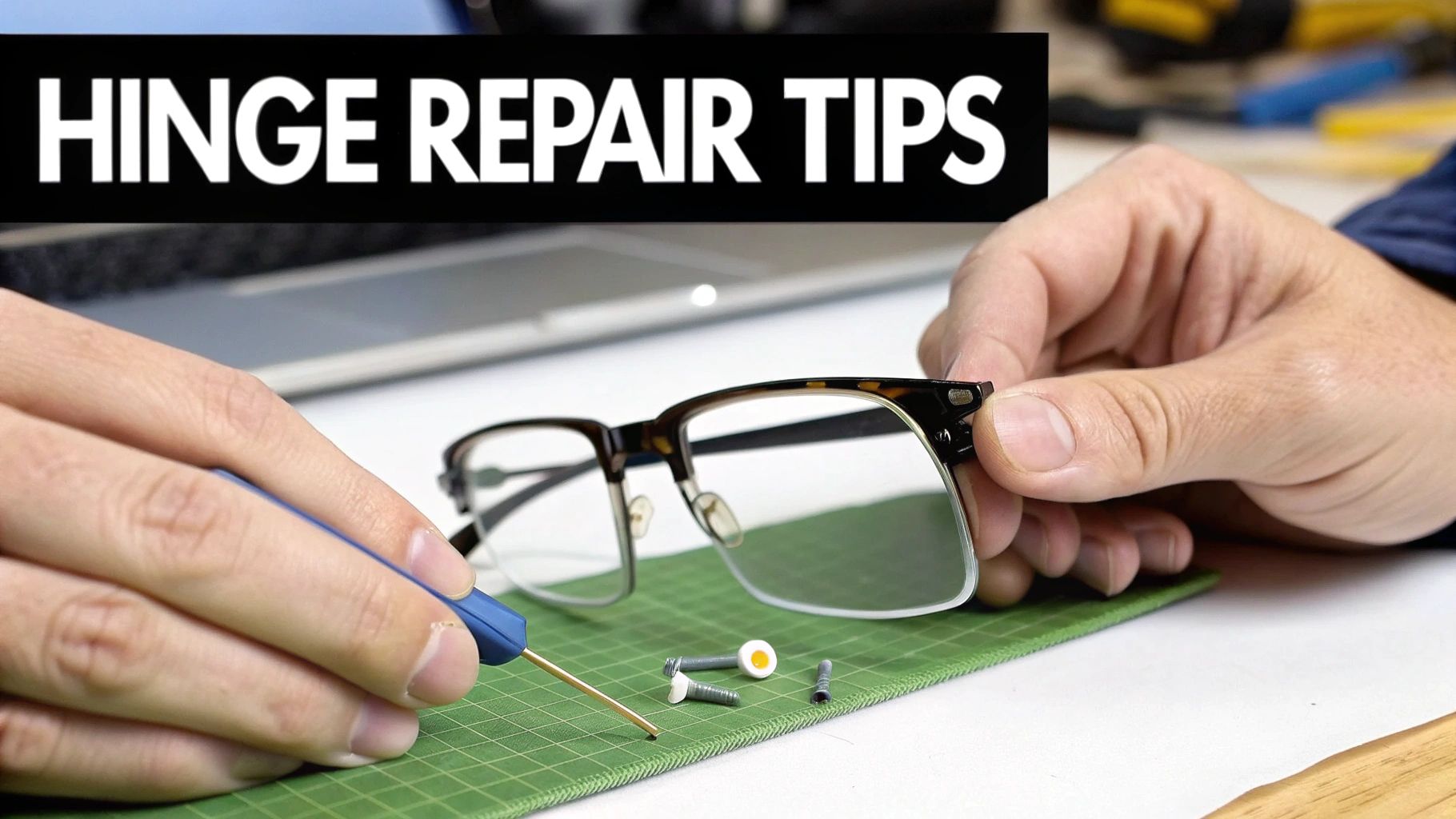
Before you start, it's important to realise that not all hinges are the same. You'll most likely run into either a standard barrel hinge or the more complex spring hinge. The fix for each is completely different, so figuring out which one you have is your first job.
Tackling Standard Barrel Hinges
This is the classic, no-fuss hinge found on countless frames. It's made up of a few interlocking loops held together by a tiny screw. When that screw decides to make a run for it, finding it—let alone replacing it—can feel like a mission impossible.
Here’s a practical example of a simple fix: grab a wooden toothpick. You can gently poke the tip of the toothpick up through the aligned hinge barrels from the bottom. This acts as a perfect little guide, holding everything in place while you introduce the new screw from the top. Once you feel the screw start to catch, just pull the toothpick out and tighten it up.
Sometimes the screw is fine, but the hinge plate itself has bent, causing the arm to splay outwards. For this, you’ll need padded pliers to gently grip the plate and bend it back into alignment. The key is to use minimal force and make small, gradual adjustments to avoid snapping the metal.
Focus on Eye Health and Safety: A wobbly or misaligned hinge is more than just an annoyance. It directly changes how your lenses sit in front of your eyes. That shift can throw off the optical centre of your prescription, leading to visual distortion, eye strain, and even headaches. A proper repair isn't just for comfort; it ensures your glasses work the way they're supposed to.
Understanding Spring Hinge Complexity
Spring hinges are fantastic because they give the temple arms extra flex, allowing them to bend outwards without breaking. Great feature, but it makes them a real headache to repair at home. Inside that hinge is a tiny, tightly coiled spring that needs specialised tools to safely remove and re-engage.
Trying to force a spring hinge back together without the right gear usually ends one of two ways: you’ll damage the spring, or you’ll send tiny parts flying across the room, never to be seen again. For these types of hinges, honesty is the best policy—a professional repair is almost always the safest and most effective route. Your vision is too important to risk with a botched repair.
There's a reason the professional optical industry is so vital. In Australia, the Optometry and Optical Dispensing sector is valued at around AUD 5.0 billion. This is hardly surprising when you consider that approximately 56.7% of Australians live with long-term eye conditions that need corrective eyewear. You can dig into the specifics in this market research report from ibisworld.com.
At Prescript Glasses, we know some repairs are best left to the experts. If you’re wrestling with a tricky spring hinge or any other issue, just remember that we can customize an eye wear package to suit your requirements, making sure you always have a perfectly fitting and functional pair.
Emergency Fixes for a Snapped Frame
That heart-stopping moment when your glasses snap in half can feel like a genuine disaster, especially when you can’t see a thing without them. Before you panic and grab the superglue, just take a deep breath. A clever temporary fix will get you through, protecting your vision and your frames until you can get a proper repair.
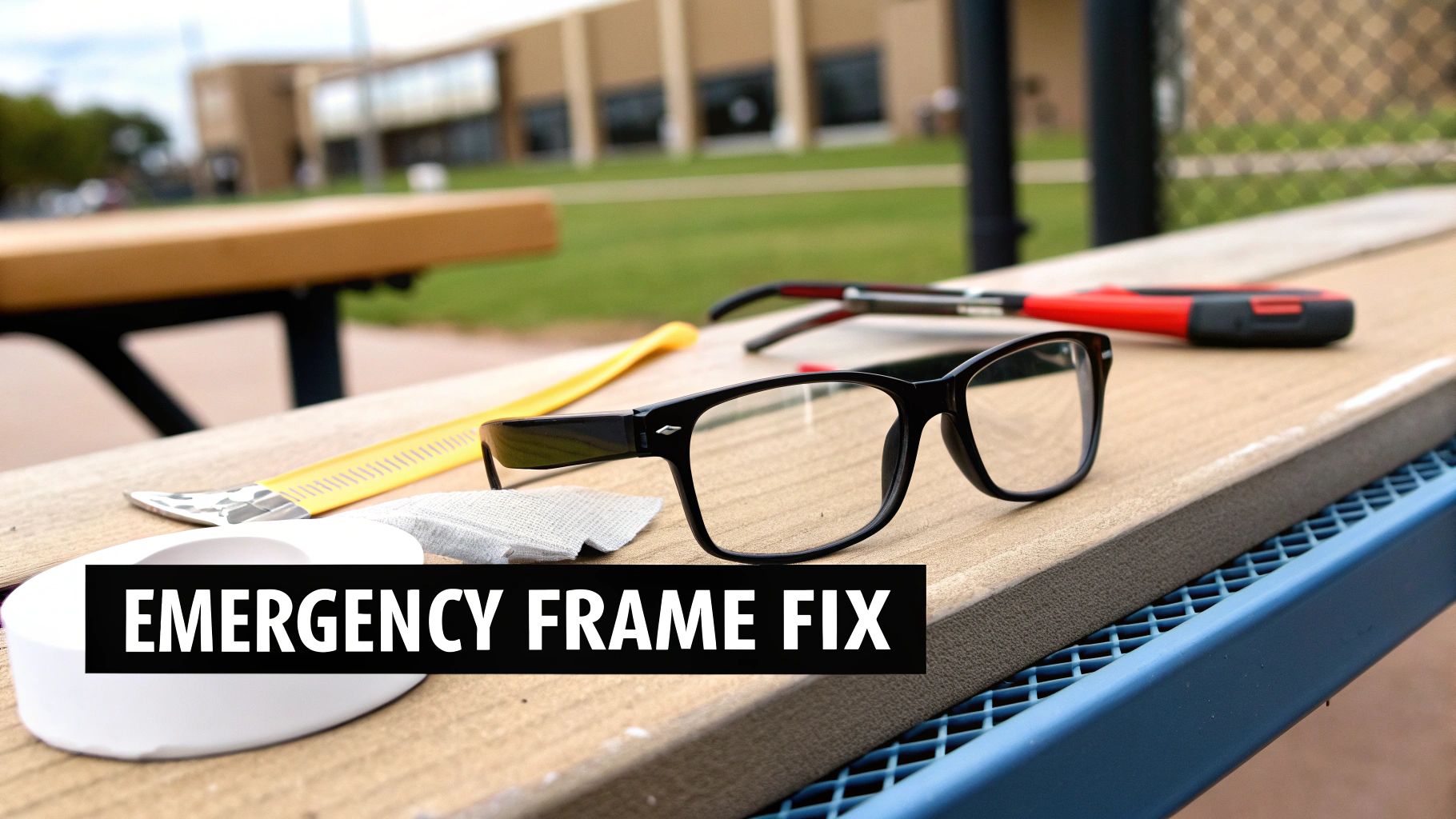
First things first, a crucial piece of advice: step away from the superglue. It seems like an obvious quick fix, but it's often the worst thing you can do. The chemicals in cyanoacrylate glues can actually eat away at the plastic or coatings on your frames. It creates a brittle bond that's guaranteed to break again, and it makes a future professional repair almost impossible.
Safer Alternatives for a Temporary Hold
Instead of glue, let's look at some practical options that won’t sabotage your frames down the line. The main goal here is to keep the lenses aligned correctly. If they're sitting crooked, you’re looking at serious eye strain, headaches, and distorted vision, which is not only uncomfortable but unsafe.
For a snapped bridge on a plastic frame, a surprisingly solid fix is heat-shrink tubing. You can grab this from any hardware store.
- Find a tube that’s just a little wider than the broken part of your frame.
- Cut a small piece and slide it over the break, like a splint. A practical example: for a break at the bridge, a 1-centimetre piece of tubing should be enough.
- Gently heat it with a hairdryer on a low setting until the tube shrinks down and clamps everything together securely.
This little trick creates a sturdy, non-damaging brace that holds your lenses exactly where they need to be. It's a much better way to fix glasses frame damage in an emergency and will hold up until you can get to an expert.
Focus on Eye Health and Safety: The most important part of any temporary repair is stability. If the lenses aren't held securely in their original positions relative to your eyes, your prescription's optical centre will be off. This forces your eyes to work harder to focus and can cause severe discomfort.
If you’re really in a bind, some strong tape can work as a last resort. Just don't use regular sticky tape; it leaves a gummy mess. Electrical tape or gaffer tape is a much better choice because it holds strong and peels off cleanly. Wrap a small piece tightly around the break, making sure the frame stays in its proper shape. It might not win any style awards, but it’s functional and, most importantly, keeps your vision clear and safe.
If these DIY fixes feel a bit much, or if the break is just too severe, it's time to call in the professionals. At Prescript Glasses, we know how vital your vision is. If your frames are beyond a simple fix, remember that we can customize an eye wear package to suit your requirements, getting you a new, perfectly fitted pair quickly.
Knowing When to See a Professional
Doing a bit of DIY on your glasses is fantastic, but a big part of getting it right is knowing when to stop. While handling minor tweaks yourself can be really satisfying, some situations definitely call for putting down the tools and heading to an expert.
Making that call protects your investment in your frames, and more importantly, your eyesight. A professional can tackle issues that are just too risky to attempt on your kitchen table.
Some repairs just aren't suited for a home fix. If you spot any damage that could mess with the integrity of your lenses, it’s time to call in a professional.
- Cracks Near the Lens: Any fracture in the frame that’s touching the lens is bad news. It can put uneven pressure on the glass, which could cause it to chip or even fall out completely. That's a serious safety risk.
- Breaks in Speciality Metals: Frames made from materials like titanium or memory-metal need specialised equipment to fix. For example, if you try bending a titanium frame at home without the right heating tools, it will almost certainly snap for good.
- Complex Spring Hinge Damage: As we've covered, those spring hinges have delicate little mechanisms inside. Trying to force them back together without the proper tools usually ends in permanent, irreparable damage.
The Value of Professional Expertise
An optometrist or a skilled optical dispenser has the right training and equipment to handle these tricky jobs safely. They can weld metal frames, replace intricate hinge components, and make sure the final repair keeps the precise alignment your prescription demands.
Poor alignment isn't just a minor annoyance—it can lead to eye strain, headaches, and blurry vision. This makes a professional repair absolutely essential for your well-being.
Focus on Eye Health and Safety: Making the right decision stops a small problem from turning into a costly full replacement. Even more importantly, it ensures your vision correction stays accurate and safe for daily wear.
The Australian eyewear market is a big deal, expected to hit around US$2.89 billion by 2025, which shows just how much we value quality frames and professional care. You can discover more insights about the Australian eyewear market on eyetalk.com.au if you're interested in the trends.
If you’re ever in doubt, it’s always better to play it safe and consult a professional. Sometimes, a severe break can also be a good opportunity to think about upgrading your lenses. For more on that, you might find our guide on replacing lenses in existing glasses frames helpful.
And if a repair just isn't on the cards, remember, we can customize an eye wear package to suit your requirements, ensuring you get a new pair that's perfect for you.
Common Questions About Fixing Glasses Frames
Even with a detailed guide in front of you, it's natural to have a few more questions pop up when you're about to perform surgery on your own specs. Let's tackle some of the most common queries we hear, giving you the clear, practical answers you need to get the job done right.
One of the biggest questions we get is about superglue. Can you just glue a snapped plastic frame back together? We strongly advise against it. Superglue creates a brittle bond that's almost guaranteed to break again under the slightest pressure. Worse yet, the chemicals can actually melt or damage the frame's material, making a future professional repair completely impossible. It’s a classic short-term fix that almost always causes permanent damage.
Another frequent issue? Frames feeling way too tight behind the ears. For plastic frames, an easy fix is to run the temple arms under warm water for about 20-30 seconds to make them pliable. You can then gently bend the arms outwards to ease the pressure. If you have metal frames, you can skip the water and just use your thumbs to carefully flex the arms outwards in small, controlled movements.
Navigating DIY Repairs Safely
The million-dollar question is whether it's actually safe to fix your glasses yourself. For simple jobs, absolutely. Things like tightening a loose screw or making a minor adjustment to the temple arms are generally fine, provided you have the right tools and a steady, gentle hand. These little tweaks are great for maintaining comfort and proper lens alignment, which is crucial for your vision.
However, major breaks are a different story. If you're dealing with a snap near the lens or damage to specialised materials like titanium, it's time to step back and call in the pros. A botched DIY repair on a serious break can easily compromise your vision, damage your lenses, and lead to a much more expensive problem. When in doubt, an expert opinion is your safest bet.
And if you spot some scratches while you're working, our guide on how to get scratches out of eyeglasses has some helpful tips.
Focus on Eye Health and Safety: The whole point of any repair is to make sure your glasses sit correctly for perfect vision. An improper fix can shift the lens position, leading to eye strain, headaches, and dizziness. Always prioritise your safety by knowing when a DIY job is smart and when it’s time to seek professional help.
It's also worth noting that frame materials are constantly evolving. Here in Australia, we're seeing huge innovations in eyewear, with a big shift towards sustainable solutions like biodegradable acetate and recycled metals. This affects not just how durable frames are, but also how they can be repaired.
At Prescript Glasses, we get it – sometimes a repair just isn't on the cards. If your frames are truly beyond saving, let us help you find the perfect new pair. We can customize an eye wear package to suit your requirements. Explore our collection at https://www.prescriptglasses.com.