How Do You Remove Scratches From Eyeglasses: Safe, Simple Fixes

That tiny scratch on your glasses is more than just an annoyance; it's a constant distraction that messes with your day. Scratched lenses scatter light, creating a kind of visual static that makes your eyes work overtime. This guide will walk you through what actually works to fix this common problem and, more importantly, what definitely doesn't, always keeping your eye health and safety as the top priority.
The Real Impact Of Scratched Eyeglasses

A fresh scratch on your eyeglasses can feel like your prescription suddenly got worse. It’s not just a cosmetic issue—it's a real barrier to clear vision that can affect your eye health and even your safety. Your eyes are forced to constantly refocus and peer around the damage, leading to some serious discomfort.
This non-stop effort to see past the imperfection can cause a bunch of problems, including:
- Persistent eye strain, especially when you're trying to focus on reading or driving. For example, a truck driver with a scratch in their line of sight might experience increased glare from headlights, making night driving more hazardous.
- Fatigue and trouble concentrating, a common complaint for anyone who spends hours looking at a screen. A practical example is a software developer who finds a scratch creates a distracting blur on their monitor, breaking their focus and reducing productivity.
- Recurring tension headaches that seem to pop up out of nowhere.
How Scratches Affect Your Vision
Even one little scratch can create visual distortions. Think of a student trying to read a textbook; they might find the words around the scratch are blurry, forcing them to tilt their head just to see properly. Over hours of study, that minor annoyance adds up to a whole lot of unnecessary strain. In the same way, a professional on a video call might notice distracting flares or halos around lights, making it harder to focus on the meeting.
Not all scratches are created equal, either. A deep gouge right in your line of sight is way more disruptive than a fine, hairline scuff near the edge of your frame. The location and severity of the scratch dictate just how much it messes with the light passing through the lens to your eye.
Understanding the different types of lenses for eyeglasses also helps you see how different coatings and materials react to damage. This problem is more common than you might think. In Australia, a huge 67% of the population might not be seeing as clearly as they should. Scratches only make things worse by distorting vision in a way that can feel like a prescription error.
This is exactly why those online "hacks" using toothpaste or baking soda are such a bad idea. They're abrasive and can easily strip away the essential coatings on your lenses, making the damage—and the risk to your eye health—even worse.
How Scratches Impact Your Vision and Eye Health
It's easy to underestimate how a small blemish can affect you. Here’s a quick breakdown of how different types of scratches can impact your vision and comfort.
| Type of Scratch | Visual Impact | Potential Eye Strain |
|---|---|---|
| Fine, Hairline Scuffs | Minor blurring or faint halos, especially around light sources. Noticeable when cleaning lenses. | Low. May cause slight distraction but usually doesn't lead to significant strain unless there are many. |
| Micro-Scratches | A "hazy" or "filmy" effect across the lens, reducing overall clarity and contrast. | Moderate. The constant low-level blur forces eyes to work harder, leading to fatigue over the day. |
| Deep Gouges | Creates a distinct blind spot or major distortion. Light scatters aggressively, causing significant glare. | High. Forces constant head tilting and refocusing, leading to headaches, severe eye strain, and fatigue. |
As you can see, even what looks like a minor issue can have a compounding effect on your eye health.
Scratches aren't just cosmetic; they are functional defects. They introduce visual noise that your brain and eyes have to filter out, increasing cognitive load and contributing directly to eye fatigue.
Ultimately, clear vision is essential for your daily safety and well-being. Whether you're driving at night and dealing with the glare from headlights or working on a detailed project, your glasses need to provide a clear, unobstructed window to the world. We can customize an eye wear package to suit your requirements, ensuring your vision stays crisp and comfortable.
Popular Scratch Removal Myths That Ruin Your Lenses
Before you even think about reaching for that tube of toothpaste or box of bicarb soda, let's talk about the popular DIY 'hacks' that do far more harm than good. A quick search for "how do you remove scratches from eyeglasses" will unleash a flood of suggestions, from car wax to glass etching cream. The fundamental problem here is that these substances are abrasive and designed for surfaces much, much tougher than your delicate lenses, posing a direct threat to your eye health.
Your eyeglass lenses, especially those with modern coatings, are precision-engineered pieces of optical technology. They aren't a car door or a kitchen countertop. Using a household abrasive on them is a guaranteed recipe for disaster.
The Toothpaste and Bicarb Soda Trap
Two of the most common myths you'll see involve using toothpaste or a bicarb soda paste to "buff out" scratches. The logic feels almost plausible—a mild abrasive should smooth the edges of the scratch, right? Unfortunately, the reality is far harsher.
The tiny grits in toothpaste and bicarb soda are way too coarse for lens coatings. Instead of fixing a scratch, they create thousands of new micro-scratches. This process strips away your anti-glare, anti-reflective, and blue light filtering layers, leaving you with a permanent cloudy mess that simply can't be fixed.
Attempting to repair a scratch with an abrasive household product is like trying to fix a chip in a crystal vase with sandpaper. You don't remove the damage; you just destroy the entire surface, compromising your eye health and safety.
Imagine a graphic designer trying to fix their lenses with a bicarb paste right before a big deadline. They follow the online instructions, only to find their vision is now hopelessly blurry and their glasses are unusable. The very 'fix' they tried has rendered their expensive glasses worthless.
This issue is surprisingly widespread. A 2022 Vision Australia survey found that 45% of Australian glasses wearers report that scratches impact their daily tasks. The temptation to try a quick fix is understandable, but the results are consistently poor. Research shows that toothpaste damages 85% of lens coatings, and corrosive etching creams are destructive to 100% of plastic lenses. The verdict is clear: these DIY methods fail spectacularly. You can read detailed eyewear insights from professionals on why these methods just don't work.
Other Dangerous DIY Methods To Avoid
Beyond toothpaste and bicarb, other hazardous 'solutions' often do the rounds online. It's crucial to steer clear of these as well.
- Car Wax or Furniture Polish: These products are made to temporarily fill scratches on hard surfaces. On lenses, they just leave a greasy, vision-distorting film that's a nightmare to remove and can damage coatings. For example, a driver using car wax on their lenses would find that oncoming headlights create a dangerous, smeared glare.
- Glass Etching Cream: This is literally an acid-based product designed to permanently etch glass. Using it on your plastic or polycarbonate lenses will chemically melt and destroy the surface instantly, posing a severe safety risk if any residue comes into contact with your eyes.
- Rubbing Alcohol or Ammonia-Based Cleaners: While not used for buffing, these harsh chemicals are often wrongly suggested for cleaning. They will strip protective coatings, leaving your lenses vulnerable and cloudy.
These methods don't repair scratches; they destroy the technology that helps you see clearly and protects your eyes from strain and harmful light. When your vision is at stake, the only safe path is to avoid these myths entirely. If scratches are compromising your vision, we can customize an eye wear package to suit your requirements, ensuring you see the world clearly and safely.
Temporary Fixes You Can Safely Try On Minor Scratches
Let's be realistic: most scratches on your glasses are there for good. But for those incredibly fine, surface-level scuffs, you can sometimes hide them temporarily. It's crucial to understand this isn't a permanent repair. Think of it like applying concealer to a tiny blemish on your skin – it hides the issue for a while but doesn't make it vanish forever.
This trick absolutely won't work on deep gouges you can feel with your fingernail. But for those barely-there scuffs that only catch the light in a certain way, a temporary fix can be a lifesaver. It’s a handy little secret to have up your sleeve before a big video call, a wedding, or a job interview where you want to look sharp and distraction-free.
Using a Wax-Based Filler for a Quick Fix
To temporarily fill in a minor scratch, you’ll need a non-abrasive, wax-based product. You can often find these in dedicated lens or eyeglass repair kits. Whatever you do, steer clear of car wax or furniture polish. These products are loaded with chemicals that can strip away delicate lens coatings and leave a greasy film that just makes your vision worse.
The process is straightforward but demands a gentle touch to keep your eyes and lenses safe.
-
Start with a Spotless Surface: First things first, make sure your lenses are perfectly clean. Grab a proper lens spray and a clean microfibre cloth to wipe away any dust, smudges, or oils. If you apply filler to a dirty lens, you’ll just trap the grime inside the scratch, making it even more obvious.
-
Apply a Tiny Amount: Next, put a tiny, pinhead-sized amount of the wax filler right on the scratch. If you use too much, you’ll end up with a smudgy mess that’s a nightmare to buff out and can distort what you see.
-
Buff Gently: With a clean, dry part of your microfibre cloth, gently buff the wax into the scratch using small, circular motions. The idea is to fill the tiny groove without smearing the product all over the rest of the lens. Keep buffing until the excess is gone and the lens looks clear again.
This method works by filling the shallow abrasion, allowing light to pass through more smoothly and reducing the visible distortion. The effect is short-lived and will likely wear off the next time you properly clean your lenses, but it's perfect in a pinch. While glasses need a delicate touch, understanding some general DIY tips for removing scratches from other surfaces can give you a bit of background on how different materials react to polishing.
Remember, this is a cosmetic illusion, not a structural repair. It doesn't restore any damaged anti-glare or UV coatings. The lens is still compromised, so continue to handle your glasses with care.
This temporary fix gives you a clear, practical way to deal with a common annoyance without falling for the dangerous DIY myths we've already debunked. When you're dealing with a minor scuff and just need a quick visual touch-up, this is a safe method that protects your lenses from further harm.
For anything more serious, a professional solution is always the right call. And if you're just plain tired of dealing with scratches, we can customize an eye wear package to suit your requirements, getting you into a pair of durable, high-quality lenses from the start.
Knowing When To Seek Professional Lens Replacement
While it’s tempting to try and buff out every little mark on your glasses, there comes a point where a home remedy does more harm than good. Knowing the difference between a minor scuff you can live with and damage that needs a professional is key to protecting your eye health.
Here’s a simple rule of thumb I always share: gently run your fingernail over the mark. Can you feel it catch? If you can, that scratch is too deep for any DIY fix.
Another clear sign is when a scratch is sitting directly in your line of sight. Any attempt to "polish" it will just create a larger, distorted patch on the lens, which is often far more distracting and visually disruptive than the original scratch. For these deeper, more significant scratches, the only real solution is professional lens replacement. It’s not about giving up; it’s about making the smart, safe choice for your eyesight.
Why Professional Replacement Is The Only Safe Option For Deep Scratches
Today’s lenses are far more than just curved pieces of plastic or glass; they’re sophisticated pieces of technology. They often have multiple, precisely applied coatings—for filtering blue light, reducing glare, or even adapting to sunlight.
When you try to buff out a scratch at home, you’re not just polishing the lens; you’re grinding away these essential coatings. This permanently damages the very features that protect your eyes and enhance your vision.
The most important thing to realise is this: you can't truly remove a scratch. Home remedies work by wearing down the surrounding lens material to match the depth of the scratch. This process irreparably alters your prescription and destroys any protective coatings in that area.
Opting for a professional replacement guarantees that your prescription remains accurate and all your lens coatings are perfectly intact. It’s the only way to get back to that crystal-clear vision you need. This has become an increasingly common choice for glasses wearers, too. In Australia, there was a 25% increase in lens replacement claims due to scratches between 2018 and 2023. You can read more about the financial impact of scratched lenses on Vision Direct's website.
This simple decision guide can help you figure out if a scratch is a minor issue or something that needs a new lens.
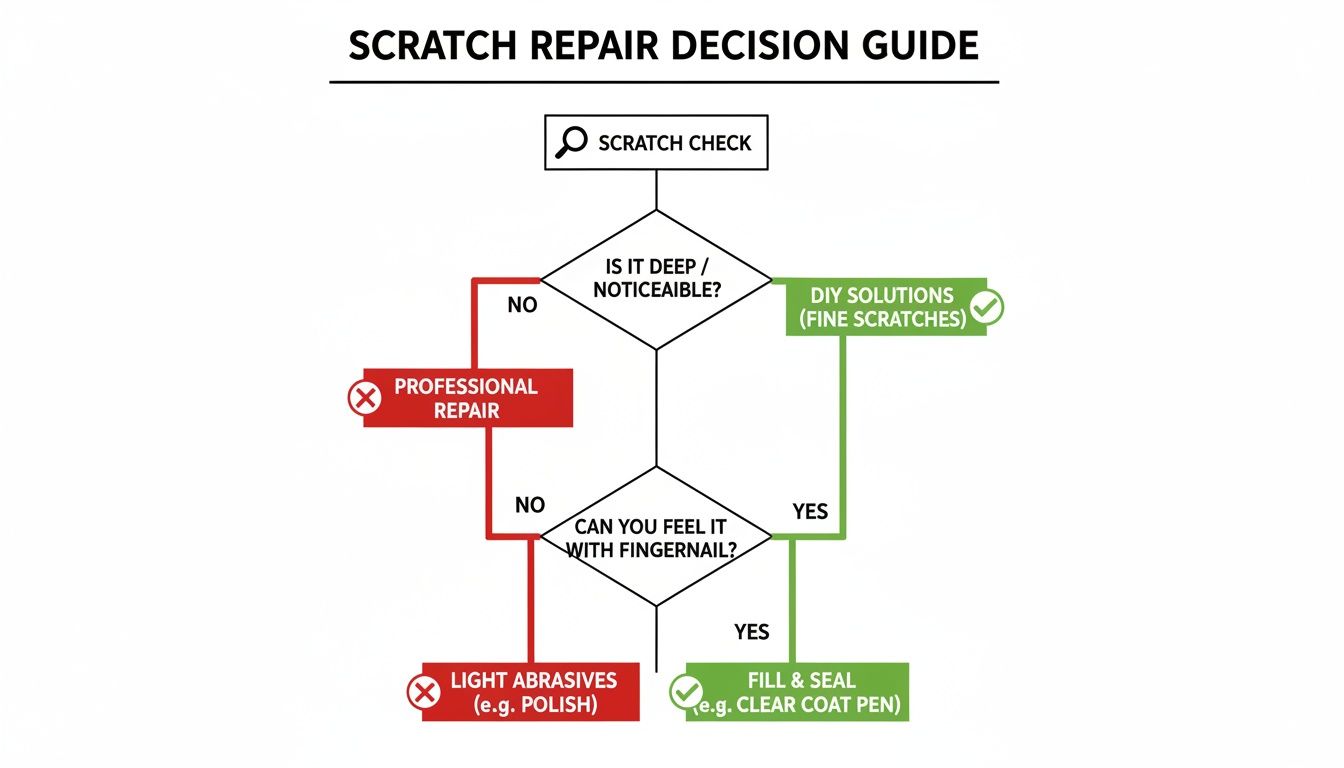
The key takeaway is straightforward: if you can feel the scratch or it’s right in your field of view, it’s time to call in the professionals.
DIY Repair vs Professional Replacement: A Cost-Benefit Analysis
When faced with a scratch, it's easy to think a quick home fix is the most sensible option. But it's worth weighing the short-term savings against the long-term risks to your vision and the value of your glasses. Here's a quick breakdown to help you decide.
| Factor | DIY Scratch Repair | Professional Lens Replacement |
|---|---|---|
| Best For | Extremely minor surface scuffs, outside of your direct line of vision. | Any scratch you can feel with a fingernail or that obstructs your vision. |
| Outcome | Can temporarily hide or minimise the appearance of a very light scratch. | Restores perfect optical clarity with a brand-new, undamaged lens. |
| Risk | High risk of permanently damaging lens coatings and distorting your prescription. | Zero risk. Ensures your vision is corrected accurately and safely. |
| Cost | Low initial cost for supplies (e.g., wax, toothpaste). | Higher upfront cost, but protects your investment in your frames. |
| Long-Term Value | Poor. Often worsens the problem or requires eventual replacement anyway. | Excellent. Restores full functionality and protects your eye health. |
Ultimately, while a DIY approach might seem like a budget-friendly fix, it often ends up being a temporary patch that can cause bigger problems. Professional replacement is an investment in clear, comfortable, and safe vision.
When you're dealing with scratches, your vision should always be the top priority. For more information, check out our guide on replacing lenses in your favourite frames. Rather than risking your eyesight with a questionable home remedy, investing in professionally crafted lenses is always the right call. We can customize an eye wear package to suit your requirements, ensuring you get high-quality lenses made to your exact prescription.
How To Prevent Scratches And Protect Your Eyewear
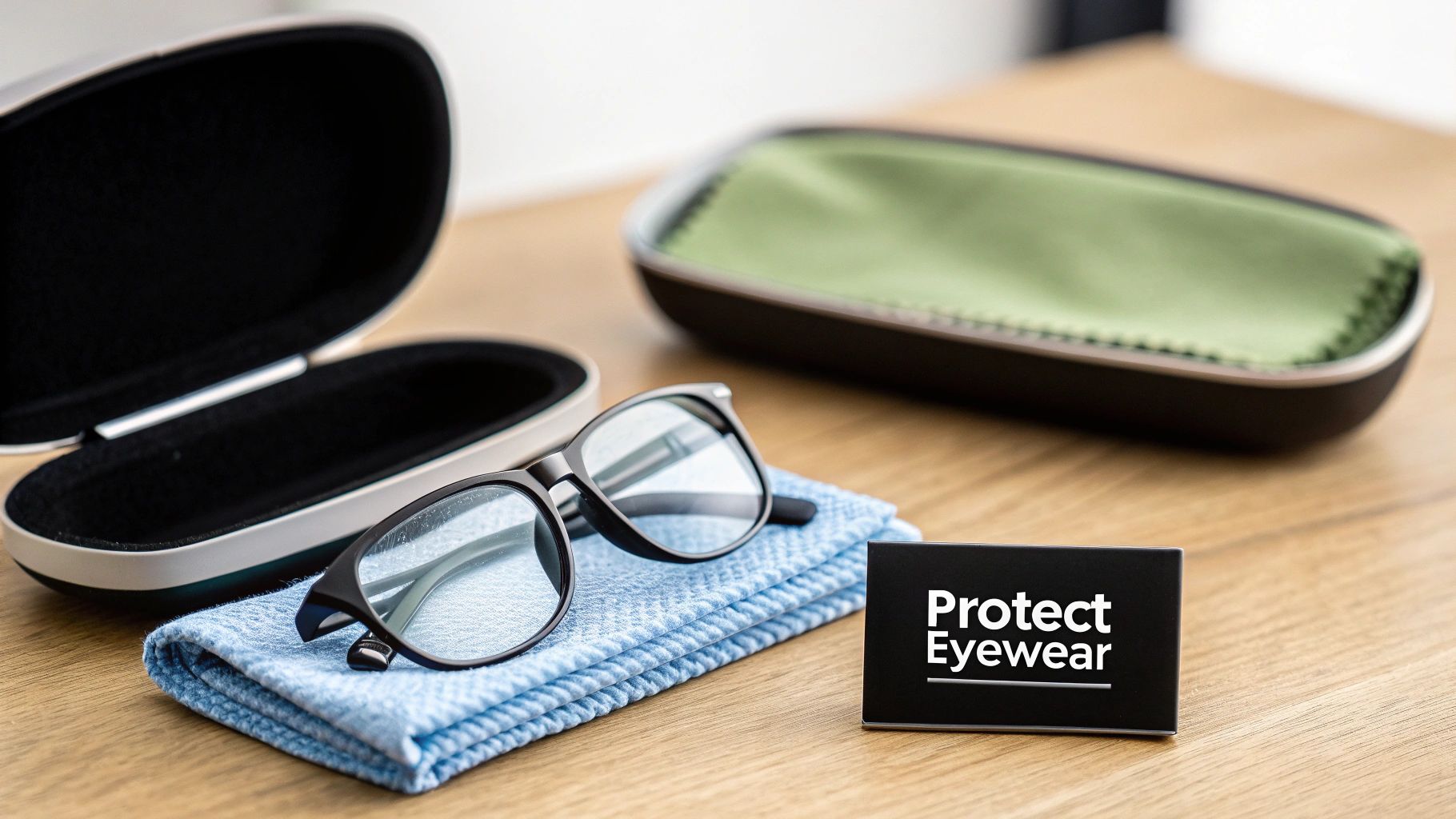
While it's handy to know how to fix a scratch, the best strategy is to stop it from happening in the first place. Let's move beyond the obvious "use your case" advice and get into the practical, real-world habits that will genuinely protect your investment. Protecting your glasses isn't just about avoiding annoying repairs; it's about keeping your vision clear and safe.
Making small adjustments to your daily routine can make a huge difference. For instance, if you're at your desk, fight the urge to place your glasses lens-down on the tabletop. It’s such a common habit but a surefire way to invite scratches. Always fold them and set them lens-up, or even better, pop them back in their case.
Build Better Habits For Lens Longevity
Your everyday environment is full of subtle threats to your eyewear. Just being more mindful of them can dramatically extend the life of your lenses and their all-important coatings.
- Mind Your Clothing: It's almost instinct to wipe away a smudge with the hem of your t-shirt, especially if you’re active. But the fibres in most clothing fabrics are surprisingly abrasive, often trapping tiny dust and grit particles that grind against the lens surface, causing a web of micro-scratches. A practical example is someone at the beach wiping sand off their sunglasses with their shirt, unknowingly creating dozens of tiny scratches.
- Keep It Clean, The Right Way: Always have a dedicated microfibre cloth on hand. Reaching for a paper towel, napkin, or tissue is a common mistake that will absolutely lead to fine scratches over time.
- Rinse Before Wiping: This is the most crucial step most people miss. Before you wipe, always rinse your glasses under a gentle stream of lukewarm water. This simple action washes away any grit that you'd otherwise scrape across the lens.
A protective case is your eyewear’s best friend. Tossing your glasses into a bag, pocket, or glove compartment unprotected is one of the fastest ways to guarantee scratches from keys, coins, and other abrasive objects.
It also helps to understand what your lenses are made of. Many modern lenses, for instance, are made from plastic composites that behave a lot like acrylic. Getting familiar with tips for safely cleaning acrylic surfaces can offer some valuable insights into caring for your glasses.
Master The Art Of Safe Cleaning
Proper cleaning is more than just getting rid of smudges—it’s a core part of preventative maintenance. A consistent, gentle technique ensures you aren’t accidentally causing the very damage you’re trying to avoid. Our guide on https://prescriptglasses.com/blogs/news/how-to-clean-glasses offers a detailed breakdown of the best practices.
Following these simple habits won't just extend the life of your lenses; it will maintain their optical clarity and ensure your vision remains unobstructed. Ultimately, protecting your eyewear is a direct investment in your long-term eye health. If your current pair is already beyond saving, we can customize an eye wear package to suit your requirements, getting you started with a fresh, durable pair.
Time for a Fresh Start? Your Custom Eyewear Solution
Look, at the end of the day, the only way to get that perfectly clear, scratch-free vision back is with a new pair of high-quality lenses. Instead of squinting through damaged glasses that mess with your vision and safety, getting a professionally crafted pair is a fresh start. It’s a simple process that puts you back in the driver's seat.
We’ve made it easy. Just upload your current prescription from a recognised eye health professional, and we can put together an eyewear package that fits your exact needs.
Lenses Built For Your Life
Choosing the right lens isn’t just about vision correction; it’s a practical decision based on what you do every day.
- For the Office Professional: If you're staring at screens for eight hours a day, durable BlueRay lenses are a must. They’re designed to filter out that harsh blue light and cut down on digital eye strain.
- For the Outdoor Enthusiast: Constantly moving between inside and outside? Adaptive Photochromic lenses are a game-changer. They automatically adjust to sunlight, giving you seamless comfort and UV protection without having to switch glasses.
Investing in professionally made lenses isn't just a quick fix for a scratch. It's a direct investment in your long-term eye health, your daily comfort, and your overall safety. We build your glasses to your exact specifications, so they work for you.
Answering Your Questions About Scratched Glasses
When you're dealing with a scratch on your glasses, a lot of questions pop up. Here are some clear, straightforward answers to the ones we hear most often, keeping your long-term eye health front and centre.
Can an Optician Just Buff Out the Scratches?
In almost all cases, the answer is a firm no. Most modern lenses aren't just simple pieces of plastic or glass; they're layered with delicate coatings for things like anti-glare, UV protection, or blue light filtering.
Trying to buff out a scratch would mean stripping away these essential layers. This doesn't just remove the scratch—it creates a huge, distorted patch on your lens that's often far more distracting than the original mark. Imagine buffing a BlueRay lens; you'd be removing the very technology that protects your eyes from screen fatigue. That’s why an optician will almost always recommend a lens replacement as the only truly safe and effective fix.
Do Scratch-Resistant Coatings Make Lenses Scratch-Proof?
It's a common misconception. A scratch-resistant coating adds a fantastic layer of durability, but it doesn't make your lenses invincible. Think of it as 'scratch-resistant,' not 'scratch-proof.'
These coatings are designed to stand up to the minor, everyday scuffs you might get from careful cleaning or small bumps. But a hard drop onto a rough surface like concrete or asphalt can still leave a deep gouge. They offer great protection, but you still need to handle your glasses with care.
Your clear vision is fundamental to your overall eye health. Attempting risky DIY repairs on coated lenses can easily compromise their protective qualities, leading to more eye strain and discomfort down the line.
Why Do Scratches Seem So Much More Obvious on My New Glasses?
This is something a lot of people notice, especially if their new lenses have an anti-glare coating. These advanced coatings are incredible because they eliminate almost all reflections, making the lens surface crystal clear.
The upside is brilliant vision. The downside? Any tiny imperfection, whether it's a small scratch, a smudge, or a speck of dust, stands out much more. There are simply no reflections or glare to help camouflage it.
If scratches are getting in the way of your vision, it's time for a proper solution. At Prescript Glasses, we can customise an eyewear package that suits your specific needs, ensuring your vision is always clear and protected. Find your perfect pair at prescriptglasses.com.