
How to Clean Glasses for Crystal-Clear Vision

It's the first thing you reach for in the morning and the last thing you take off at night. But when was the last time you really cleaned your glasses?
For a perfect, streak-free clean every time, start with a gentle rinse under lukewarm water. This washes away any gritty dust that could scratch your lenses. Then, pop a tiny drop of lotion-free dish soap on your fingertips and lather it up on the lenses, frames, and nose pads.
Rinse everything off thoroughly and dry your specs with a clean, soft microfiber cloth. That’s it. No streaks, no smudges, just crystal-clear vision.
Why Clean Glasses Are Essential for Your Eye Health
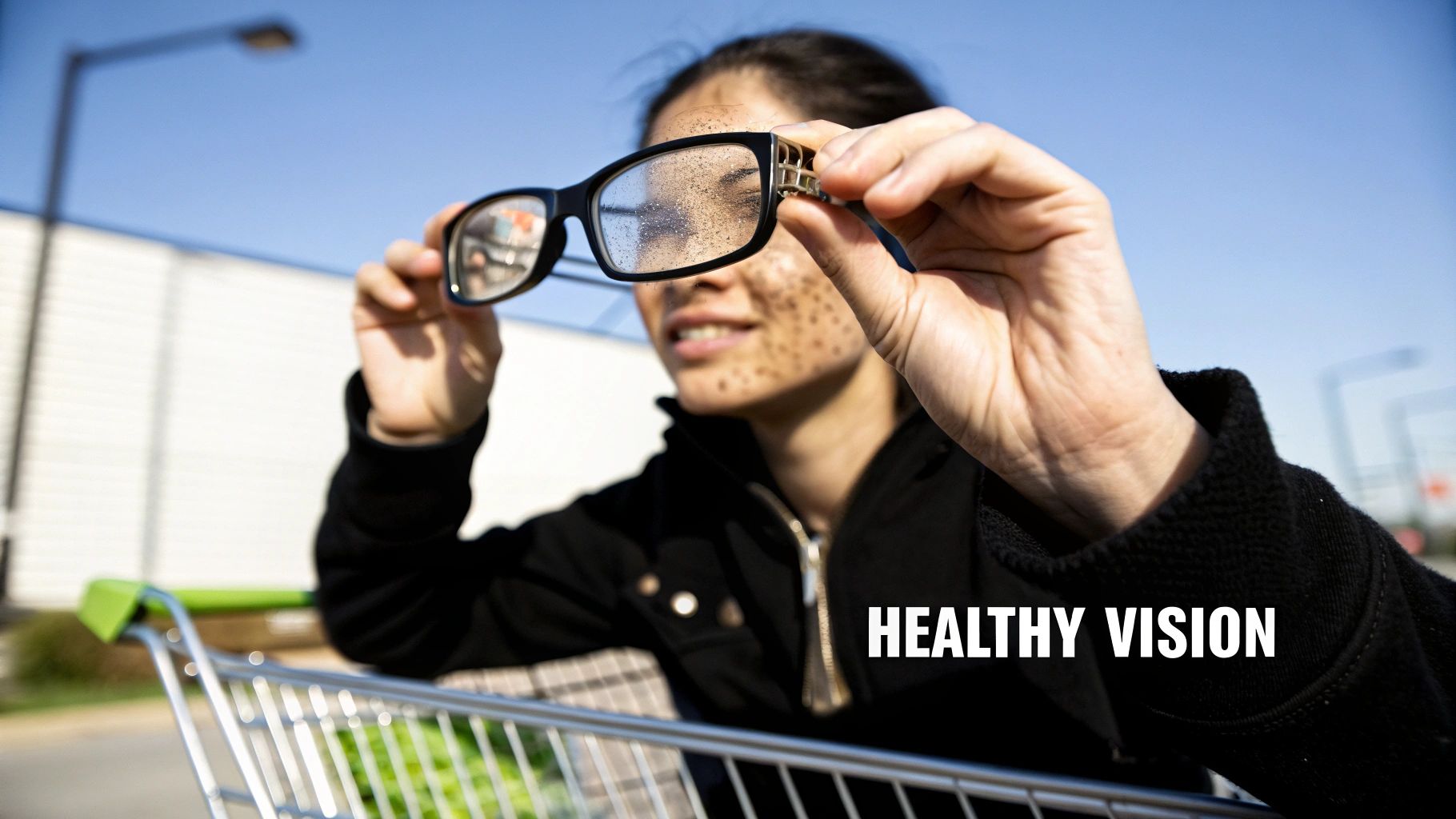
It’s so easy to write off a smudge on your glasses as just a little annoyance—something that’s just getting in the way. But the link between clean glasses and your eye health is a lot stronger than you might think. All those fingerprints, dust particles, and daily grime aren’t just blurring your view; they’re creating a perfect breeding ground for bacteria.
Suddenly, cleaning your glasses feels less like a chore and more like an essential part of your daily hygiene routine. Think about it: you touch a shopping trolley, a door handle, or a handrail on the train, and then, without a second thought, you push your glasses back up your nose. That's a direct transfer of germs to something that sits just millimetres from your eyes.
Protecting Your Vision and Your Investment
Constantly trying to peer through dirty glasses forces your eyes to work overtime, straining to see through the smudges and smears. This can easily lead to unnecessary eye strain and even nagging headaches. It’s not just about discomfort, either. The buildup of oils and debris from your skin can cause irritation, breakouts, and redness right where your frames sit on your nose and temples.
Keeping your eyewear clean is also a fundamental part of preventative eye care. In Australia, where around 66% of the population wears prescription glasses, making this a daily habit is crucial. A good quality lens cleaning spray or pre-moistened wipe can slash surface bacteria by up to 99-100%, which dramatically lowers your risk of nasty eye infections.
When you make cleaning a daily habit, you’re not just polishing a lens—you’re actively shielding your eyes from potential infections and making sure your eyewear investment lasts as long as it should.
The Long-Term Benefits of a Simple Habit
Building a consistent cleaning routine is one of the simplest things you can do to support your vision in the long run. It ensures your prescription lenses are giving you the clear, accurate correction you paid for, which is a key part of your overall well-being.
To get the most out of your eyewear, it's always a good idea to understand your prescription and know when it’s time to schedule an eye check-up. We can also put together a custom eyewear package to suit your needs, making sure you have everything you need for optimal care from day one.
Building Your Lens-Safe Cleaning Toolkit
Before we even get into the how, let's talk about the what. Nailing down the right cleaning tools is probably the single most important step you can take for the health of your glasses. The right kit prevents accidental damage, but the wrong items can permanently wreck your lenses. It’s all about being prepared so that every clean is a safe one.
Ever been tempted to use the corner of your t-shirt or a paper towel? It seems harmless, but think of those materials as being covered in tiny, abrasive fibres. To your delicate lens coatings, they're like fine sandpaper. Over time, they create a web of micro-scratches that scatter light, leading to annoying glare and blurry vision.
Your Essential Cleaning Supplies
To protect your investment in clear sight, your cleaning kit should be simple and used only for your eyewear. You really only need a few key items to get a perfect, streak-free finish every time without risking damage.
- Microfibre Cloths: Not all cloths are the same. A high-quality microfibre cloth is specifically woven to lift and trap oils and grime without scratching. It's a good idea to have a few clean ones ready to go.
- Lotion-Free Dish Soap: A single, tiny drop is all you need. The crucial part is that it must be free of lotions or moisturisers. Those additives will just smear a greasy film all over your lenses.
- Lukewarm Running Water: Temperature is key here. Hot water can actually damage lens coatings, causing them to crack or peel. This is a condition known as "crazing," and it's irreversible. Lukewarm water is gentle but still effective.
The goal isn't just to wipe away smudges; it's to lift debris off the lens surface safely. Rinsing first is non-negotiable, as it washes away gritty particles that would otherwise be ground into your lenses when you start wiping.
What to Avoid at All Costs
Knowing what not to use is just as important. So many common household items can cause irreversible damage, compromising how your glasses look and function. Stay far away from paper towels, napkins, tissues, and yes, the hem of your shirt.
You should also never reach for harsh chemical cleaners. Products loaded with ammonia, bleach, or high concentrations of alcohol will strip away the protective anti-reflective and scratch-resistant coatings right off your lenses. That kind of damage can't be buffed out or fixed.
It's also crucial to ensure your cleaning tools are spotless. You can learn how to properly care for your microfiber cloths to avoid just transferring dirt back onto your glasses. And while we're focused on lenses, don't forget the frame! Find out how to properly tighten your glasses to keep them fitting perfectly.
We know keeping your eyewear in top condition is a priority. That's why we can customize an eye wear package to suit your requirements, complete with all the essential, lens-safe supplies you'll need from day one.
The Best Daily Method for Cleaning Glasses
Forget any complicated routines you’ve heard about; the best way to clean your glasses is actually the simplest. This is the definitive, optometrist-approved daily method that protects your lenses while giving you that perfect, crystal-clear finish. It all comes down to a gentle touch and the right materials.
First things first, wash your hands thoroughly. Your fingertips carry natural oils, dirt, and even residue from hand creams that will only make smudges worse. A quick wash with soap and water ensures you’re not transferring new grime onto the very lenses you’re trying to clean.
The Wash and Rinse Process
Once your hands are clean, hold your glasses under a gentle stream of lukewarm tap water. This is a non-negotiable first step. It flushes away tiny particles of dust and debris that, if wiped while dry, would act like sandpaper and create micro-scratches on your lens coatings. Think of it as clearing the way for a safe clean.
Next, put a single, tiny drop of lotion-free dish soap on your fingertip. It’s absolutely crucial that the soap is free from moisturisers or harsh additives, as these can leave behind a greasy film that’s impossible to get rid of. Gently massage the soap onto both sides of the lenses, the nose pads, and the arms of the frame. This gentle friction lifts away stubborn oils and fingerprints without applying damaging pressure.
This simple visual guide breaks down the essential tools for a perfect clean every time.
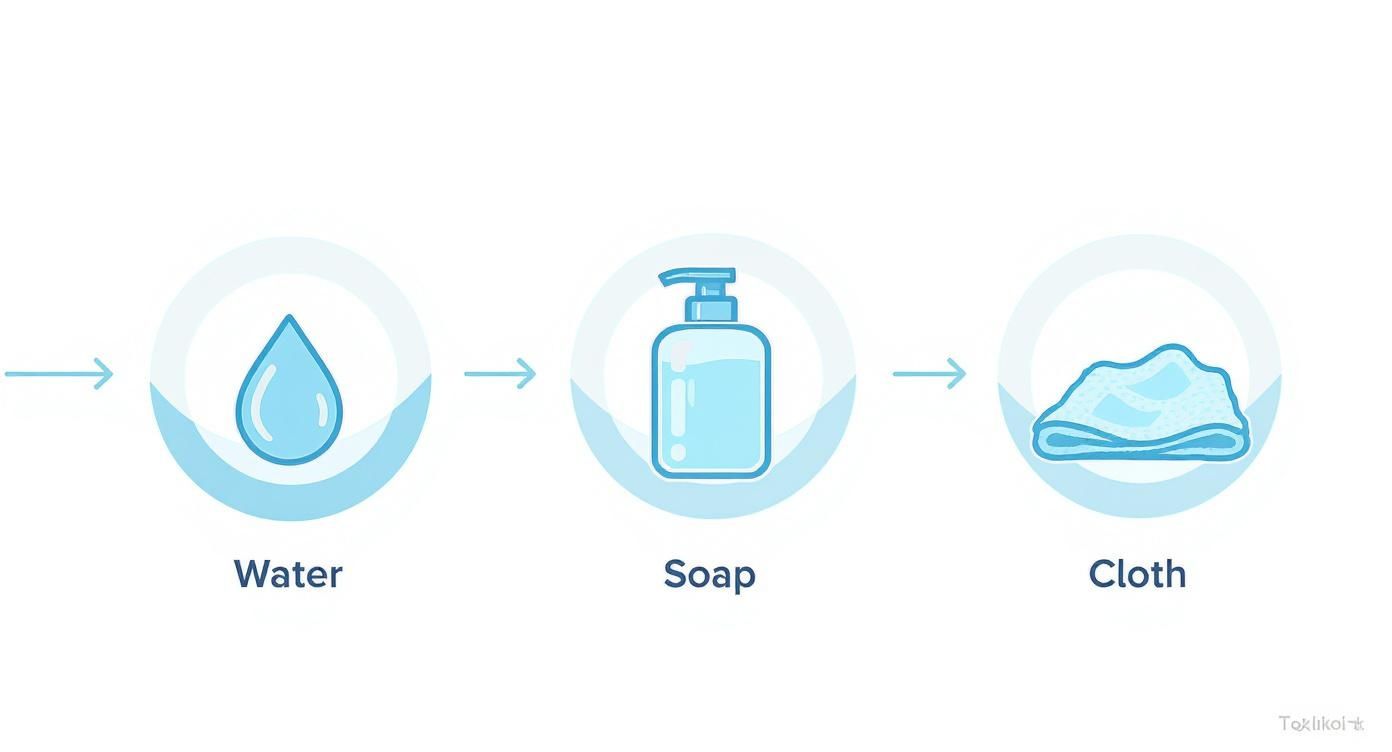
As you can see, a great clean really only relies on three simple elements: water to rinse away debris, soap to lift grime, and a dedicated cloth to dry everything safely.
After lathering, rinse your glasses thoroughly under the same stream of lukewarm water. You'll want to make sure no soap residue is left, especially around the hinges and where the lenses meet the frame, as dried soap can attract even more dirt. Give them a gentle shake to remove most of the water droplets before moving on to the final, and most important, step.
Drying for a Streak-Free Finish
Now it’s time to dry them, and the only tool for the job is a clean, dry microfibre cloth. Please, never use a paper towel, the corner of your shirt, or a tea towel. These materials might feel soft, but they have abrasive fibres that will scratch your lenses over time and often leave behind annoying lint.
Gently blot the lenses and frame dry with the microfibre cloth. To avoid accidentally bending your frames, it's a good practice to hold the side of the frame you are currently drying. Pay special attention to the metal hinges and screws, as drying these areas properly helps prevent rust and corrosion down the track.
A common mistake I see is people applying too much pressure while wiping. Let the cloth do the work. A clean microfibre cloth is designed to absorb water and trap any remaining residue without aggressive rubbing, preserving the integrity of your lens coatings and ensuring your vision remains unobstructed.
This simple yet effective routine is the gold standard for maintaining your eyewear. A daily clean not only improves your vision but is a cornerstone of good eye health and safety. If you're looking for the perfect set of tools to get started, remember that we can customize an eye wear package to suit your requirements, ensuring you have everything you need for pristine glasses every day.
Common Cleaning Mistakes That Can Ruin Your Lenses
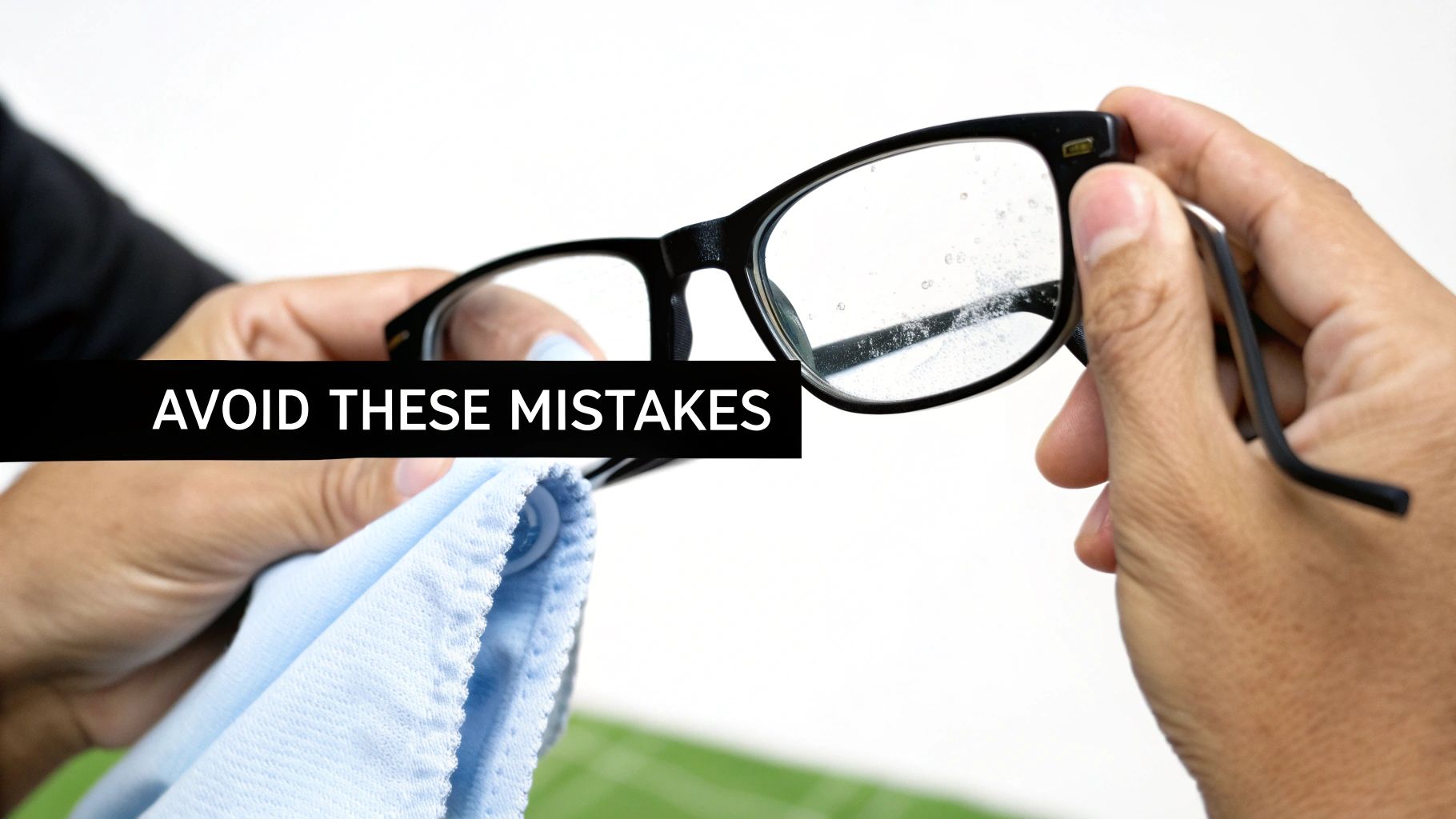
We’ve all been there. A smudge appears, and the nearest convenient cloth is the hem of our shirt. But many of us are guilty of cleaning habits that secretly do more harm than good to our glasses. Understanding these common pitfalls is the first step towards protecting your eyewear and making it last.
It’s about breaking those old habits. The classic ‘shirt wipe’ is probably the biggest offender. While it feels like a quick fix, your shirt, jumper, or even a tea towel traps tiny, abrasive particles of dust and debris. When you wipe your glasses, you're essentially grinding that grit right across the lens surface, creating a web of micro-scratches over time.
The Dangers Hiding in Your Routine
Beyond using the wrong cloth, a few other common practices can cause irreversible damage. Many of these habits seem harmless at first, but they slowly degrade the quality of your lenses and their protective coatings.
Paying attention to these details can make a huge difference in the longevity and performance of your eyewear.
- Using Hot Water: The temperature of the water matters—a lot. Hot water can cause the delicate coatings on your lenses, like anti-reflective or scratch-resistant layers, to expand at a different rate than the lens itself. This leads to a ‘crazing’ effect, which looks like a network of tiny cracks and is impossible to fix.
- Reaching for Household Cleaners: Put down the Windex! Window cleaners, surface sprays, and products with ammonia, bleach, or high concentrations of alcohol are your lenses' worst enemies. These harsh chemicals are designed for tough surfaces, and they will strip away your lens coatings, leaving them foggy and permanently damaged.
- The Habit of Dry Wiping: Wiping a dirty, dry lens is another critical mistake. Without moisture to lift the grit away, you’re just dragging abrasive dust particles across the surface. This is a direct cause of the scratches that interfere with your vision.
Focus on Eye Health and Safety: Damaged lenses don't just look bad—they can cause visual distortions and increase glare, leading to eye strain. A proper cleaning routine is fundamental preventative care.
A Practical Example of What to Avoid
Let's paint a picture. You're at a café, and you notice a fingerprint smudge on your lens. Your first instinct might be to grab a paper napkin off the table. Don't do it. Paper napkins and tissues are made from wood pulp, and those fibres are far too coarse for delicate lens surfaces.
Instead, the best move is to take your glasses to the restroom, rinse them under lukewarm tap water, and gently dry them with a clean microfibre cloth you keep in your glasses case. It's a small change in habit that makes a world of difference.
Unfortunately, once damage occurs, it's very difficult—if not impossible—to repair. If you're already dealing with this issue, you can explore some tips on how to get scratches out of glasses, but prevention is always the best strategy.
Protecting your eyewear means being mindful of these small details every day. If you're ever unsure about the best products for your specific lenses, just ask. We can customize an eye wear package to suit your requirements, including all the lens-safe cleaning supplies you'll need.
Caring for Special Lenses and Coatings
Today’s lenses are packed with incredible technology, but those advanced coatings need a slightly more delicate touch when it comes to cleaning. While the old faithful method of lukewarm water and a drop of dish soap still works wonders, there’s less room for error with these specialised layers.
Getting the cleaning process right is crucial for protecting the features you paid for. Taking just a minute to understand what your specific lenses need will ensure they keep performing at their best, giving you that perfectly clear vision day in and day out.
Anti-Reflective and Blue Light Lenses
If you have an anti-reflective (AR) coating, you know how amazing it is for cutting down glare from oncoming headlights or your computer screen. The one small trade-off? They seem to be magnets for fingerprints and smudges. Because there are no reflections to hide them, every single streak stands out.
This is why a quick daily clean is pretty much essential to keep your view crisp.
Blue light filtering lenses often come with an AR coating to boost their performance, so the same rules apply. For both types, you absolutely have to avoid abrasive cloths and harsh chemicals. They can literally strip away those delicate layers. Stick with a gentle touch and a clean microfibre cloth—it’s your best defence.
Photochromic and Polarised Lenses
Photochromic lenses, the ones that cleverly darken in the sun, work because of a chemical reaction to UV light. That technology can be degraded by harsh chemicals or extreme heat, which can slow down or even stop their ability to transition.
A practical example of what to avoid is leaving your photochromic glasses on the dashboard of your car on a hot summer day. That prolonged, intense heat can permanently cook the light-reactive properties, leaving them stuck in a semi-darkened state. For safe cleaning solutions, this guide on understanding pH neutral cleaners is a great resource for finding products that won't harm delicate surfaces.
Polarised sunnies are fantastic for slicing through intense glare, especially off water or wet roads. The polarising film is usually sandwiched inside the lens, which makes it fairly tough. Still, things like saltwater and sunscreen can be corrosive. After a day at the beach, give them a good rinse with fresh water as soon as you can.
Focus on Eye Health and Safety: Looking after these coatings is about more than just keeping your glasses looking good. A damaged anti-reflective layer can actually create new sources of glare. Even worse, compromised UV protection in sunglasses can leave your eyes exposed to harmful radiation, which has real consequences for your long-term eye health.
This is especially true here in Australia, where about 49.5% of the population wears glasses or contacts. With nearly 64% of Aussies reaching for sunnies in the summer, daily cleaning becomes a vital part of eye safety, clearing away the sweat, dust, and grime that can degrade your lenses.
Ultimately, your advanced lenses are an investment in better vision. We can customize an eye wear package to suit your requirements, making sure you get lenses perfectly suited to your life and the know-how to keep them in top condition.
Tackling Your Common Eyeglass Care Questions
Even when you have a solid cleaning routine down pat, little questions and frustrations can still pop up. Getting a handle on these common hiccups is the secret to keeping your glasses in perfect shape and your vision crystal clear. Let's get straight to the answers you're looking for.
One of the big ones we hear all the time is about alcohol wipes. Are they safe? The short answer is: it depends. While some pre-moistened lens wipes use a very diluted, lens-safe isopropyl alcohol, you should generally steer clear of multi-purpose alcohol wipes from the chemist. The high concentration of alcohol in those can be far too harsh, potentially stripping the protective coatings right off your lenses over time. Always stick to products made specifically for eyewear.
Solving Those Pesky Cleaning Puzzles
It’s incredibly frustrating when you’ve followed all the right steps, yet you’re still left with a stubborn smudge or a cleaning cloth that just seems to make things worse. Don't worry, it's usually just a small tweak to your technique or tools that will get you that perfectly clear finish.
For a particularly greasy smudge from makeup or fingerprints, your best friend is the lukewarm water and dish soap method. A tiny drop of lotion-free soap, gently lathered with your clean fingertips right on the problem spot, usually does the trick. If that smudge still refuses to budge, you might be dealing with a scratch or damage to the lens coating itself, not dirt. If you suspect this is the case, stop rubbing immediately and have your optometrist take a look.
Focus on Eye Health and Safety: A crucial part of eye safety is knowing when a blurry spot isn't just a smudge. Trying to buff out what you think is a mark could permanently damage your lens and throw off your prescription's accuracy.
Keeping Your Cleaning Tools in Top Shape
What about when your microfibre cloth seems to just spread the grime around instead of picking it up? That’s a dead giveaway that your cloth is dirty. Microfibre is amazing at trapping oils and dirt, but once it’s full, it has nowhere to put the new grime except right back onto your lenses.
The fix is simple: hand wash your cloths regularly. Just use a single drop of lotion-free dish soap, rinse them thoroughly, and let them air dry completely. The most important thing to remember is to never use fabric softener. It leaves behind a waxy film that will smear all over your glasses, defeating the whole purpose. For the best results, get into the habit of giving your glasses a quick clean with the dish soap method every day to remove the daily buildup, especially after coming into contact with things like sunscreen or saltwater.
At Prescript Glasses, we know that great vision is about more than just the right prescription—it’s also about having the right knowledge and tools for daily care. That’s why we can customize an eye wear package to suit your requirements, complete with high-quality lenses and all the cleaning accessories you need. Find your perfect pair and learn how to keep them pristine by visiting us at https://www.prescriptglasses.com.