How to Improve Vision Naturally and Support Healthier Eyes

Let's be clear: improving your vision naturally isn't about finding a magic bullet that lets you toss your glasses in the bin. It’s about building a foundation of consistent, science-backed habits that reduce eye strain and support long-term eye health. Think of it as a lifestyle shift for your eyes—combining smart daily choices, protective measures, and regular professional care to keep your vision comfortable and clear.
What Does 'Natural Vision Improvement' Actually Mean?
When people search for ways to improve their vision naturally, they're usually looking for actionable things they can do every day. The good news is, there are plenty. But it's vital to separate fact from fiction.
This isn't about reversing a diagnosed refractive error with eye exercises alone. Instead, it’s a proactive approach. The goal is to create the best possible environment for your eyes to function at their peak. That means cutting down on stressors like digital eye strain, giving them the nutrients they need to thrive, and protecting them from physical harm. It's preventative maintenance for one of your most precious senses.
Setting Realistic Expectations
The real aim here is to support your overall eye health. When you do that, you'll often experience greater visual comfort—less tiredness, dryness, and strain. It can even help slow the progression of certain age-related conditions. It’s about working with the vision you have and keeping it as healthy as you can, for as long as you can.
While many of us dream of perfect sight, it helps to know what that actually means. Understanding what 20/20 vision actually means provides a realistic benchmark for your eye health journey.
Of course, any good eye care plan starts with a professional. An optometrist gives you that critical baseline for your vision and overall eye health, but it seems many are skipping this crucial step.
Recent Medicare data paints a concerning picture, revealing a 15.1% drop in initial comprehensive eye exams across Australia between 2017 and 2023. This trend suggests a lot of people are missing out on early detection, which is the cornerstone of preserving vision naturally.
The Core Pillars of Natural Eye Health
To make this all manageable, we can break down natural eye care into a few core pillars. Each one plays a unique role in protecting and supporting your sight.
To simplify, here’s a quick overview of the key areas we’ll be focusing on in this guide.
Core Pillars of Natural Eye Health
| Pillar | Primary Goal | Simple Action Example |
|---|---|---|
| Daily Routines & Exercises | To reduce strain and improve focus flexibility. | Practising the 20-20-20 rule during screen time. |
| Nutrition & Supplements | To provide essential building blocks for eye tissue. | Adding leafy greens like spinach to your diet. |
| Sleep & Hydration | To allow eyes to repair and stay lubricated. | Aiming for 7-9 hours of quality sleep per night. |
| Screen Time & Ergonomics | To minimise digital eye strain and discomfort. | Positioning your monitor at arm's length. |
| Protective Eyewear | To shield eyes from UV rays and blue light. | Wearing sunglasses with 100% UV protection. |
Each of these pillars contributes to a holistic strategy. For instance, once you have your prescription from an optometrist, we can customise an eye wear package to suit your requirements—whether that’s adding blue light filters for your office glasses or creating durable prescription sunglasses for your weekend adventures.
This integrated approach, combining healthy habits with professional guidance, is the smartest and most effective way to care for your vision.
Eating for Better Eye Health and Clarity
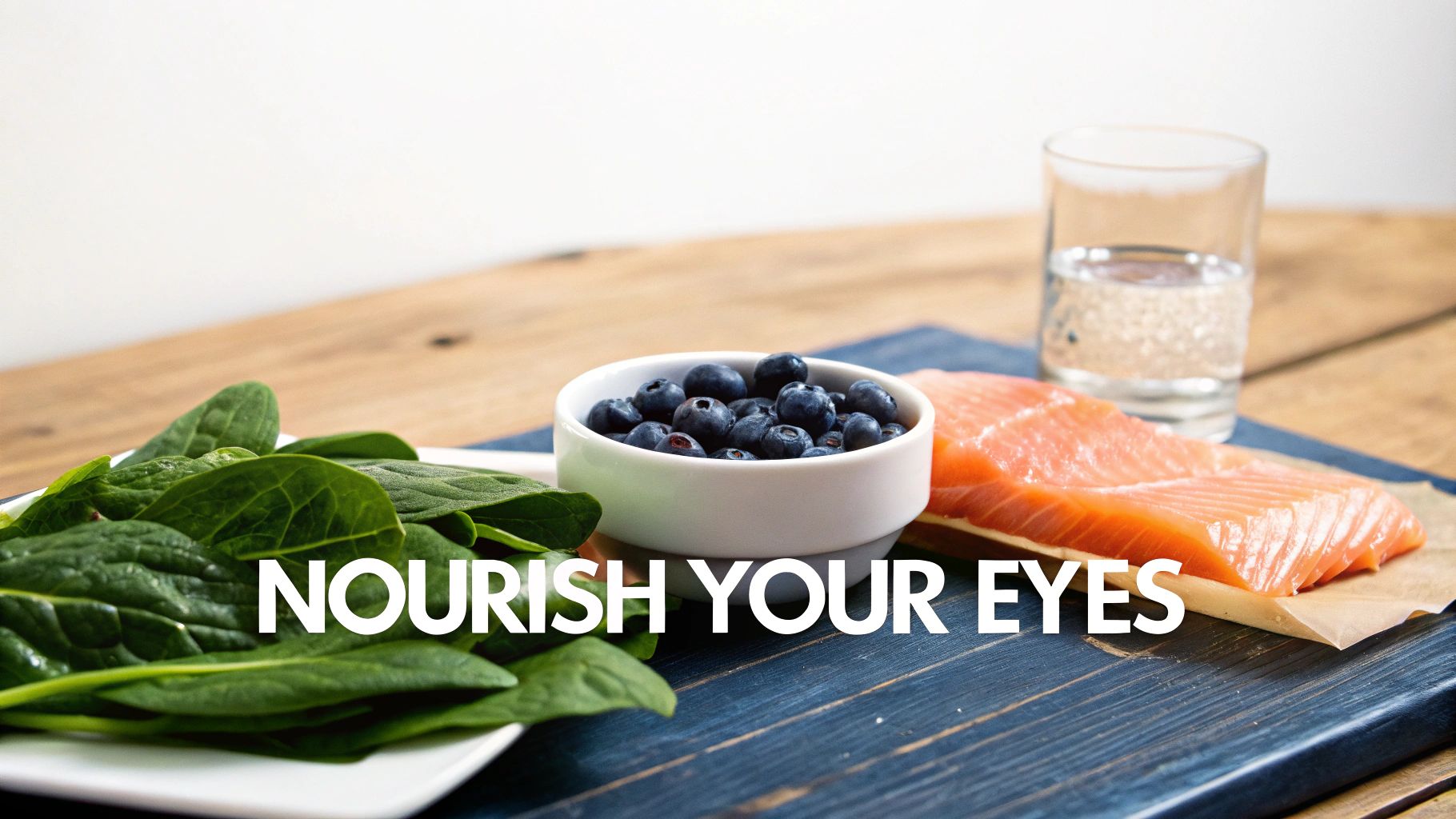
The old advice to "eat your carrots" is a good start, but it’s really just the tip of the iceberg when it comes to nutrition and your vision. What you eat is one of the most powerful tools you have for supporting long-term eye health. It provides the essential building blocks your eyes need to function at their best and defend against daily wear and tear.
When people ask how to improve vision naturally, the conversation often begins with what's on their plate. A diet packed with colourful fruits, leafy greens, and healthy fats delivers a steady stream of antioxidants and vitamins that are scientifically linked to better eye outcomes. This isn't about finding a magic bullet, but rather creating a sustainable strategy to protect your sight for years.
It's easier than you might think. For instance, a simple morning smoothie can become an antioxidant powerhouse. Just blend a handful of spinach, a cup of blueberries, and a scoop of almond butter for a potent mix of eye-friendly nutrients to kickstart your day.
The Power of Key Eye Nutrients
Certain vitamins and antioxidants are the real superstars when it comes to maintaining the delicate tissues inside your eyes. Take lutein and zeaxanthin, for example. These two crucial carotenoids act like your body's internal sunglasses, filtering out harmful high-energy blue light before it gets a chance to damage your retina.
You'll find these protective compounds in abundance in dark, leafy greens. My rule of thumb is simple: the more vibrant the green, the better it probably is for your eyes.
- Lutein & Zeaxanthin: Kale, spinach, and silverbeet are loaded with these. They concentrate in the macula, which is essential for sharp, detailed central vision.
- Vitamin C: This is a powerful antioxidant found in citrus fruits, berries, and capsicums. It helps shield your eyes from the damage caused by free radicals.
- Vitamin E: Almonds, sunflower seeds, and avocados are great sources. Vitamin E works with other antioxidants to keep your eye cells healthy.
- Zinc: Think of this mineral as a vital assistant. It helps transport Vitamin A from your liver to the retina, where it's used to produce melanin—a protective pigment. You can find it in lean red meat, poultry, and legumes.
Weaving these foods into your weekly meal plan is a practical step you can take right now. A colourful salad with spinach and capsicum, a handful of almonds for a snack, or a hearty lentil soup can make a huge difference over time.
Omega-3s for Moisture and Macular Health
Omega-3 fatty acids are another cornerstone of an eye-healthy diet. These essential fats are a major structural component of the retina itself. They also play a key role in managing inflammation and supporting the oily layer of your tear film, which is what prevents that gritty, dry-eye feeling.
Adding a serving of oily fish like salmon, mackerel, or sardines to your diet twice a week is a brilliant way to boost your omega-3 intake. This simple habit directly supports your macular health and helps combat the discomfort of dry eye, a common complaint for anyone who spends hours in front of a screen.
For those on a plant-based diet or just looking for other options, Your Ultimate Guide to Vegan Omega 3 has some invaluable insights. Great plant-based sources include flaxseeds, chia seeds, and walnuts.
Hydration: The Overlooked Hero
While we tend to focus on food, we absolutely cannot overlook hydration. Your eyes need plenty of moisture to function comfortably. Dehydration can lead directly to symptoms of dry eye, including that annoying itchiness, grittiness, and even blurred vision.
Staying properly hydrated helps maintain the delicate fluid balance within your eyes and ensures your tear glands can produce enough moisture to keep things lubricated and clear of debris. The goal should be at least eight glasses of water a day. If you find plain water a bit boring, try infusing it with lemon or cucumber for a flavour boost. It's a simple, foundational habit for natural eye care.
Creating an Eye-Friendly Digital Workspace
Let's face it, screens are a huge part of modern life. From the moment we start work to kicking back with a movie, our eyes are glued to digital displays. All that screen time puts a real strain on them, often leading to what's known as digital eye strain. The good news? You can fight back. Creating a workspace that works with your eyes, not against them, is one of the most powerful ways to reduce that daily fatigue.
This is about more than just tweaking the brightness setting. It’s about being mindful of your entire setup—from where your monitor sits to the light in your room. Making a few small, consistent changes can lead to a massive improvement in how your eyes feel, cutting down on symptoms like tiredness, headaches, and blurry vision.
A great place to start is with the physical ergonomics of your desk. How you position yourself and your screen directly impacts not just your eyes, but your neck and back too.
Optimise Your Monitor and Lighting
Your monitor should be about an arm's length away, with the top of the screen sitting at or just below your eye level. This angle encourages a slight downward gaze, which feels more natural for your eye muscles and saves your neck from craning upwards.
Next, let's talk lighting. Harsh overhead lights or glare bouncing off a nearby window are major culprits for eye strain. If you can, set up your desk so that windows are to the side of your screen, not directly in front or behind it. If you’re still battling reflections, you can find some fantastic expert solutions for reducing window glare that help create a softer, more comfortable workspace.
Finally, adjust your screen’s settings. The brightness and contrast should blend with the light in your room, not compete with it. A good rule of thumb is to hold a white piece of paper next to your monitor. If the screen looks like a light source in comparison, it’s too bright.
Master the Art of Taking Breaks
You’ve probably heard of the 20-20-20 rule. It’s simple: every 20 minutes, look at something 20 feet away for 20 seconds. The concept is easy, but actually remembering to do it during a busy day is the hard part. The trick is to build it into your routine so it becomes second nature.
- Set a recurring reminder: Use your calendar or a phone app to set a gentle, silent alarm that nudges you every 20 minutes.
- Use a physical cue: Stick a colourful sticky note on the corner of your monitor. Every time your eyes land on it, take your break.
- Find a distant focal point: Pick something outside your window—a tree, a faraway building, a sign—and make that your go-to spot for every break.
These little pauses give your eye muscles a chance to relax, which is fundamental to preventing digital fatigue. If you want to dive deeper, our guide on how to reduce eye strain is packed with more tips.
Shield Your Eyes with Protective Eyewear
One of the best tools you can have is a pair of glasses designed specifically for screen use. Digital screens emit high-energy visible (HEV) light, better known as blue light. This type of light is a known contributor to eye strain and can even mess with your sleep cycle.
In Australia, a shocking 94% of vision loss among Indigenous Australians is preventable or treatable. This statistic is a powerful reminder of how important accessible interventions, like proper eyewear, are for long-term eye health. Simple tools can make a profound difference.
High-quality Blue Light Filter Lenses are engineered to block a portion of this HEV light, cutting down on the amount that reaches your retina. It’s not about blocking all blue light, but about managing your exposure, especially during those long days in front of the computer.
People who wear blue light filtering glasses often report:
- Less eye fatigue and dryness by the end of the day.
- Fewer tension headaches linked to screen time.
- Better sleep, especially when using screens in the evening.
At Prescript Glasses, we know everyone’s visual needs are different. That’s why we can customise an eye wear package to suit your requirements. Whether you need prescription lenses with our BlueRay filter for heavy computer use or our adaptive Bluecromic lenses that work both indoors and out, we can build a pair that gives you the clarity and protection you need for your digital life.
Daily Habits That Protect Your Vision
What you do every single day—well beyond your diet or screen habits—has a massive impact on your eye health. How you rest, where you spend your time, and even the air quality around you can all play a part in protecting your long-term vision.
It’s not about complicated or expensive routines. It’s about making small, conscious choices that give your body what it needs to repair and protect your eyes. Think of your vision as part of a larger system; your overall wellness is the true foundation for clear, comfortable sight.
Prioritise Quality Sleep For Eye Repair
Getting enough proper sleep is non-negotiable for healthy eyes. When you’re asleep, your eyes finally get a break from the constant focusing, blinking, and exposure to irritants. This is when they repair and rejuvenate themselves, which helps reduce issues like fatigue, twitching, and dry eye symptoms.
During sleep, your eyes are also continuously lubricated, washing away dust and other particles that build up during the day. Simply aiming for 7-9 hours of solid, uninterrupted sleep each night is one of the most powerful things you can do for your vision.
Embrace The Outdoors And Natural Light
Spending time outside does your eyes a world of good. Research suggests that exposure to natural daylight is important for healthy eye development, especially in kids, as it may help regulate how the eye grows.
Of course, with the great outdoors comes the sun. Just like you protect your skin, you absolutely must shield your eyes from harmful ultraviolet (UV) radiation. Over time, consistent UV exposure can significantly raise your risk of developing serious conditions like cataracts and macular degeneration.
This is where high-quality protective eyewear becomes essential.
- Always wear sunglasses: Look for lenses that block 100% of UVA and UVB rays.
- Consider wraparound styles: These give you much better coverage by blocking stray light from sneaking in at the sides.
- Don’t be fooled by clouds: Damaging UV rays slice right through cloud cover, so make sunglasses a habit all year round.
At Prescript Glasses, we can customise an eye wear package to suit your requirements, ensuring you have the best protection. Options like our Sunglass and adaptive Photocromic lenses provide complete UV protection so you can enjoy being outdoors without worry.
The following infographic shows just how simple it can be to set up an ergonomic workspace—another key daily habit for protecting your vision.
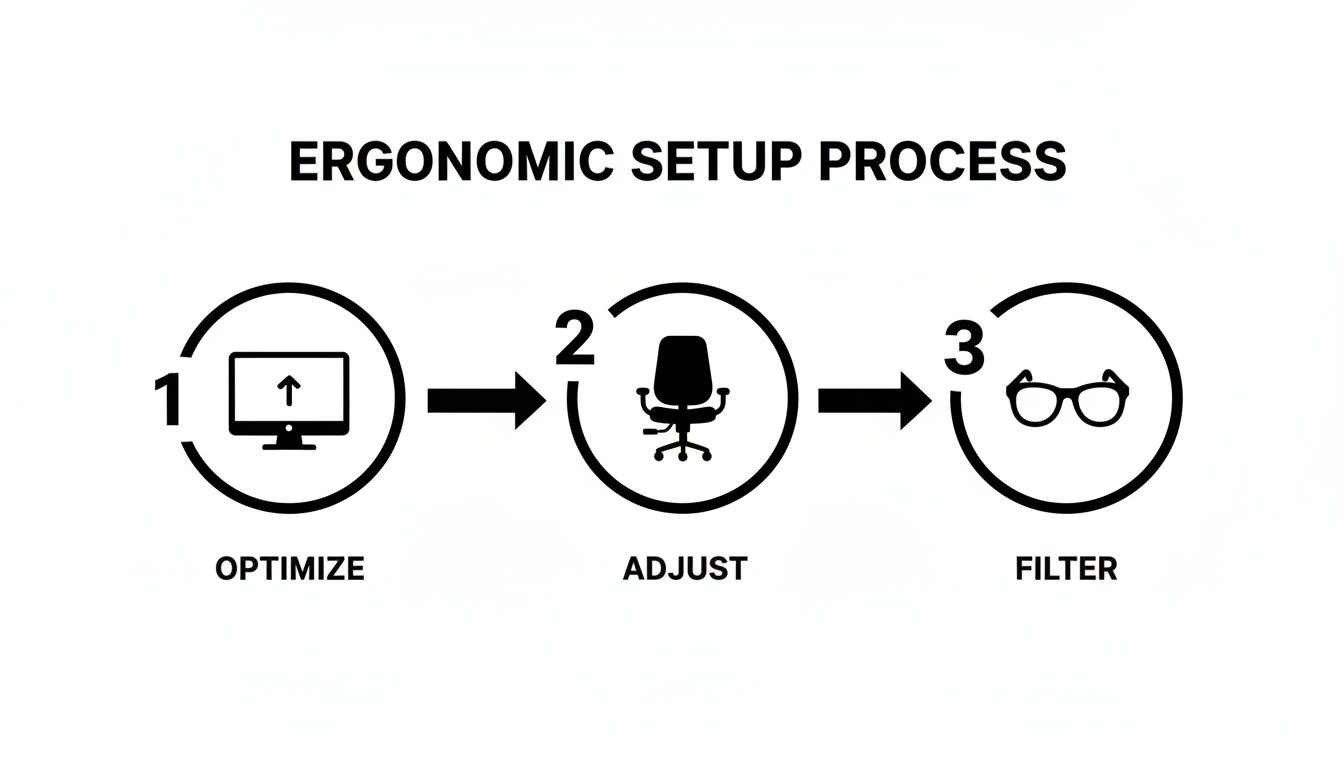
This guide walks through three critical steps—optimising your monitor, adjusting your chair, and using filtered lenses—to reduce the physical strain on both your eyes and body.
The small habits we build can either support or undermine our vision over time. Here’s a quick look at how positive daily choices stack up against negative ones.
Daily Habits for Healthier Vision
| Positive Habit | Negative Habit to Avoid | Impact on Vision |
|---|---|---|
| Getting 7-9 hours of quality sleep | Staying up late, inconsistent sleep schedules | Allows eyes to repair, lubricate, and reduce fatigue. |
| Spending time outdoors with UV protection | Forgetting sunglasses or wearing low-quality ones | Reduces risk of cataracts and macular degeneration. |
| Quitting or avoiding smoking | Smoking cigarettes or being around secondhand smoke | Lowers the risk of AMD and cataracts significantly. |
| Staying well-hydrated throughout the day | Consuming excess caffeine or sugary drinks | Helps prevent dry, irritated eyes by maintaining moisture. |
Making a conscious effort to adopt more of the "positive" habits is a practical, effective way to care for your sight every single day.
Avoid Smoking For Clearer Long-Term Vision
The connection between smoking and vision loss is undeniable. Smoking wreaks havoc on the tiny, delicate blood vessels in your eyes, dramatically increasing your odds of developing conditions that can steal your sight.
Smokers are up to four times more likely to develop age-related macular degeneration (AMD) and have a significantly higher risk of cataracts compared to non-smokers.
If you’re looking for ways to improve your vision naturally, quitting smoking is one of the single most effective steps you can take. The toxic chemicals in cigarettes accelerate oxidative stress, which directly harms the sensitive tissues in your retina and lens.
This commitment to healthier living has already created incredible change. The eye health gap for Aboriginal and Torres Strait Islander Australians was inspiringly halved in under a decade, proving that 90% of vision loss is preventable with simple measures like proper spectacles and proactive care. Initiatives detailed in the latest Save Sight Registries report show that accessible, natural interventions can make a profound and lasting difference.
Simple Eye Exercises for Relief and Focus
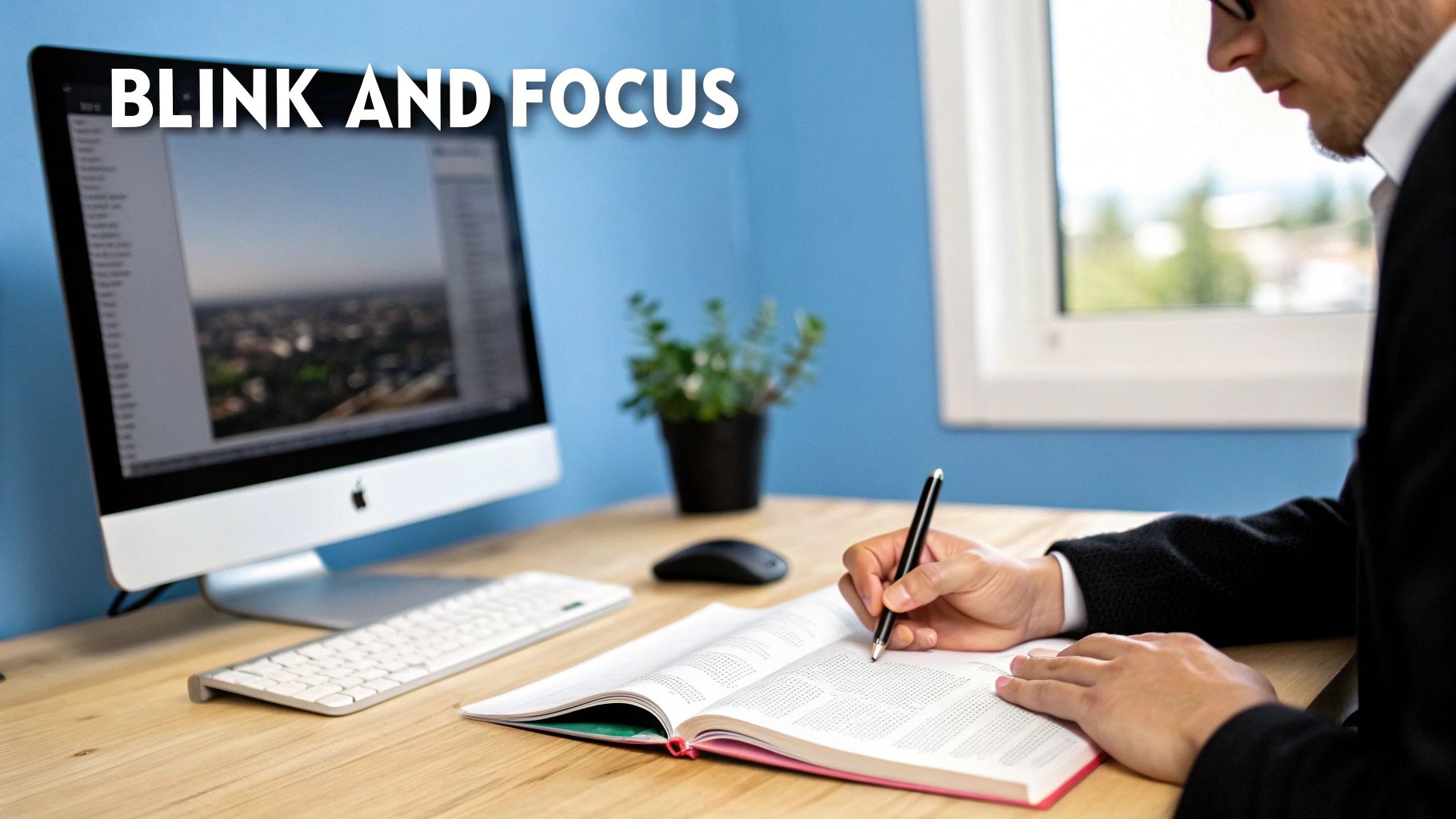
Let’s be clear from the start: eye exercises won't magically fix your prescription. What they are brilliant for, however, is managing digital eye strain and keeping your focusing muscles flexible. Think of them as a bit of yoga for your eyes—a chance to stretch and relax the muscles that work so hard all day long, especially when you're glued to a screen.
Just a few minutes of these gentle movements can bring immediate relief from that tired, achy feeling and really boost your visual comfort over time. The goal isn’t to reshape your eyeball but to strengthen its focusing system. It's a simple, practical step towards better day-to-day eye health.
Mastering Focus Shifting
One of the best things you can do for your eyes during the workday is what I call a Focus Shift. This simple technique counteracts the strain that comes from staring at a fixed, close-up object—like your laptop screen—for hours on end.
Here’s how you do it: find a small object about 25 cm away (a pen on your desk is perfect). Focus on it for 10-15 seconds. Then, shift your gaze to something at least 6 metres away—a building across the street or a tree outside your window. Hold your focus there for another 10-15 seconds, allowing your eyes to really relax into the distance.
Repeat this little sequence 5-10 times whenever your eyes feel tight. You're essentially giving the tiny ciliary muscles in your eyes a gentle workout, helping them stay flexible and avoid that 'locked-in' feeling.
Improving Motion with Figure Eights
Next up is the Figure Eight. This is another fantastic exercise for improving your eyes’ range of motion without having to move your head or strain your neck. It’s all about encouraging smooth, coordinated eye movements.
Try this:
- Imagine a huge, horizontal figure eight lying on its side about 3 metres in front of you.
- Keeping your head perfectly still, slowly trace the shape with just your eyes.
- Continue for about 30 seconds.
- Take a quick break, then reverse direction and trace it again for another 30 seconds.
This movement helps keep your eye muscles agile, which is especially useful if they feel sluggish or stiff after a long day.
Remember, the key to any exercise is consistency. Making these simple routines a part of your workday is a powerful, natural way to care for your eyes.
The Simple Power of the Blink Break
It sounds almost ridiculously simple, but consciously blinking is one of the most effective ways to combat dry, tired eyes. When we’re concentrating hard on a screen, our blink rate can drop by more than half. This means the tear film that lubricates our eyes isn't being spread properly.
The solution? A Blink Break. Every 20-30 minutes, just pause what you're doing and blink slowly and deliberately 10 times. Really focus on making it a full closure, like you’re gently lowering a curtain over your eye.
This simple act spreads a fresh layer of moisture over your cornea, clearing out debris and instantly relieving that gritty, irritated feeling. It’s a quick reset that makes a world of difference.
Combining these exercises with the right protective eyewear creates a robust defence against daily visual stress. At Prescript Glasses, we can customise an eye wear package to suit your requirements, ensuring you have the perfect tools to complement your new healthy eye habits.
Combining Natural Habits with Custom Eyewear
When it comes to looking after your eyes, the smartest move isn't choosing between natural habits or professional tools—it's about blending them together. Think of it this way: all the healthy routines in the world work best when they're backed up by eyewear that gives you the exact correction and protection you need. This integrated strategy is really the foundation of modern Eye Health and Safety.
The first step? Regular eye exams. They're non-negotiable. An optometrist does far more than just check your prescription; they assess the complete health of your eyes. This professional check-up gives you the crucial data needed to make every other decision about your vision.
Your Prescription, Your Way
Once you have your prescription, the goal is to find eyewear that fits your life like a glove. This is where a personalised approach truly shines. For instance, we can customise an eye wear package to suit your requirements, making sure your lenses are built for the specific challenges you face every day.
Here are a few real-world examples of how this works:
- For the Software Developer: Staring at multiple monitors all day? A pair of glasses with BlueRay lenses can filter out that intense, high-energy light, which helps cut down on fatigue and strain by the end of the day.
- For the Architect: If you're constantly moving between indoor client meetings and sunny outdoor site inspections, adaptive Photochromic lenses that darken in the sun are an absolute game-changer.
- For the Daily Commuter: A perfectly fitted pair of single-vision or multifocal glasses ensures everything from road signs to your dashboard is crisp and clear, making your drive that much safer.
Fusing proactive habits with tailored technology is the most practical and sustainable way to support your vision. It's about looking after your eyes with healthy choices while giving them the best possible tools to see the world clearly and comfortably.
By uploading your prescription, you can unlock a whole range of specialised options. To get a better handle on what’s available, you can explore our detailed guide on different types of prescription glasses lenses. This combination of daily wellness and expertly crafted eyewear is your most powerful path forward.
Frequently Asked Questions About Natural Eye Care
When you start looking into natural eye care, you’ll find a lot of information floating around—some of it helpful, some of it just plain wrong. It can be tough to sort fact from fiction.
Let’s tackle some of the most common questions people ask, so you can focus on what genuinely supports your long-term vision and comfort. This is all about practical answers for better Eye Health and Safety.
Can Eye Exercises Improve My Prescription?
This is probably the number one question we hear, and it’s a tricky one. The short answer is no, eye exercises won't permanently change your prescription. Conditions like nearsightedness (myopia) or astigmatism are due to the physical shape of your eye or cornea, and no amount of muscle training can alter that.
So, what are they good for? Think of eye exercises as physical therapy for tired, overworked eye muscles. They are fantastic for easing digital eye strain, improving your focusing flexibility, and making your eyes feel more comfortable after a long day staring at screens. They help your eyes work more efficiently, but they won’t get rid of your need for glasses.
What Are the Most Important Foods for Eye Health?
When people ask how to improve vision naturally, diet is a massive piece of the puzzle. You can’t go wrong with a diet loaded with powerful antioxidants that protect the delicate tissues in your eyes.
A few key players to get on your plate are:
- Lutein and Zeaxanthin: These are your eyes' internal sunglasses. You'll find them in dark leafy greens like spinach, kale, and silverbeet.
- Vitamin C: A powerhouse antioxidant found in citrus fruits, berries, and capsicums that helps fight off damage from free radicals.
- Omega-3 Fatty Acids: Think fatty fish like salmon, mackerel, and sardines. These essential fats are crucial for retinal health and can help combat dry eyes.
It's not about one 'superfood,' but rather a consistent pattern of eating a colourful, balanced diet. This provides your eyes with the steady stream of protection they need to thrive.
How Often Should I Get My Eyes Checked?
Even if your vision feels perfectly fine, a comprehensive eye exam with an optometrist every one to two years is non-negotiable for adults. Why? Because many serious, sight-threatening conditions like glaucoma often creep up without any warning signs in the early stages.
Think of it like this: a regular check-up establishes a baseline for your eye health. This allows your optometrist to catch tiny, subtle changes long before you'd ever notice them yourself. That early detection is absolutely critical for preserving your sight for years to come.
Do Blue Light Blocking Glasses Actually Work?
Yes, for many people, they absolutely do. A quality pair of blue light filtering glasses can be a game-changer for reducing the symptoms of digital eye strain. They work by blocking a portion of the high-energy visible (HEV) blue light that our digital screens pump out all day long.
The feedback is pretty consistent: users often report less eye fatigue, fewer tension headaches, and eyes that feel less dry and gritty after hours on the computer. While they won't fix an underlying prescription, they are a brilliant tool for making your screen-filled life much more comfortable.
At Prescript Glasses, we understand that everyone's visual needs are unique. After your eye exam, we can customise an eye wear package to suit your requirements, whether you need BlueRay lenses for intense screen time or durable sunglasses for outdoor protection. Start building your perfect pair at https://www.prescriptglasses.com.