How to Adjust Glasses Nose Pads for a Perfect Fit

Knowing how to adjust glasses nose pads is one of those simple skills that can completely transform your daily comfort. Often, all it takes is a gentle push with your thumbs to stop your frames from slipping. A proper fit is about more than just convenience—it ensures your lenses are correctly aligned, which is absolutely vital for clear vision and overall eye health. Prioritizing safety and making small, gentle adjustments will prevent damage to your frames and protect your vision.
Finding All-Day Comfort with the Perfect Glasses Fit

Ill-fitting glasses are more than just a minor frustration; they can genuinely impact your well-being. When your frames are constantly sliding down your nose or sitting crooked, it can lead to persistent headaches, those annoying red marks, and even skin irritation.
Even more importantly, an improper fit can compromise your vision by misaligning the optical centre of your lenses. This guide will walk you through some simple, safe instructions for adjusting your nose pads right at home. It’s a game-changer for anyone spending serious time in front of screens, from gamers needing an unobstructed view to professionals on back-to-back video calls.
Why the Right Fit Is So Important for Your Eye Health
A customised fit isn't a luxury; it's a necessity for optimal eye health. Think about these real-world scenarios:
- For Professionals: If your glasses slip during an important meeting, you might find yourself tilting your head unnaturally to see properly, leading to neck strain. A quick nose pad tweak ensures your glasses stay put, helping you maintain a professional look and better posture.
- For Gamers and Students: Intense focus demands stable vision. Frames that shift can alter how your blue light filtering lenses work, causing unnecessary eye strain during long sessions. A simple adjustment keeps that protective barrier exactly where it needs to be.
A secure fit means your prescription lenses are perfectly positioned. This gives you the sharpest vision possible and reduces the eye fatigue that comes from constantly refocusing through misaligned glass.
Here at Prescript Glasses, we know every face is unique. We can customize an eyewear package to suit your requirements, ensuring your new glasses fit perfectly from day one.
You can even explore different frame styles from the comfort of your home to find your ideal match by learning how to try glasses on virtually. Mastering a small adjustment is the final step to unlocking true, all-day comfort.
Identifying Your Nose Pad Type and Gathering Tools
Before you start twisting or pushing anything, let's figure out exactly what kind of glasses you're working with. Getting this right from the start is the difference between a quick, successful adjustment and a trip to the optician with a broken frame. A quick look is all it takes.
Most glasses out there use one of three common nose pad styles. Once you know which one you have, you'll know exactly what tools to grab and what steps to follow.
The Three Common Nose Pad Types
Have a close look at the bridge of your glasses. Each of these designs needs a slightly different approach.
- Adjustable Metal Arms: This is the most common setup you'll find, especially on metal frames. You'll see two little metal arms, each holding a small silicone or plastic pad. Their biggest advantage is that they are highly customisable, making them easy to tweak for a perfect fit.
- Screw-In Pads: You'll find these on both metal and some plastic frames. The pad is held in place by a tiny screw. If you flip the pad over, you can usually spot the small screw head securing it to the frame.
- Push-In or Snap-On Pads: This is a clean, screw-less design. The frame has a small mount, and the nose pad has a little slot that simply pushes or snaps onto it for a secure fit.
A quick word of advice: always work in a well-lit space and lay a soft microfibre cloth on your work surface. If you drop a tiny screw or even the glasses themselves, you'll avoid any heartbreaking scratches. Eye health and safety begin with protecting your eyewear.
Your Essential Toolkit for Safe Adjustments
While you can make some minor tweaks to metal arms with just your thumbs, a proper adjustment needs the right tools. Please don't reach for the pliers in your garage toolbox; household tools are too clumsy and will almost certainly scratch or damage your frames.
Here’s a quick rundown of what you should have on hand:
- Padded Needle-Nose Pliers: These are a must-have for gently gripping those metal pad arms without leaving a mark. If you don't have a padded pair, just wrap the tips of regular pliers with a bit of electrical tape or a folded piece of cloth.
- Eyeglass Repair Kit: You can find these little kits everywhere, and they're incredibly handy. They usually come with a micro-screwdriver, a few common spare screws, and sometimes a small magnifying glass. You'll definitely need this for screw-in pads.
- A Clean Microfibre Cloth: Indispensable. Use it to protect your lenses from fingerprints and smudges while you work, and to give them a good clean afterwards.
To give you a clearer picture, here's a quick reference table to match your nose pad type with the tools you'll need.
Nose Pad Types and Required Tools
| Nose Pad Type | Best For | Required Tools |
|---|---|---|
| Adjustable Metal Arms | Fine-tuning the fit for height and width | Padded needle-nose pliers (or your thumbs for small tweaks) |
| Screw-In Pads | Replacing old, discoloured, or broken pads | Eyeglass repair kit with a micro-screwdriver |
| Push-In/Snap-On Pads | Quick and easy pad replacement without tools | A firm thumbnail or a non-sharp plastic tool |
With the right tools laid out, you're ready to make those adjustments.
And remember, a good fit starts with a well-maintained frame. If your glasses feel loose in other ways, check out our guide on how to tighten your glasses. At Prescript Glasses, we know that a perfect fit is everything, and we're here to help you get it right.
How to Adjust Metal Pad Arms for a Custom Fit
Of all the different types of nose pads, metal pad arms are easily the most common and versatile. They give you a level of customisation that can completely change how your glasses feel and function day-to-day. Getting this adjustment right isn't about guesswork; it’s about using precise, gentle techniques to achieve a professional-level fit without leaving your home.
When you're learning how to adjust your glasses' nose pads, the golden rule is to make tiny, incremental changes. You don't want to over-bend the delicate metal arms, as this can weaken them over time. A patient, gentle approach always wins.
Before you start bending anything, this simple workflow will help you prepare for a safe and effective adjustment.
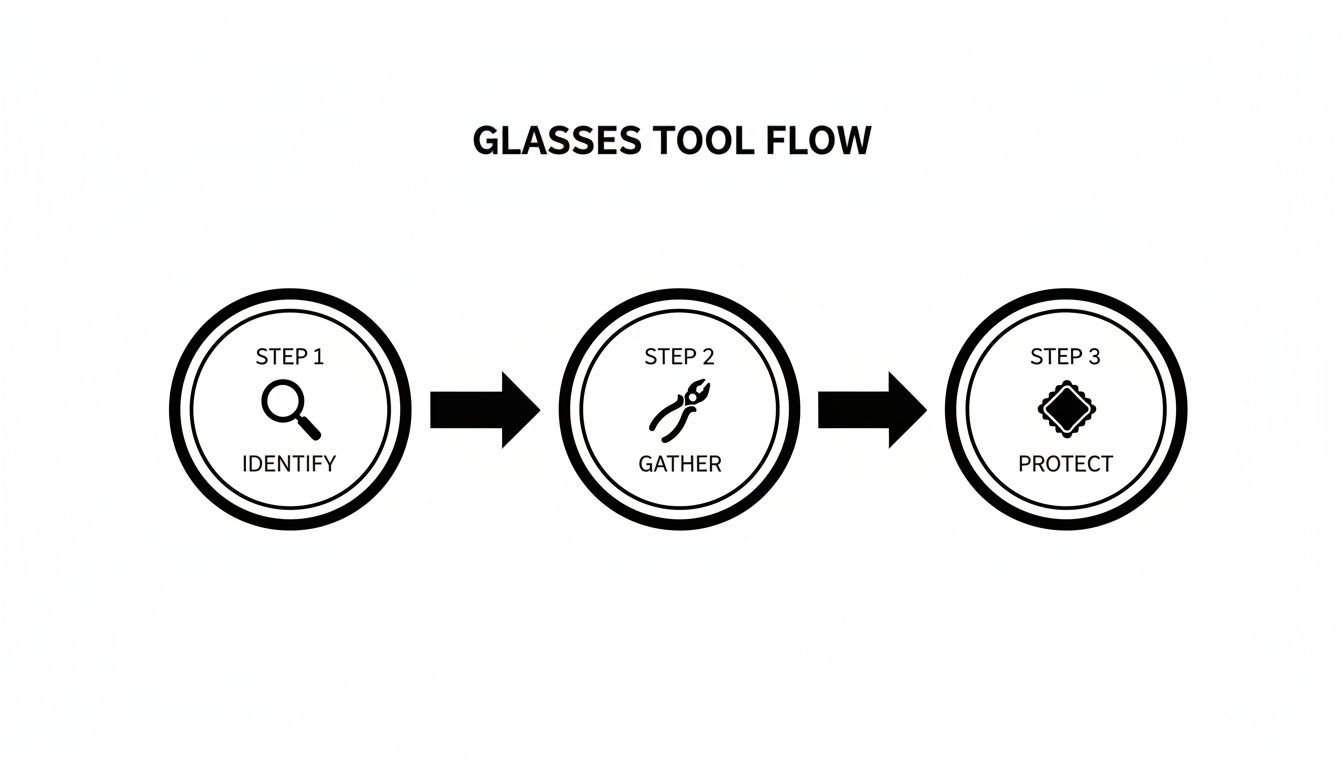
As you can see, a successful tweak starts long before you touch the frames. It’s all about identifying your needs, gathering the right tools, and protecting your eyewear.
Adjusting for Width and Slippage
By far, the most common complaint we hear is glasses constantly sliding down the nose. Nine times out of ten, this is a simple width issue. A secure fit isn’t just about comfort—it’s crucial for keeping your lenses correctly aligned for your eye health.
- If your glasses are slipping: The nose pads are probably too far apart. Use your thumbs to gently and evenly push the pads a fraction closer together. Try them on. Still slipping? Repeat with another small nudge until they sit securely without pinching.
- If your glasses are pinching: This means the pads are too close. Just do the opposite: use your thumbs to carefully push the pads outward, away from each other, just enough to relieve the pressure while keeping them snug.
A real-world example: Think about a student trying to study for exams. Having their glasses slip down every few minutes is incredibly distracting. By pushing the nose pads just 1-2 millimetres closer together, they create enough gentle friction to hold the frames firmly in place, letting them focus without interruption.
Fine-Tuning Vertical Height
Getting the height right is just as important as the width, especially if you wear multifocal lenses or have specific lens coatings. Where your frames sit on your face directly impacts how well your lenses work for you. If they're too low, you might be looking over the top of your prescription, leading to eye strain or headaches.
Remember, the ideal position is when the centre of the lens aligns perfectly with your pupil. Small adjustments here can make a massive difference in visual comfort and effectiveness.
- If your glasses sit too low: This is where padded pliers come in handy. Gently grip one pad arm right at its base and bend it slightly upwards, toward the frame. Do the exact same thing on the other side to keep them perfectly even.
- If your glasses sit too high: Grip the pad arm at its base again, but this time, carefully bend it slightly downwards, away from the frame. As always, match the adjustment on the other side.
Another practical scenario: A gamer using our BlueRay lenses needs their frames positioned perfectly to get full coverage against screen glare. If the glasses sit too low, their eyes are exposed to that harsh blue light over the top of the lens. A tiny upward tweak of the pad arms lifts the frames into the ideal spot, ensuring their eyes are protected during long sessions.
With these techniques, you can achieve a truly personalised fit. At Prescript Glasses, we know that perfect vision starts with a perfect frame. We can customize an eyewear package to suit your requirements, from frame style to the specific lens technology your lifestyle demands.
Swapping Out Screw-In and Push-In Nose Pads
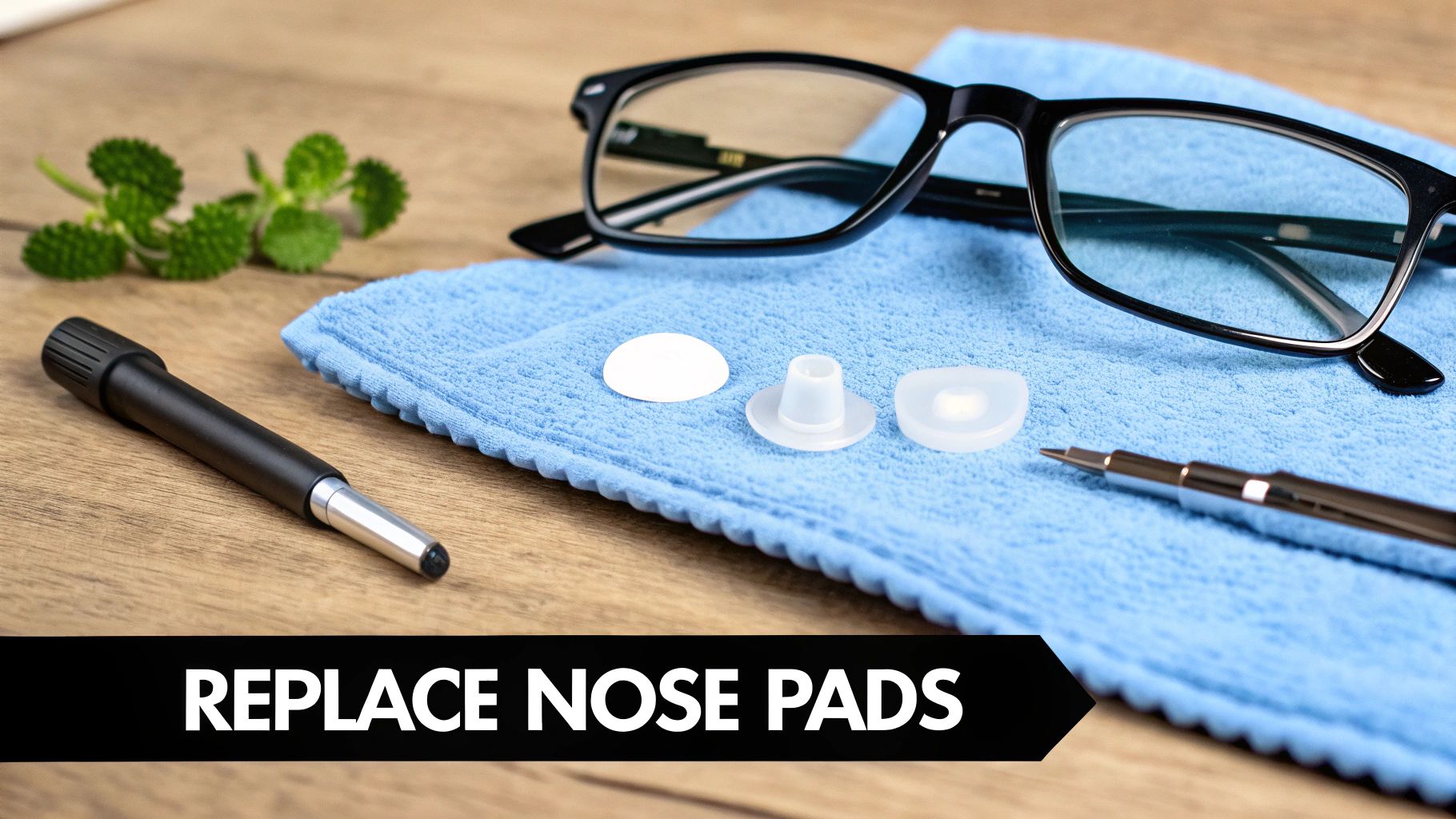
While you can’t reposition screw-in or push-in nose pads like you can with metal arms, knowing how to replace them is still a crucial skill. Over time, these little pads can get yellowed, hard, or caked with oils and makeup, which is not only uncomfortable but can lead to skin irritation. A quick swap for a fresh pair is an easy win for both comfort and hygiene.
The whole process is pretty straightforward, but you’ll want to be gentle and keep things clean to protect your eyes. Always give your hands a good wash before you start, and work over a soft surface like a microfibre cloth to avoid any accidental lens scratches.
How to Handle Screw-In Nose Pads
Screw-in pads are held on by a tiny, delicate screw, and using the right tool is non-negotiable. If you try to force it with a screwdriver that’s too big or small, you’ll strip the head in a heartbeat, turning a simple job into a real headache. This is where an eyeglass repair kit really proves its worth.
Grab the micro-screwdriver from your kit that fits the screw slot perfectly. To get the old pad off, hold your frames steady and turn the screw anti-clockwise. Take your time – these things are minuscule. Once it's loose, carefully remove it along with the old pad and pop the screw somewhere safe where it won’t roll away.
Line up the new pad, pop the screw back in, and turn it clockwise until it feels snug. Be careful not to over-tighten, as you could damage the pad mount itself.
A Quick Word of Warning: Stripping a screw can make it almost impossible to remove without taking it to a professional. If you feel any real resistance, stop. Double-check that your screwdriver is the right size. Trying to brute-force it is never the solution.
The Gentle Touch for Push-In Pads
Push-in (or snap-on) pads are even simpler because you don't need any tools at all. It’s all about a gentle ‘pop-out, snap-in’ motion. This is a super common design, which makes sense when you consider that a massive 49.5% of the Australian population wears glasses or contacts. For millions of Aussies, especially in humid climates where sweat can wear down pads faster, quick and easy maintenance is a must. You can read the full insights on trends shaping the Australian eyewear market to learn more about vision care down under.
To take the old pad off, just use your thumbnail to get under the edge and gently push it away from its mount. You should feel a little pop as it comes free.
To put the new one on, line up the slot on the pad with the mount on the frame. Then, press down firmly with your thumb until you feel it click or snap securely into place. Give it a light tug just to be sure it’s not going anywhere.
Choosing Your New Replacement Pads
The material you choose can genuinely make a difference to your daily comfort. Here are a couple of popular options:
- Soft Silicone: A crowd favourite for a reason. It offers excellent grip to stop your glasses from slipping and feels incredibly soft against the skin.
- Hypoallergenic Options: If you've got sensitive skin, materials like titanium or certain PVCs are fantastic choices to prevent any redness or irritation.
At Prescript Glasses, we know that comfort is completely personal. That's why we can customize an eyewear package to suit your requirements, making sure every single part of your glasses is perfect for you.
Troubleshooting Common Fit Issues Safely
Getting the fit right is about so much more than just comfort—it’s absolutely essential for your vision. When your glasses don't sit correctly, your lenses aren't doing their job properly, which can lead to unnecessary eye strain and headaches.
Let's walk through a few common fit problems and how you can safely solve them yourself. Knowing how to tweak your nose pads can fix most minor annoyances, but it's just as important to recognise when a problem needs a professional touch.
Solving Asymmetrical or Crooked Frames
One of the most frequent complaints is glasses sitting crooked, with one side higher than the other. You might think it's a nose pad issue, but nine times out of ten, it’s not. It’s usually because one of your ears is slightly higher than the other—which is incredibly common and perfectly normal.
The fix here involves a gentle adjustment to the temple arms (the long parts that go over your ears), not the nose pads.
- If the left lens is too high: Carefully bend the right temple arm down a tiny bit, either at the hinge or at the curve behind your ear.
- If the right lens is too high: Do the opposite. Gently bend the left temple arm downwards.
Practical example: A driver notices that the horizon looks slightly tilted when wearing their glasses. After checking in a mirror, they see the left side is higher. By gently warming the right temple arm with a hairdryer for 20-30 seconds and then bending it down slightly, they level the frames, ensuring their view of the road is accurate and safe.
When Glasses Sit Too Close or Too Far
Another classic problem is the distance of the lenses from your eyes. This can mess with your field of vision, and if they're too close, your eyelashes will constantly smudge the lenses. It's a massive annoyance.
An improperly positioned lens, especially a progressive or high-index one, can introduce visual distortions. A small nose pad adjustment can restore the intended clarity and prevent headaches.
Here’s how to get that distance just right:
- Glasses are too close (and smudging): You need to widen the nose pads. Using your thumbs, gently push the pads slightly further apart from each other. This will lift the frames off your face.
- Glasses are too far away: This is a common issue for people with a lower or narrower nose bridge. Simply bring the nose pads closer together by carefully pushing them inwards. This lets the frames sit nearer to your eyes.
Knowing When to See a Professional
DIY adjustments are fantastic for those small comfort tweaks, but you have to know your limits. Your eye health is the top priority. The Australian eyewear market is set to hit USD 5,845.0 million by 2034, with a huge demand for functional lenses. With 49.5% of Aussies in corrective eyewear, discomfort is rampant; an estimated 35% run into nose pad issues within the first month. These little fit problems actually contribute to 18% of all optometry revisits. You can learn more about the trends shaping the Australian eyewear market and see just why a perfect fit is so critical.
Attempting to fix a major issue yourself can end in disaster.
Stop what you're doing and see an optician if you notice any of these red flags:
- Visual Distortion: If your vision suddenly seems blurry, wavy, or just "off" after you've made a tweak, you’ve likely shifted the optical centre of the lens. This is a big deal for multifocal or progressive lenses. Bend it back to where it was and get professional help.
- Frame Stress: See any whitening on the plastic? Feel a metal frame getting weak or about to snap? Don't push it. You’re on the verge of causing permanent damage. For bigger issues, check out our detailed guide on how to handle more complex glasses frame repairs.
- Loose Lenses: If an adjustment makes a lens feel loose or wobbly in the frame, an optician needs to secure it properly before it falls out and gets damaged.
Here at Prescript Glasses, we are committed to your vision. We can customise an eyewear package to suit your requirements, ensuring that initial fit is as close to perfect as possible. For all the little tweaks that come later, these troubleshooting tips will keep you seeing clearly and comfortably.
Your Questions on Nose Pad Adjustments Answered
Even with the best guide in hand, a few questions can pop up when you're getting the hang of adjusting your glasses. Let's tackle some of the most common ones we hear, so you can feel totally confident tweaking your eyewear at home.
How Often Should I Adjust My Glasses Nose Pads?
There's no hard-and-fast rule here—your comfort is the best indicator. The right time to adjust is whenever you feel them pinching, notice they’re constantly sliding down your nose, or see those tell-tale red marks left behind.
It’s just a fact of life that frames loosen up a bit with daily wear. A quick fit-check every few weeks is a great habit to get into. But if you find yourself fiddling with them every single day, that's a sign of a bigger fit issue, and it's probably time to let a professional take a look.
Can I Adjust the Nose Pads on Plastic Frames?
This is a big one. Most plastic or acetate frames have a fixed, moulded bridge that’s part of the frame itself. It's not designed to be bent or repositioned.
Attempting to force an adjustment on these frames will almost certainly cause them to snap. It’s not worth the risk of permanently damaging your glasses. If your plastic frames are slipping, the go-to solution is a set of adhesive silicone nose pads. These little pads stick right onto the bridge, adding some much-needed grip and a subtle lift for a secure fit without damaging the frame.
Your glasses should feel secure but never tight. The goal is a gentle, balanced pressure that holds the frames in place, ensuring your lenses are always correctly aligned for the clearest vision possible.
What Should I Do If I Break a Nose Pad Arm?
If one of the metal nose pad arms snaps off, stop right there. This isn’t a DIY fix. Reaching for the superglue or pliers can cause way more damage and often makes a professional repair impossible down the line.
A broken pad arm is a clear signal to call in an expert. Take your glasses to a qualified optician or an eyewear repair shop. They have the proper tools, like soldering equipment, to do a safe, durable repair. Trust us on this one—superglue rarely holds under pressure and can easily melt your frame's finish.
At Prescript Glasses, we believe a perfect fit is the foundation of great vision. We can customise an eyewear package to suit your requirements, from the frame style down to the specific lens technology you need. Explore our collections and build your perfect pair today at https://www.prescriptglasses.com.