
Finding Relief with Photophobia Eye Glasses

Photophobia eye glasses are a game-changer. They’re engineered to filter out the exact wavelengths of light that trigger pain and discomfort, offering relief that standard sunnies just can't match. For anyone who finds everyday light painfully bright, these glasses are less of an accessory and more of a shield, bringing back comfort and visual clarity while prioritizing your long-term eye health and safety.
What is Photophobia and How Can Glasses Help?
Ever felt like your eyes have an alarm system that's just way too sensitive? For most people, a bright sunny day or the fluorescent lights in a supermarket are just part of the scenery. But if you have photophobia, those same light sources can feel like a full-on assault, causing squinting, headaches, and even serious pain.
It’s not a "fear" of light, but a very real hypersensitivity that can turn simple, everyday tasks into a struggle.
This isn't some rare condition, either. A surprising number of Australians deal with vision-related issues every single day. The latest stats show that a whopping 53.7% of Australians live with one or more long-term eye conditions. This paints a clear picture: there's a huge need for specialised eyewear that does more than just correct vision—it needs to protect it, too. With almost half the population already wearing glasses, the demand for smarter solutions like photophobia glasses is bigger than ever.
The Everyday Triggers of Light Sensitivity
The things that set off photophobia are lurking everywhere in our modern world. Pinpointing them is the first step toward getting some relief.
Some of the most common culprits include:
- Bright Sunlight: The raw intensity of direct sun is a major trigger for many.
- Fluorescent Lighting: Think offices, schools, and big retail stores. The flicker and harsh quality of these lights are notoriously hard on sensitive eyes.
- Digital Screens: We all know this one. The blue light blasting from our computers, phones, and tablets is a well-known cause of eye strain and sensitivity.
- LED Headlights: That sharp, blinding glare from oncoming cars at night can be particularly brutal.
When you're struggling with photophobia, it feels like the whole world has the brightness turned up too high. Specialised glasses work by filtering out the most problematic frequencies of light. They basically turn down the ‘volume’ on the light hitting your eyes, giving you comfort without plunging your world into darkness.
These aren't just sunglasses with a fancy name; they are a practical, engineered solution for light-induced pain. By blocking the specific colours of light known to fire up pain receptors in the brain, they offer a scientifically-backed way to manage your symptoms. Our own guide on glasses for light sensitivity dives even deeper into the technology behind it all.
Whether you're stuck under harsh office lights all day or just trying to enjoy a walk in the sun, the right eyewear is a crucial tool. At Prescript Glasses, we can customise an eyewear package to suit your requirements, making sure you get the perfect blend of protection and clarity you need.
The Science Connecting Light Sensitivity and Migraines
https://www.youtube.com/embed/Yux0O-ucF7c
If you've ever had a migraine, you know the feeling. The only thing you want is a dark, quiet room. This isn't just a simple preference—it's your body's way of screaming for relief. The intense link between light sensitivity and migraines is hardwired into our eyes and brain, turning what should be harmless, everyday light into a direct trigger for pain.
For a long time, this was just an unfortunate reality for migraine sufferers. But now we know why it happens. It turns out your eyes contain highly specialised cells that have a direct hotline to your brain's pain centres. This isn't about vision in the normal sense; it’s about how your brain processes specific light signals as a threat.
How Your Eyes Talk to Your Brain's Pain Centres
The main culprits here are a specific type of light-sensitive cell in your retina called intrinsically photosensitive retinal ganglion cells (ipRGCs). Think of them as hyper-vigilant security guards that are extremely sensitive to certain kinds of light, particularly blue light.
When these cells are hit with those specific light wavelengths, they release a photopigment called melanopsin. This kicks off a chain reaction, firing up parts of the brain that are directly responsible for processing pain.
This isn't just a theory. Groundbreaking research from Harvard Medical School has mapped out this exact mechanism. A pivotal 2016 study showed that white, blue, amber, and red light all cranked up headache intensity for people having a migraine. The only light that offered a bit of relief was a very narrow band of low-intensity green light.
This chart breaks down the process, showing how light travels from its source to your eye, triggering discomfort, and how specially designed glasses can step in to provide relief.
As the graphic shows, by blocking those problem light waves before they hit your eye, specialised eyewear directly intercepts the source of the pain.
Filtering the Problem Wavelengths for Relief
Getting to grips with this science is so important because it confirms that your sensitivity is a real, measurable condition—it’s not "all in your head." Even better, it gives us a clear way to manage it. The solution isn't to live in the dark, but to selectively filter out the most aggressive light wavelengths that set off your ipRGCs. This is where photophobia eye glasses come in.
Think about someone who works in an office under harsh fluorescent lights and constantly gets debilitating headaches. Those lights are packed with the blue-violet wavelengths that continuously stimulate the melanopsin pathway, leading to relentless eye strain and triggering a migraine. Wearing glasses that specifically filter this type of blue light can stop that pain signal from ever reaching the brain.
This targeted filtering is what makes photophobia glasses different from your average pair of sunnies. They are designed with your eye health and safety in mind, zeroing in on the precise light that causes pain. You can learn more about the specifics in our detailed guide on how blue light filtering glasses work.
At Prescript Glasses, we can customise an eye wear package to suit your requirements, making sure your lenses provide scientifically-backed protection that actually works for you.
Choosing the Right Lens Technology for Your Needs
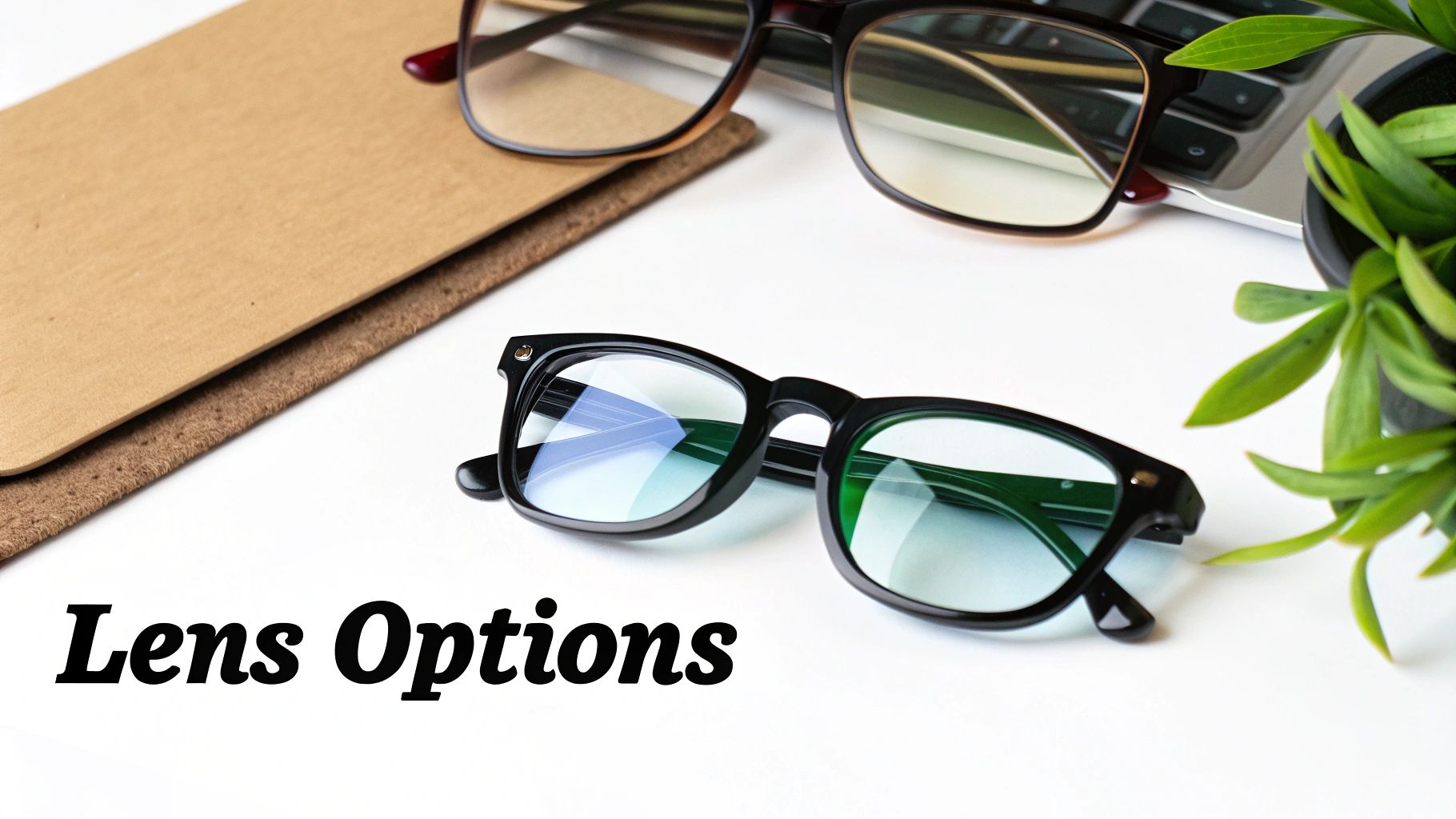
Picking the right glasses for photophobia is a bit like choosing the perfect shield. The idea is to find a lens that zeros in on your specific light sensitivity triggers, giving you relief exactly where you need it most. Getting to know the tech behind each lens type is the first step to making a smart choice that actually improves your eye comfort and safety.
After all, not all lenses are the same. Some are built to tackle the glare from digital screens, while others are designed to adapt to the bright Australian sun. Your daily routine and the places you spend most of your time will really dictate which option offers the best defence for your sensitive eyes.
Let’s break down the main players in lens technology, each offering a unique way to manage light.
Photochromic Lenses: The Smart Adapters
You've probably heard of Photochromic lenses, often called transitions. Think of them as the chameleons of the eyewear world. They’re made with special molecules that kick into gear when exposed to UV light, causing the lenses to darken automatically when you step outside and clear up again once you're back indoors.
This adaptive tech is incredibly practical for anyone who moves between different lighting conditions all day. Instead of constantly switching between your regular glasses and sunnies, one pair does all the heavy lifting. This seamless change provides consistent comfort and saves your eyes from the strain of sudden brightness.
BlueRay Lenses: The Digital Guardian
In a world filled with screens, blue light is everywhere. BlueRay lenses are specifically engineered with a filter that blocks a huge chunk of the high-energy blue-violet light beaming from our computers, smartphones, and tablets. This targeted filtering is a game-changer for reducing digital eye strain, minimising screen-related headaches, and can even help you sleep better.
An office worker spending eight hours a day staring at a monitor, for example, will find immense relief with BlueRay lenses. They act as a constant barrier, preserving eye health and focus throughout the workday.
Exploring the many blue light glasses benefits can give you a deeper understanding of how this technology helps manage light sensitivity in our modern lives.
Bluecromic Lenses: The All-In-One Solution
But what if you need protection from both the sun and your screens? That’s where Bluecromic lenses come in. They combine the best of both worlds, blending the adaptive smarts of photochromic lenses with the powerful filtering of BlueRay lenses.
This hybrid is the ultimate all-rounder. A uni student, for instance, can study on their laptop indoors with total blue light protection, then walk to their next class in the bright sun without even thinking about changing their glasses. The lenses darken on their own to provide a full sunglass tint and UV protection.
To help you decide which lens is right for you, we’ve put together a simple comparison.
Lens Technology Comparison for Photophobia Relief
This table offers a side-by-side comparison of our lens options to help you choose the best technology based on your specific needs and daily activities.
| Lens Type | Primary Benefit | Best For | Key Feature |
|---|---|---|---|
| Photochromic | Adapts to changing light | Moving between indoors and outdoors | Automatically darkens in UV light |
| BlueRay | Filters digital screen light | Heavy screen users (office, gaming) | Blocks harmful blue-violet light |
| Bluecromic | All-in-one protection | Varied daily routines | Combines photochromic & BlueRay tech |
Ultimately, the best choice really comes down to your lifestyle. By matching the right lens technology to your daily light exposure, you can find your perfect defence against photophobia.
For a more detailed breakdown, our guide to the different types of lenses for eyeglasses has you covered. No matter your needs, we can customise an eyewear package to suit your requirements, ensuring you get the best possible protection and visual comfort.
Who Can Benefit from Photophobia Glasses?
You don't need a migraine diagnosis to feel the burn of light sensitivity. The modern world, with its intense artificial lighting and screens that are always on, can be a major source of visual discomfort for almost anyone. Photophobia eye glasses are a seriously practical solution for anyone finding their day-to-day life interrupted by harsh light.
From professionals stuck in brightly lit offices to students squinting under library fluorescents, these glasses are a game-changer for comfort and focus. Let's look at a few people who'd feel the difference immediately.
The Office Professional
Picture an accountant spending eight hours a day under flickering fluorescent lights, staring intently at a bright monitor. That whole setup is a perfect storm for eye strain and headaches. This constant bombardment of intense, artificial blue light is a fast track to digital eye strain, fatigue, and a serious hit to productivity.
Here's a practical example: Sarah, a graphic designer in a busy open-plan office, used to get crippling tension headaches around 3 PM every day. The combination of glaring overhead lights and her dual monitors left her eyes feeling sandy and exhausted. After switching to glasses with BlueRay lenses, she was able to filter out those aggressive light wavelengths. The result? Her eye comfort was preserved, and she could finally focus clearly right through to the end of the day.
The Dedicated Gamer
Gaming demands absolute visual concentration, often for hours at a time. The mix of rapid on-screen action, bright flashes, and intense colours beaming from LED displays is incredibly taxing on the eyes. This kind of prolonged exposure often leads to eye fatigue, dryness, and sensitivity, which can mess with both performance and enjoyment.
For any serious gamer, protecting your eye health is just as crucial as having a good connection.
Think of it this way: proper eyewear is a vital piece of gear, just like a high-performance mouse or headset. It helps slash the visual stress, paving the way for longer, more comfortable gameplay without the nagging pain of tired eyes. This focus on eye health isn't just about comfort—it's what keeps you competitive.
The Diligent Student
We've all been there. University libraries and study halls are notorious for their harsh, cool-toned fluorescent lighting. For a student putting in countless hours reading textbooks and researching on a laptop, this kind of light makes concentration a real struggle. The last thing you need when prepping for exams is to be squinting to read or fighting off a persistent headache.
Here’s how the right eyewear can be a lifesaver for students:
- Slashes Glare: Specialised lenses cut right through the reflective glare coming off glossy textbook pages and laptop screens.
- Filters Out the Bad Stuff: They actively block the specific blue-violet light from overhead fixtures that causes the worst of the eye strain.
- Sharpens Focus: By making your eyes more comfortable, you can concentrate for longer periods without hitting that wall of fatigue.
Whether you're grinding in the office, levelling up at home, or cramming for an exam, the right lenses can bring massive relief from the light triggers in your environment. Here at Prescript Glasses, we can customise an eyewear package to suit your requirements, making sure your glasses are a perfect match for your lifestyle and visual needs.
How to Select Your Perfect Frames and Lenses
Picking the right glasses for photophobia is about more than just the lens technology. It's about creating a complete package that protects your vision and actually fits your life. The frames you choose are a huge part of this, working hand-in-hand with your lenses to create a proper shield against painful light.
When you're trying to keep light sensitivity at bay, the design of your frames is just as critical as the tint of your lenses. The real goal is to stop light from sneaking in around the edges—from the top, bottom, and sides. This is exactly why some frame styles just work better than others for your eye health and safety.
Finding Frames for Maximum Eye Health
Think of your frames as the first line of defence. For real comfort and protection, you’ll want to look at styles that offer more coverage than your standard pair. This is the secret to cutting down on the eye strain that sneaky stray light causes.
Here are a few practical frame features that make a massive difference:
- Wrap-around Styles: These frames curve to follow the shape of your face, doing a brilliant job of blocking peripheral light that makes you squint.
- Larger Lenses: It’s simple, really—bigger lenses cover more of your eye area. This gives you a much wider field of protection from overhead and ambient light.
- Top Bars or Shields: Some frames come with a bar across the top or small shields on the sides. They are fantastic for stopping light from seeping in from above.
For someone who works outdoors or drives a lot, a wrap-around frame can be a total game-changer. It doesn’t just block direct sunlight; it also slashes the distracting and painful glare that reflects off surfaces from the side, making things safer and much more comfortable.
Choosing a frame with this kind of extra coverage is how you get the full, powerhouse benefit of your specialised lenses.
Personalising Your Vision Solution
Once you’ve found the perfect frame, the next step is to make sure the lenses are matched perfectly to your vision. A precise prescription is key—not just for seeing clearly, but for reducing the kind of eye strain that can make light sensitivity even worse. Don't worry, the process is straightforward.
We know everyone’s vision is unique, which is why we’ve made it simple to get us your details. You can easily upload a current prescription from your optometrist right on our site. This ensures your new photophobia glasses are made to your exact specifications, giving you both crystal-clear vision and targeted light protection.
This personalised approach is what we're all about. We can customise an eyewear package to suit your requirements, making sure every single component—from the frame shape to the lens tech and your specific prescription—works together to bring you the best possible relief and comfort.
Practical Tips for Managing Light Sensitivity
While your photophobia eye glasses are a fantastic tool, they're just one piece of the puzzle. Think of them as your first line of defence, but building a complete strategy will give you the best relief and dramatically improve your comfort. It’s all about creating a light-smart environment that works with your eyewear, not against it, to protect your eye health.
Adjusting Your Environment
Making a few simple tweaks to your digital world can bring almost instant relief. Try switching your phone and computer to 'dark mode' to kill that harsh white glare that makes sensitive eyes work overtime. And if you spend hours staring at a screen, the 20-20-20 rule is non-negotiable for safety: every 20 minutes, look at something 20 feet away for 20 seconds.
But it’s not just about screens. Your physical space matters, too. That harsh, cool-toned fluorescent lighting in many offices? It's a major trigger. Swapping those bulbs at home for warmer, softer lighting creates a much calmer atmosphere. Dimmer switches are also a game-changer, giving you total control over the light intensity.
For those moments when light sensitivity is at its peak, or even just for getting a good night's rest, don't underestimate the power of total darkness. It's amazing how sleep masks can provide significant relief for light sensitivity and migraines.
When you step outside, don't just rely on your glasses. A wide-brimmed hat is the perfect partner. It adds a crucial layer of physical protection, blocking overhead sunlight and cutting down on the sneaky glare that can creep in around the edges of your frames.
When you combine these simple habits with the right pair of glasses, you build a powerful, multi-layered defence against light sensitivity. Remember, we can customise an eye wear package to suit your requirements, ensuring your glasses are part of a complete strategy for your comfort and safety.
Your Questions Answered: Photophobia Glasses Explained
Diving into specialised eyewear can feel a little overwhelming, so let's clear up some of the common questions we hear. We want you to feel completely confident about finding the right relief for your eyes.
Can I Get These Glasses Without a Prescription?
Yes, absolutely. While we’re experts at fitting lenses to your exact prescription, many people just need the light-filtering tech on its own. If your vision is fine without correction, you can simply order our frames with non-prescription (often called 'plano') lenses.
You’ll still get the full power of our BlueRay or Bluecromic filters, which is a fantastic option for anyone looking to dial down their light sensitivity without changing how they see the world.
How Are These Different from Regular Sunglasses?
That’s a great question, and the difference is huge. Standard sunglasses are like a dimmer switch for the whole world—they turn down all light, which is great for a sunny day outside but not so helpful indoors.
Photophobia eye glasses, on the other hand, are much more precise. They’re engineered to target and filter out the specific wavelengths of light that trigger pain and headaches, especially that harsh blue light from screens and fluorescent bulbs. Think of it like a high-tech audio equaliser. Instead of just lowering the total volume, our lenses specifically turn down the jarring, high-pitched frequencies that hurt your ears, leaving the rest of the sound clear.
Here’s a practical example: Imagine wearing dark sunglasses to cope with bright office lights. Everything becomes dim and hard to see. But with photophobia glasses, the painful glare vanishes while your surroundings stay perfectly clear and comfortable. It’s targeted relief, not just darkness.
How Long Will It Take to Get Used to Them?
For most people, the relief is instant. The moment you put them on, that sense of visual "ahhh" kicks in.
That said, giving your brain a few days to adjust is completely normal, especially if you’re not used to wearing glasses or a particular tint. It's just your brain getting acquainted with a new, more comfortable way of seeing. It’s a tiny adjustment period that paves the way for some serious long-term comfort and eye safety.
At Prescript Glasses, we know that no two pairs of eyes are the same. That’s why we can customise an eye wear package to suit your requirements, getting you the perfect mix of frames and lenses for your life.
Take a look through our collection and start your journey to comfortable vision today at https://www.prescriptglasses.com.