How to Fix Eyeglass Frames a DIY Guide

Before you even think about fixing your glasses, let’s be clear about one thing: step away from the kitchen drawer. Grabbing a pair of kitchen scissors or those rusty pliers from the garage is a surefire way to turn a simple fix into a disaster. A little preparation goes a long way, and having a dedicated repair kit is your best defence against those everyday eyewear mishaps.
Your Essential At-Home Eyeglass Repair Toolkit
Trying to muscle a tiny screw into place with the wrong tool isn’t just risky for your frames—it’s bad for your eyes. A clumsy DIY fix can easily misalign your lenses, leading to eye strain, headaches, and blurry vision. For example, if your glasses sit crooked after a bad repair, one lens might be slightly closer to your eye than the other, forcing your eyes to work harder to focus. Investing in a small, specific toolkit is a smart move that means you’re always ready for a quick, safe repair.
Most common issues, like a wobbly arm or a slightly bent frame, are totally manageable at home if you have the right gear. You don't need a professional workshop, just a handful of key items to prevent a minor annoyance from becoming a major expense.
Must-Have Tools for Frame Repairs
Having these bits and pieces on hand means you can jump on a problem the moment it happens, getting your vision back to being comfortable and clear without any drama.
- Precision Screwdriver Set: Those tiny screws in your eyeglass hinges are no match for a standard-sized screwdriver. You absolutely need a small set with both flathead and Phillips heads to tighten or replace screws without stripping them.
- Padded Needle-Nose Pliers: If you have metal frames, these are non-negotiable for making gentle adjustments. The padding on the tips prevents scratching the frame's finish, unlike regular pliers that will leave scrapes and dents behind.
- Magnifying Glass: The parts you're dealing with are incredibly small. A magnifying glass is a huge help, letting you see exactly what you’re doing to avoid fumbling and ensure the repair is spot-on.
Essential Supplies to Keep Stocked
Beyond the tools themselves, a few spare parts can be a real lifesaver. These items cost next to nothing and can be tucked away until you need them.
Focus on Eye Health and Safety: A well-organised toolkit is a safe toolkit. Keeping tiny screws, pads, and tools separate prevents them from getting lost and makes any repair job go much faster. It's a fundamental step in protecting your eyewear investment and making sure your vision isn't compromised for long.
We’ve all been there—a tiny screw drops onto the carpet and vanishes forever. To keep all your essential tools and tiny components neatly organised and easy to find, you could look into something like specialised divider storage boxes.
It’s also a great idea to have these items ready:
- Replacement Screws and Nose Pads: These are the parts that most often get lost or wear out.
- High-Quality Microfibre Cloth: You can't have too many of these. They're perfect for cleaning lenses and frames without leaving scratches.
- Hard Protective Case: The best repair is the one you never have to make. Storing your glasses in a hard case when you’re not wearing them is the easiest form of prevention.
We understand that everyone’s needs are different. We can customise an eyewear package to suit your requirements, making sure you have everything you need.
Getting to Grips with Common Eyeglass Frame Problems
Alright, you’ve got your toolkit handy. Now it’s time to tackle some of the most common headaches that come with wearing glasses every day. Learning how to handle these minor repairs yourself doesn't just save you a trip to the optician—it gives you the confidence to deal with small issues on the spot, so your vision is never compromised.
Just remember, the golden rule for any DIY frame fix is to be gentle. Whether you’re working with metal or plastic, slow and steady movements are your best friend. Trying to force a frame back into shape is the fastest way to hear that dreaded snap.
How to Adjust Bent Metal Frames
We’ve all done it—accidentally sat on our glasses or had them squashed in a bag. With metal frames, this usually results in one arm sitting higher than the other, making them feel wonky on your face. It's a classic alignment problem that can lead to some serious eye strain if you don't sort it out.
This is where your padded needle-nose pliers come in. First, wrap a microfibre cloth around the part of the frame you need to bend. This simple step is crucial for preventing scratches. Grip the bent area firmly (but not too tightly!) and apply slow, even pressure to guide it back into place. For example, if the right arm is too high, you would gently bend the left temple arm downwards at the hinge to level it out.
The key is to make tiny adjustments, then try them on. Check your work by placing the glasses on a flat table. Do both temple arms rest evenly? If not, repeat the process with just a little more pressure until they're perfectly level.
Safely Straightening Plastic Frames
Plastic frames are a different beast altogether. Try to bend them when they're cold, and they'll likely snap. The secret here is a little bit of controlled heat to make the material pliable. Your hairdryer on its lowest heat setting is the perfect tool for the job.
Hold the hairdryer about 15 centimetres away from the frame and keep it moving to warm the area evenly. After about 30 to 60 seconds, the plastic should feel flexible enough to gently mould with your thumbs. Whatever you do, never use an open flame or boiling water. That kind of intense heat will warp the frame permanently and can completely ruin your lens coatings.
Focus on Eye Health and Safety: When you're adjusting any frame, be careful not to change the position of the lenses relative to your eyes. The whole point is to restore the frame's original fit, not alter the lens orientation. Misaligned lenses can cause distorted vision, headaches, and major eye strain.
As this little diagram shows, the process is pretty straightforward once you have the right tools.
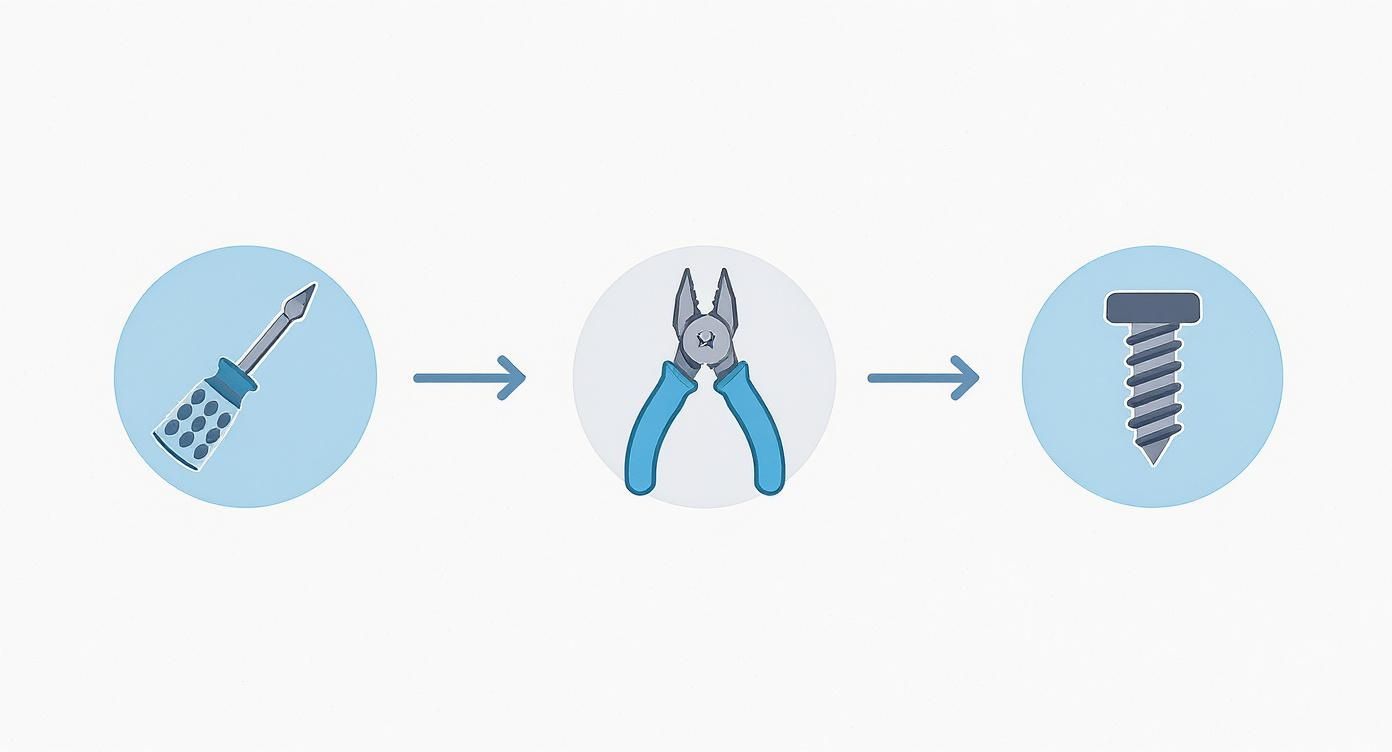
It really just boils down to having a screwdriver, pliers, and some spare screws on hand for most at-home repairs.
Managing Loose and Lost Screws
A wobbly temple arm is almost always down to one thing: a loose hinge screw. Thankfully, this is one of the easiest fixes out there. Grab your precision screwdriver and gently turn the screw clockwise until it’s snug. Just be careful not to overtighten, or you could strip the threads.
But what if the screw has vanished completely? Don’t panic. If you don't have a spare from your kit, a wooden toothpick makes for a brilliant temporary fix. Just push the sharp end into the screw hole and carefully snap it off so it sits flush with the hinge. This will hold the arm securely until you can track down a proper replacement screw.
For more serious breaks, especially on a sturdy plastic or metal frame, a reliable two-part epoxy can be a real lifesaver. This is usually a last resort for breaks that aren't on a hinge, and you'll need to apply it very carefully to keep it away from your lenses.
Here's a quick guide to help you identify the problem and figure out the best course of action.
Troubleshooting Common Eyeglass Frame Issues
| Problem | Potential Cause | Recommended DIY Action | When to See a Professional |
|---|---|---|---|
| Loose Temple Arms | Hinge screw has loosened over time. | Use a precision screwdriver to gently tighten the screw clockwise until snug. | If the screw is stripped or the hinge barrel is damaged. |
| Glasses Sit Crooked | Frame, temple, or nose pads are bent out of alignment. | For metal, use padded pliers for small adjustments. For plastic, use gentle heat from a hairdryer. | If the frame is severely bent or you can't achieve a comfortable fit. |
| Nose Pads Feel Uncomfortable | Pads are misaligned, dirty, or worn out. | Gently bend the nose pad arms to adjust the fit. Clean with soap and water. | If the nose pad arm is broken or the pads are cracked and need replacing. |
| Snapped Plastic Frame | Accidental pressure or impact. | A temporary fix might be possible with superglue or epoxy, but it's often not durable. | Almost always. A professional can often perform a stronger, cleaner repair. |
Knowing these basic fixes can be a game-changer, especially when you consider how many of us rely on glasses. In Australia, the optometry industry is valued at around AUD 5.0 billion, partly because 56.7% of Australians have long-term eye conditions. That’s a lot of people who need their glasses in good working order every single day.
At Prescript Glasses, we know that accidents happen. While these DIY tips are fantastic for minor issues, every pair of eyes and frames is different. That's why we can customise an eyewear package to suit your requirements, ensuring you always have a solution—whether it's a quick fix at home or a brand-new pair sent your way.
Smart Fixes for On-the-Go Emergencies
It’s almost a law of the universe: your glasses will break at the worst possible moment. Maybe it's right before a big presentation or while you're trying to navigate an unfamiliar city. When you’re far from your repair kit, you need a quick, safe fix that won’t make things worse. These temporary solutions are designed to get your vision back on track and get you through the day without causing more damage.
The absolute priority here is your Focus on Eye Health and Safety. A poorly done temporary fix can throw your lenses out of alignment, leading to instant eye strain, headaches, or blurry vision. Think of these as a reliable bridge to a proper, professional repair—not a permanent answer.
Creative Solutions with Everyday Items
You really don’t need a full toolkit to handle a minor eyewear crisis. More often than not, things you already have in your bag, car, or desk drawer can be cleverly repurposed to hold your glasses together until you can get them looked at properly.
Here are a couple of practical tricks for common emergencies:
- For a Popped-Out Lens: If a lens falls out but the frame itself isn't snapped, a small piece of clear sticky tape is your best friend. Carefully slot the lens back into the frame, then apply a thin strip of tape along the top and bottom edges to secure it. It’s a nearly invisible fix that will easily get you through the day.
- For a Lost Hinge Screw: When that tiny, crucial screw vanishes and an arm detaches, a simple paperclip can save the day. Straighten out the paperclip, thread it through the hinge holes where the screw used to be, and then bend the ends to lock it in place. Sure, it won't win any style awards, but it makes your glasses wearable again.
Focus on Eye Health and Safety: Just remember, these are stopgap measures. Using your glasses with a makeshift repair for too long can strain your eyes because the alignment will inevitably be a little off. Your eye health should always come first.
Clever Fixes for Loose Parts
Sometimes the problem isn't a dramatic break but a wobbly, loose component that's just plain annoying. A loose arm can be incredibly distracting, causing your glasses to sit crooked and messing with your vision.
Believe it or not, dental floss works wonders for a wobbly hinge. Just wind a small amount of floss tightly around the hinge barrel. This fills the gap and creates enough friction to temporarily tighten the arm, stopping it from swinging around. For a more detailed walkthrough on this, you can learn more about how to tighten my glasses in our dedicated guide.
These quick tricks are all about restoring basic function without risking further damage. Once you're back home, you can assess the problem more carefully. At Prescript Glasses, we know that life happens, which is why we can customise an eyewear package to suit your requirements, ensuring you're always prepared.
Preventative Care to Keep Your Frames Strong
Let's be honest, the best way to fix your glasses is to avoid breaking them in the first place. A little proactive care is a whole lot easier than dealing with an emergency repair, and a few simple habits can make a huge difference in how long your frames last. It really just comes down to building a small, consistent routine to protect your investment.
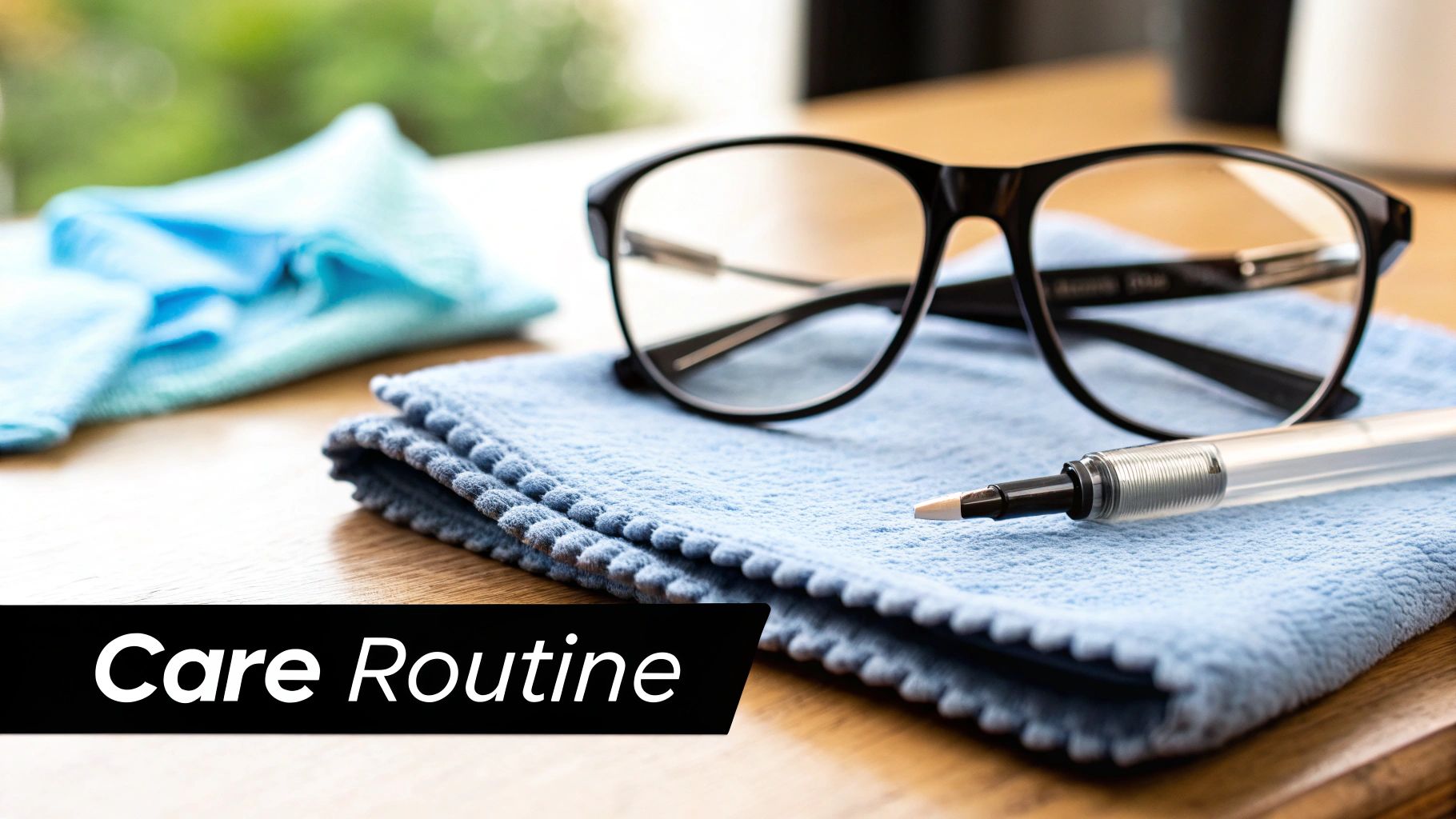
These small actions add up, eventually turning frame maintenance into second nature. By keeping an eye on your Focus on Eye Health and Safety, you can prevent the gradual misalignment that leads to annoying eye strain and headaches.
Build Your Daily and Weekly Habits
The most effective strategy is to create a simple care schedule. Think of it as daily maintenance with a quick weekly check-up to catch any minor issues before they become major problems.
Your daily routine should always include a proper cleaning. Wiping your lenses on your shirt might seem harmless, but it can grind in tiny dust particles and cause micro-scratches. Instead, grab a dedicated lens spray and a clean microfibre cloth to wipe away smudges from both the lenses and the frame. For a full rundown, check out our guide on how to clean glasses.
Once a week, take just a moment for a quick inspection. Look closely at the tiny hinge screws—they can start to loosen from the constant opening and closing. If they feel a bit wobbly, a quick turn with a precision screwdriver will keep the arms secure and perfectly aligned.
Focus on Eye Health and Safety: Proper handling is just as important as cleaning. Always use two hands to take your glasses on and off. Removing them with one hand puts uneven stress on one hinge, gradually bending the frame out of shape and weakening the screw over time.
Smart Storage and Handling
Where you put your glasses when you’re not wearing them matters more than you might think. Tossing them on a desk, hanging them from your shirt collar, or leaving them on the car dashboard is just asking for trouble.
- Always Use a Hard Case: A sturdy case is your best defence against getting sat on, crushed in a bag, or knocked off a table. It's a non-negotiable for keeping your frames safe.
- Avoid Extreme Temperatures: Never, ever leave your glasses in a hot car. For example, on a sunny day, the dashboard temperature can easily exceed 60°C, which can easily warp plastic frames and can even damage the delicate coatings on your lenses, making a repair impossible.
- Place Them Lens-Side Up: If you do need to set your glasses down for a moment, always place them with the lenses facing upward to prevent any accidental scratches.
This preventative mindset is becoming more and more important. In Australia, major retailers like Specsavers saw an 8.1% revenue increase to £863.3 million last year, which shows a strong consumer focus on eye health and quality frames. This growth highlights just how important it is to protect these valuable investments with proper maintenance. At Prescript Glasses, we know everyone's needs are different, which is why we can customise an eyewear package to suit your requirements.
When to Leave Eyeglass Repairs to a Professional
Knowing how to do a quick DIY fix on your glasses is a great skill to have, but it's just as important to know when to put the tools down and step away. Forcing a repair without the right equipment can easily make a small problem much worse. You could end up with irreparable damage, void your warranty, or even compromise the safety of your lenses.
Knowing the difference between a simple tweak and a serious problem is the key to protecting your investment and your eyes.
Some situations are an immediate red flag. If your frame has completely snapped in two, this is not a job for superglue—especially if it's made from titanium or other specialty alloys. These materials need specialised techniques like soldering or laser welding to create a bond that's both durable and safe.
Damage Requiring Expert Attention
Certain types of damage are just well beyond what a home repair kit can handle. Trying to force a fix in these cases almost guarantees you'll make things worse, potentially making a professional repair more expensive or even impossible down the track.
Look out for these issues:
- Broken Integrated Hinges: When a hinge that's moulded directly into the frame breaks off, you can't just screw it back on. Opticians have specific tools and can often access manufacturer parts to properly fix these complex components.
- Damage Near the Lens: Any crack, break, or severe bend right next to your lens is a high-risk situation. Fiddling with it yourself could easily chip, crack, or pop the lens out, which is a serious hazard for your eyes.
- Severe Warping of Plastic Frames: If your frames have been left in a hot car and are now seriously twisted, a hairdryer at home won't cut it. Professionals use controlled heating units to safely reshape the material without melting it or damaging the delicate coatings on your lenses.
Focus on Eye Health and Safety: Don't underestimate the risk of a botched repair. You could easily end up with misaligned lenses, which can cause significant eye strain, headaches, and distorted vision. A professional's first priority is ensuring the optical centre of your lenses is perfectly aligned with your pupils for clear, comfortable vision.
Protecting Your Investment and Vision
The Australian eyewear market is growing fast, with projections showing it could reach AUD 417.91 million by 2034. We're clearly investing more in high-quality, fashionable frames. You can read more about the Australian eyewear market trends on ResearchAndMarkets.com. When you've spent good money on a pair of glasses you love, a professional repair is the best way to maintain their integrity.
Even if a frame seems beyond saving, an optician might have options you haven't considered. For instance, they might be able to salvage your prescription lenses by replacing lenses in glasses and fitting them into a new, similar frame.
At Prescript Glasses, we understand these complexities inside and out. We can customise an eyewear package to suit your requirements, ensuring you always have the best and most practical solution for your needs.
Got Questions About Fixing Your Glasses? We’ve Got Answers.
Even with the best instructions, you’re bound to have a few questions when it comes to repairing something as important as your glasses. After all, your vision is on the line. Let’s clear up some of the most common queries we get, so you can make smart, safe decisions about your frames.
Is It a Good Idea to Use Super Glue on Broken Plastic Frames?
We get this one a lot. In a moment of panic, that little tube of super glue in the junk drawer can seem like the perfect solution. Trust us, it’s not.
We strongly advise against it. The harsh chemicals in household glues can wreck the frame's finish, cause the plastic to become brittle and weak, and can even irritate your skin. Worse still, a botched glue job makes it nearly impossible for a professional optician to perform a proper, lasting repair later on. For example, if you try to glue a snapped bridge back together, the dried glue will prevent a professional from being able to fuse the plastic correctly, ruining the frame.
If you need a quick, temporary fix to get you through the day, a small piece of clear tape is a much safer bet. It’ll hold things together until you can get your frames to a pro who has the right bonding agents for the job.
How Can I Tell If My Glasses Are Properly Aligned?
Correct alignment is everything. It’s the key to clear vision and all-day comfort.
There’s a simple trick to check this: place your glasses on a flat surface, like a table. Both temple arms (the bits that go over your ears) should sit perfectly flat. If one arm is hovering in the air, you’ve got an alignment problem.
When you’re wearing them, they should feel balanced and sit straight on your face, not tilted to one side. If you feel uneven pressure behind your ears or on your nose, or if your vision just feels a bit "off," that's a dead giveaway they need adjusting. This isn’t just about comfort; it’s a crucial part of your Focus on Eye Health and Safety.
Focus on Eye Health and Safety: A slight misalignment might not seem like a big deal, but it can force your eyes to constantly readjust. Over time, this leads to unnecessary eye strain, fatigue, and even nagging headaches.
Is It Safe to Adjust My Metal Frames at Home?
You can get away with making very minor tweaks to standard metal frames, but you have to be incredibly careful.
If you’re going to attempt it, always use pliers with padded or taped tips to prevent scratching the frame’s coating. The key is to apply gentle, steady pressure. Never make sudden, sharp bends—that’s the quickest way to weaken the metal and cause it to snap.
However, a word of warning: if your frames are made of titanium or a memory metal alloy, don’t even think about it. These high-tech materials need special heating tools and an expert’s touch to be reshaped without causing permanent damage.
At Prescript Glasses, we believe everyone deserves clear vision without the hassle. We can customise an eyewear package to suit your requirements, from ultra-durable frames to specialised lenses. Find your perfect fit by exploring our collection today at https://www.prescriptglasses.com.