What Are Blue Light Glasses: Do They Really Help Your Eyes and Sleep?

Let's get straight to it: blue light glasses are purpose-built specs designed to filter out a slice of the blue light that our digital screens are constantly throwing at us.
Think of them as a personal filter for your eyes. In a world where we're swimming in the glow of phones, laptops, and tablets day and night, they've become less of a trend and more of a practical tool for eye health and safety. Why? Because they're a direct response to a very modern problem—that nagging digital eye strain, the persistent headaches, and the disrupted sleep so many of us are all too familiar with.
Your Guide to Blue Light Glasses in a Digital-First World
In our screen-heavy lives, keeping our eyes comfortable has become a non-negotiable part of modern health and safety. From that first email in the morning to the last social media scroll at night, our eyes are always on. This has created a real need for solutions that can offer some relief. That's where blue light glasses come in—they're engineered with special lenses that act like a shield, dialling down the amount of high-energy blue light that reaches your eyes.
This guide will help you sort fact from fiction, so you can figure out if these glasses are the right move for your digital lifestyle. We'll start by breaking down the core problem and why managing your screen time is the first step in looking after your vision.
A Modern Solution for Digital Habits
The demand for blue light filtering glasses is a direct result of our daily routines. The rise of these glasses in Australia is part of a global shift, but it's also fuelled by our local lifestyle. With smartphone use hitting over 85%, many of us Aussies are clocking 4-5 hours of screen time every single day. Vision care reports also show that this constant digital glare contributes to eye strain, a problem affecting up to 70% of office workers. You can learn more about what's driving the Australian eyewear market and its focus on eye health in recent reports.
This is exactly where blue light glasses find their purpose. They’re designed to tackle the specific symptoms that crop up from spending too much time staring at a screen, making them a handy tool for anyone who lives behind a digital display.
To get a better sense of what these glasses do, here’s a quick summary of their core functions.
A Quick Look at What Blue Light Glasses Do
This table breaks down the main jobs of blue light filtering lenses and what that means for you in practical terms.
| Key Function | How It Helps You |
|---|---|
| Filters HEV Blue Light | Reduces the amount of high-energy visible (HEV) blue light from screens reaching your eyes. |
| Reduces Digital Glare | Lenses often have an anti-reflective coating that cuts down on screen glare, sharpening contrast. |
| Minimises Visual Fatigue | By filtering specific light and reducing glare, it can help lessen the symptoms of digital eye strain. |
| Supports Circadian Rhythm | May help regulate your natural sleep-wake cycle by blocking blue light that can suppress melatonin at night. |
Ultimately, the goal is to ease the discomfort that comes hand-in-hand with our screen-filled lives.
Think about these common practical examples:
- The Office Professional: You spend eight hours a day staring at spreadsheets and jumping on video calls. By 3 p.m., your eyes feel tired and dry, and a headache is starting to creep in.
- The University Student: You're pulling an all-nighter to cram for an exam, spending hours reading on your laptop. All that screen time can mess with your sleep schedule right when you need rest the most.
- The Dedicated Gamer: An intense gaming session requires sharp focus, but the screen's constant glare and blue light can lead to visual fatigue, hurting your performance over a long session.
In every one of these situations, the aim is the same: to reduce visual discomfort and support better eye health. Whether you need a full prescription or just a simple non-prescription pair, we can customise an eyewear package to suit your requirements, making sure you get the right level of protection for what you do.
Understanding the Science of Screen Light and Your Eyes
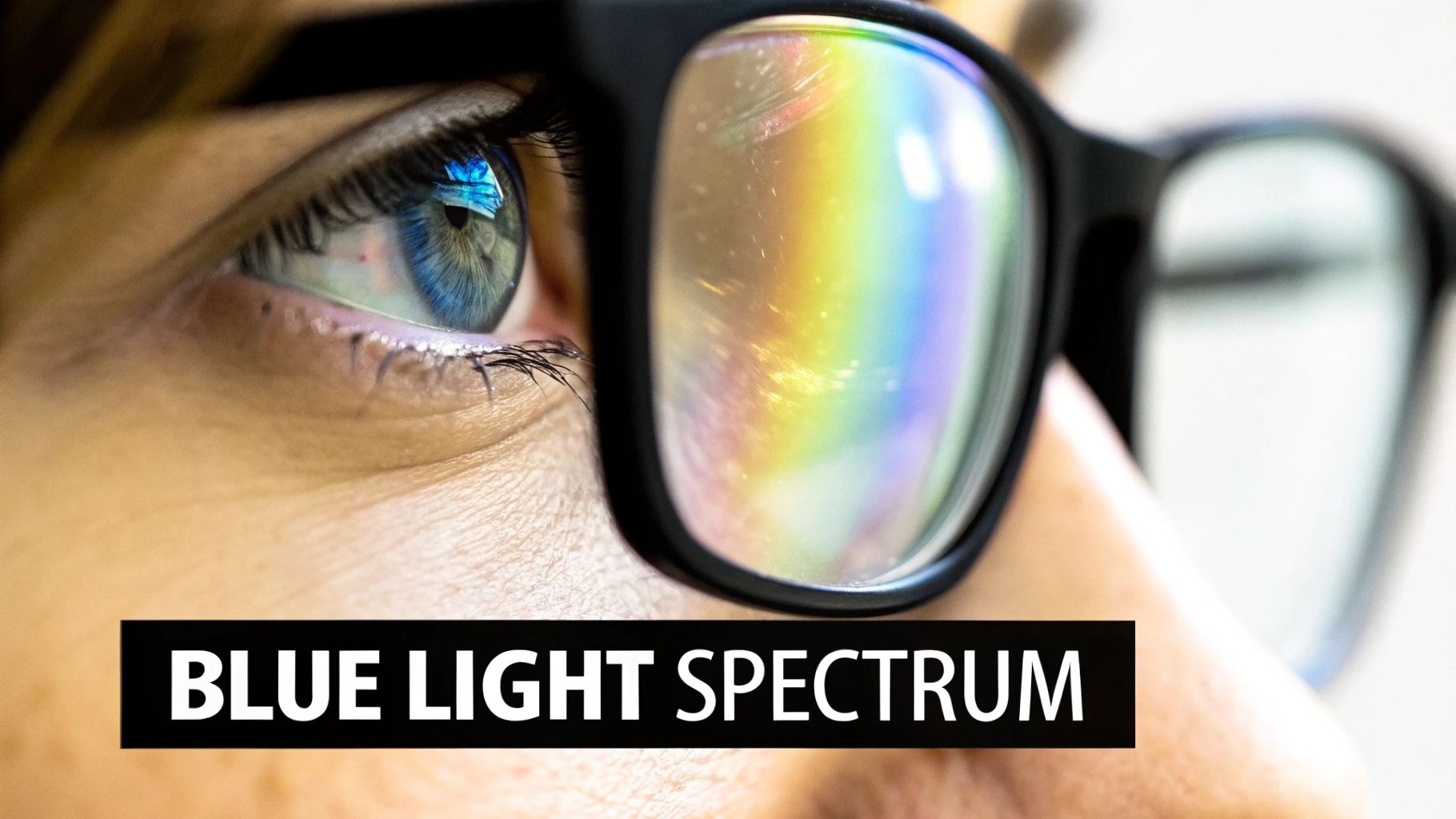
To really get what blue light glasses do, we first have to understand what they’re up against. Think of visible light as a rainbow—a whole spectrum of colours. On one end, you’ve got red light with longer, lower-energy waves. On the other end, you have blue and violet light, which have much shorter, high-energy waves.
This high-energy slice of the spectrum is often called High-Energy Visible (HEV) light. While the sun is our biggest source of it, our digital devices—laptops, smartphones, and tablets—are pumping it out, too. The real issue is that we hold these screens just centimetres from our faces for hours every day, creating a constant, close-range exposure our eyes just weren't designed for.
This constant exposure has completely changed the conversation around modern eye health and safety. It’s not about demonising blue light, but about smartly managing how much of it we get, especially from artificial sources.
How Does Blue Light Affect Your Eyes?
The human eye does a pretty amazing job of blocking harmful ultraviolet (UV) light from reaching the sensitive retina at the back. When it comes to HEV blue light, though, it’s not so great. Almost all of it zips straight through the cornea and lens to hit the retina directly.
This direct, prolonged exposure is a major player in what we now call digital eye strain. If you’ve ever wrapped up a long day at the computer with gritty, dry, or aching eyes, you know exactly what this feels like.
A perfect practical example is how you feel after a marathon of video calls. It's not just the screen you're staring at; it’s the glare and the intense focus that makes you blink way less often. This combination—less blinking and a firehose of blue light—is the perfect recipe for eye fatigue and dryness.
The real problem isn't that blue light is 'bad'—it’s a natural part of daylight that keeps us alert and focused. The issue stems from the chronic, up-close exposure from our screens, especially after the sun goes down. This sends confusing signals to our brains and can seriously overwork our eyes.
The Connection Between Blue Light and Sleep
Beyond just eye comfort, blue light is a master regulator of our internal body clock, the circadian rhythm. This is the natural cycle that tells our bodies when it’s time to be awake and when it’s time to sleep.
During the day, sunlight (which is full of blue light) signals our brain to be active and alert. As the sun sets and that blue light fades, it’s a cue for the brain to start producing melatonin, the hormone that makes us feel sleepy and ready for bed.
But when you're scrolling through your phone or tapping away on your laptop late at night, you're beaming that "daytime" signal directly into your eyes. This tricks your brain into thinking it’s still midday, hitting the brakes on melatonin production.
Here’s a practical example of how this plays out all the time:
- The Late-Night Professional: An accountant is burning the midnight oil to hit a deadline at 11 p.m. They feel completely drained, but an hour later, they’re tossing and turning because their brain is still buzzing from the screen's blue light.
- The Social Media Scroller: Someone decides to "relax" by watching videos on their tablet in bed. That supposedly calming activity can actually push back the onset of sleep, leaving them with that awful 'tired but wired' feeling and disrupting their sleep quality.
Understanding this biological process is the key to seeing why managing light exposure is so important for your health and safety. By filtering out a portion of this stimulating light, particularly in the evening, you’re helping your body stay in sync with its natural sleep-wake schedule. It's a cornerstone of both good sleep hygiene and long-term eye health. Ultimately, finding the right protection is about personalising a solution, and we can customise an eyewear package to suit your requirements, ensuring you get the support you need for your specific digital habits.
Do Blue Light Glasses Really Work? A Look at the Evidence
When you start digging into what blue light glasses are, the big question is always the same: do they actually deliver on their promises? Once you get past the marketing hype, the evidence paints a pretty nuanced picture. The strongest support seems to be for their benefits on sleep.
Let’s get into the science behind the claims and touch on the ongoing debate about whether they truly help with digital eye strain.
The most convincing argument for blue light glasses is all about protecting our natural sleep-wake cycle, better known as our circadian rhythm. Think about it: when you're staring at a screen after the sun goes down, that intense blue light is basically telling your brain it's still daytime. This suppresses the production of melatonin, the hormone that signals it's time to sleep.
By filtering out a chunk of this specific light, the glasses act like a buffer. You can almost think of it as creating an artificial sunset for your eyes, even while you’re burning the midnight oil. This helps your brain get the right signals to start winding down, which can make falling asleep easier and might even lead to better quality rest.
The Debate on Digital Eye Strain
Now, when it comes to digital eye strain, things get a bit more complicated. A lot of people who wear them swear by them, reporting a noticeable drop in symptoms like dry eyes, headaches, and that general worn-out feeling after a long day glued to a screen. This anecdotal evidence is a huge part of why they've become so popular.
Take a graphic designer, for example, who stares at a bright monitor for eight hours straight. They might find that blue light glasses take the harsh edge off the screen, leaving them feeling less fried by the end of the day. For many people, that improvement in visual comfort is a real, tangible win for their daily eye health.
However, eye health experts are quick to point out that blue light is just one piece of a much bigger puzzle. Digital eye strain is often the result of a whole cocktail of factors that a simple pair of glasses can't fix on its own.
It's crucial to understand that eye strain also comes from screen glare, poor posture, incorrect screen distance, and a reduced blink rate. Blue light glasses can help with one aspect, but they aren't a cure-all for poor digital habits.
This perspective is really about managing expectations. While the glasses can definitely make things more comfortable for some, they work best when they're part of a bigger strategy for taking care of your eye health and safety.
Evidence and Real-World Impact
The fact that so many people are using these glasses shows a major shift in how we think about wellness in our screen-saturated lives. Here in Australia, the uptake of blue light glasses is a direct response to just how much time we spend online. The local eyewear market is forecast to hit between AUD 229-243.20 million in 2025, with specialised blockers targeting the 50-60% of remote workers who suffer from digital eye strain—a group whose screen time jumped by 30% nationally after 2020.
This trend really highlights that while the scientific debate might continue, plenty of users are finding real, everyday value in them. The key is to know what they're actually for. They are a tool designed to filter a specific type of light, and that can have some positive knock-on effects for your sleep and visual comfort. To get a wider view on improving your rest, you can also look into general tips for enhancing sleep quality, which often go hand-in-hand with managing digital eye strain.
Ultimately, whether they’ll work for you comes down to what you’re trying to solve.
- For Better Sleep: If your main goal is to support your sleep cycle after using screens in the evening, the evidence is pretty solid. A practical example is putting them on for a couple of hours before bed while you watch TV or scroll on your phone.
- For Eye Strain: If you’re trying to beat eye strain, they can be a helpful part of your toolkit. But for the best results, you'll want to combine them with other good habits, like taking regular breaks and setting up your workspace properly.
Finding the right solution is all about your personal needs. Whether you need prescription lenses or just a simple pair for screen time, we can customise an eyewear package to suit your requirements, making sure your glasses are a perfect match for your lifestyle and eye health goals.
How to Choose the Right Blue Light Glasses for You
Jumping into the world of blue light glasses can feel a bit much, but trust me, finding the right pair is simpler than you think. It really just boils down to matching the lens technology to your daily grind. Not all lenses are made the same, and what a late-night gamer needs is worlds apart from what an office worker requires for all-day comfort.
The trick is to ask yourself why you need them. Are you trying to get rid of those afternoon headaches and tired eyes? Or are you more concerned about protecting your sleep after a late-night scrolling session? Nailing down that answer is your first step to picking a pair that actually helps.
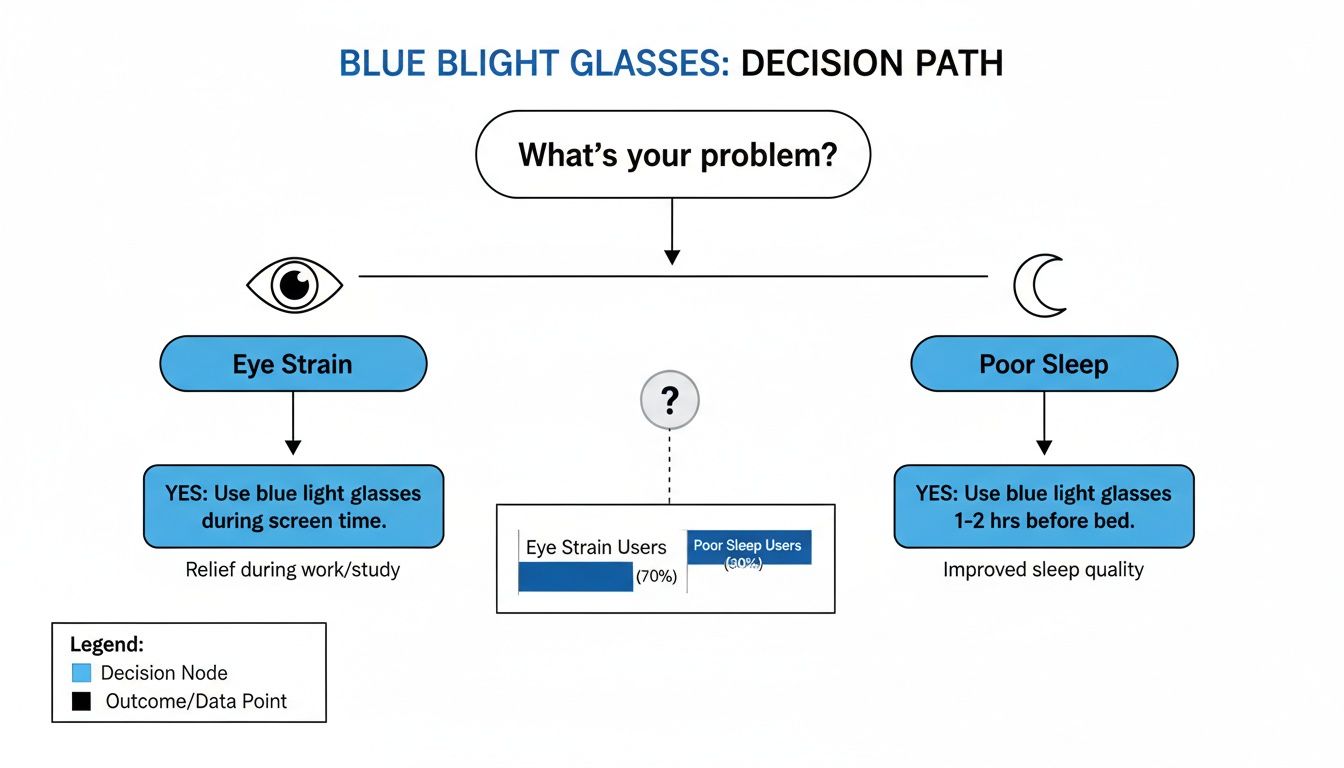
This little flowchart breaks it down nicely: your main symptom—whether it's eye strain or poor sleep—is the best guide for choosing your glasses.
Which Blue Light Lens Fits Your Lifestyle?
The biggest difference you’ll find between blue light glasses is the tint of the lens and how much blue light it actually filters out. Lenses can range from being almost perfectly clear to having a very noticeable amber or orange hue, and each one has a specific job to do.
To make it easier, we've broken down the common lens types and who they're best for. Think of this as your cheat sheet for finding the perfect match for your screen habits.
| Lens Type | Best For | Filtration Level | Practical Example |
|---|---|---|---|
| Clear/Low-Tint | All-day office wear, casual screen use, reducing digital eye strain | 10% - 40% | A professional working on spreadsheets and in video calls who needs true colour perception. |
| Yellow/Amber | Heavy screen users, students, gamers, and those sensitive to light | 50% - 75% | A student pulling a late-night study session who needs to reduce eye fatigue and protect their sleep cycle. |
| Red/Dark Orange | Pre-sleep use (1-2 hours before bed), managing circadian rhythm | 98% - 100% | A gamer unwinding with a few rounds before bed who wants to block stimulating light to fall asleep faster. |
As you can see, the right lens really depends on when and why you're using your screens. A one-size-fits-all approach just doesn’t work here.
A Practical Checklist for Your Perfect Pair
Once you know which lens type is for you, a few other details will make sure you end up with a pair you actually enjoy wearing.
-
Filtration Percentage: Always check how much blue light the lenses are blocking. A good brand will be upfront about this. Clear lenses should filter at least 10-40%, while amber lenses need to be in the 50-75% range to be effective.
-
Anti-Glare Coating: This is a must-have for anyone staring at a screen. An anti-reflective coating cuts down the glare from your monitor and overhead lights, which is a huge cause of eye strain.
-
Prescription Compatibility: If you already wear glasses, you don’t have to juggle two pairs. You can easily upload your prescription and have blue light filtering added directly to your corrective lenses. It’s the best of both worlds.
-
Frame Fit and Comfort: You're going to be wearing these for hours, so comfort is key. Look for lightweight materials and a style that sits well on your face. An uncomfortable pair will just end up collecting dust on your desk.
This push for personalised eye health is growing right here in Australia. For example, Queensland is projected to lead regional demand with a 19.1% market share by 2025, thanks to city professionals and students clocking over seven hours on screens daily. With 40% of Australians reporting eye fatigue, it's no wonder people are looking for better solutions.
No matter what you do, the goal is to find glasses that are truly made for you. For a closer look at different styles and features, check out our guide on the best blue light blocking glasses. At the end of the day, we can customise an eyewear package to suit your requirements, combining the perfect lens tech, coatings, and your prescription into a frame you'll love.
Simple Habits to Protect Your Eyes Beyond Just Glasses
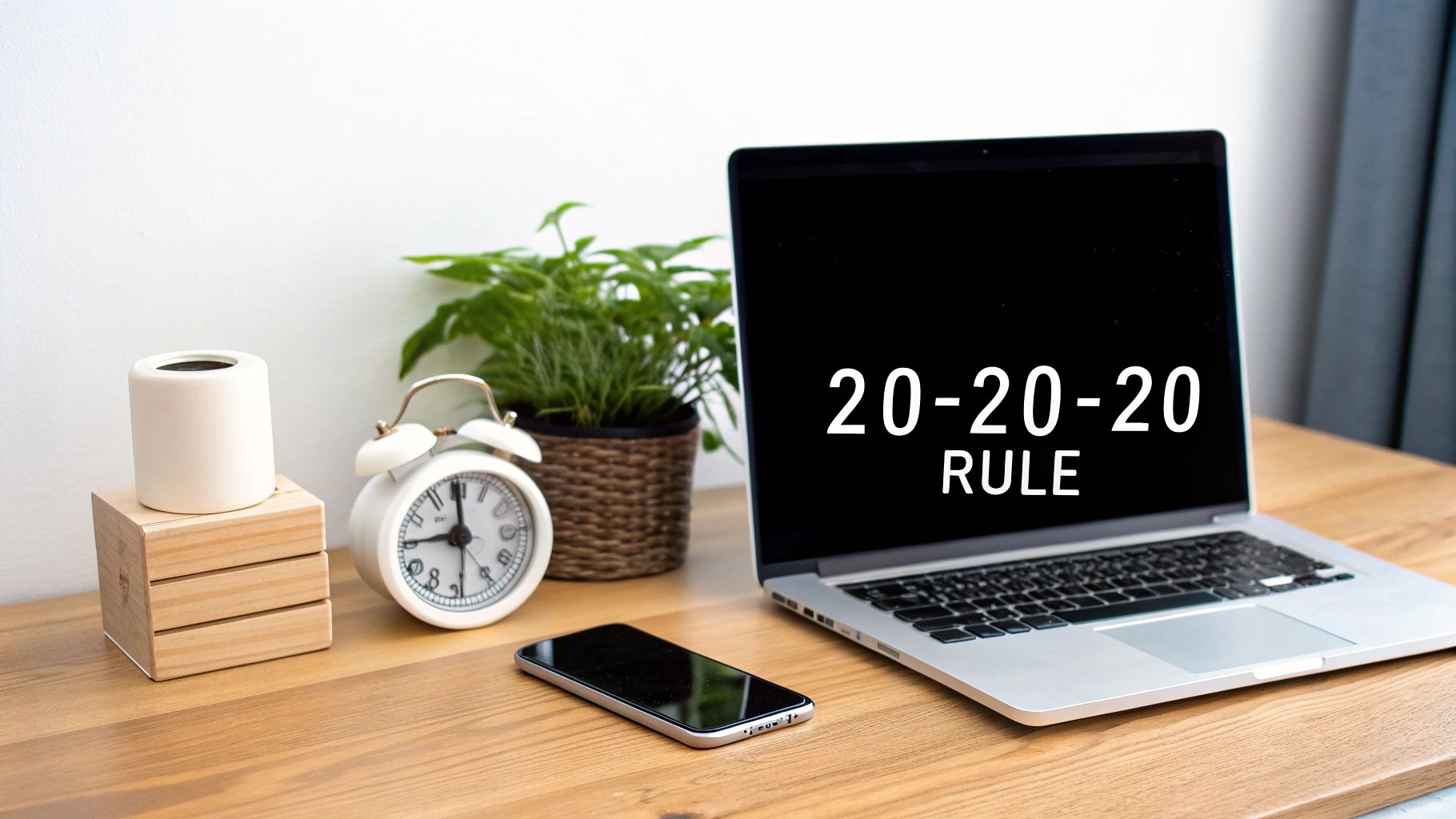
Choosing a great pair of blue light glasses is a massive step in the right direction, but they’re most effective when they're part of a complete eye care strategy. Think of them as your eyes' best defender on the field—but even the best defender needs a strong team backing them up.
The good news is, you don't need a major life overhaul. By weaving a few simple habits into your daily routine, you can build a powerful, all-around defence for your eye health and safety. These small adjustments can make a huge difference in how your eyes feel after a long day staring at screens.
Master the 20-20-20 Rule
One of the simplest and most effective tricks in the book is the 20-20-20 rule. It's a favourite among eye care professionals for a reason: it works wonders for beating digital eye strain.
The idea is incredibly easy to remember. For every 20 minutes you spend locked onto a screen, take a quick 20-second break to look at something at least 20 feet (about 6 metres) away. That's it. This tiny pause gives your hard-working eye muscles a much-needed chance to relax and reset.
A practical way to implement this is to set a quiet timer on your phone. When it chimes, glance out the window at a distant tree or building for 20 seconds. This small interruption is enough to ease the continuous strain from focusing up close.
Optimise Your Digital Environment
Your desk setup and screen settings play a surprisingly big role in your eye comfort. A few quick tweaks here and there can take a significant load off your eyes, perfectly complementing the protection you get from your glasses.
Start with your screen's brightness. Try to match it to the light level in your room. A screen that’s blaringly bright compared to your surroundings is like staring into a lamp—it forces your eyes into overdrive. On the flip side, a screen that’s too dim will have you squinting.
A holistic approach to eye health and safety involves more than just filtering light; it's about creating an environment where your eyes can work comfortably. This means managing your screen settings, your physical setup, and your daily habits in tandem.
Here are a few more actionable tips to create an eye-friendly setup:
- Activate 'Night Shift' or 'Comfort View': Most modern phones, tablets, and computers have a built-in feature that warms up the screen’s colour temperature at night. This cuts down on blue light right at the source.
- Position Your Screen Correctly: Your monitor should be about an arm's length away, with the top of the screen sitting slightly below eye level. This posture helps reduce both eye and neck strain.
- Unplug Before Bed: A practical rule is to make it a habit to put your devices away at least an hour before you plan to sleep. This gives your brain a chance to wind down naturally, without the stimulation of blue light.
When you combine these habits with your blue light glasses, you create a robust defence against digital eye strain. For a deeper dive, check out our guide on how to reduce eye strain.
Remember, every little adjustment adds up to better long-term eye health. And if you need a specific lens or coating, we can customise an eyewear package to suit your requirements, ensuring your glasses fit perfectly into your healthier digital life.
Finding Your Perfect Custom Eyewear Solution
Okay, so now you get what blue light glasses are all about and the real-world headaches they can solve. The next step? Finding a pair that’s actually right for you. This is where a bit of personalisation goes a long way, because a one-size-fits-all pair from a chemist shelf rarely gets the job done properly.
Think about it this way: a student cramming for exams late into the night has totally different needs than a professional who spends their day on back-to-back video calls. Your lifestyle dictates what features will actually make a difference. The perfect pair should feel like a seamless part of your daily kit.
Building Your Personalised Eyewear
Crafting the right solution is all about mixing and matching the right lens tech, functional coatings, and a frame style you genuinely love to wear. We can customise an eyewear package to suit your requirements, making sure every piece of the puzzle lines up with your daily grind and personal style.
This really just comes down to a few key choices:
- Prescription Needs: If you already wear glasses to see, we can build the blue light filter right into your corrective lenses. No more juggling two different pairs.
- Non-Prescription (Plano) Lenses: For those with 20/20 vision, a non-prescription pair is perfect for dedicated screen time, giving you all the protection without changing how you see.
- Premium Coatings: Tacking on extras like an anti-glare or scratch-resistant coating isn't just a gimmick. It makes your glasses tougher and cuts down on distracting reflections from overhead lights or your screen.
The goal is to create a personalised tool that not only protects your eyes but also feels comfortable and boosts your confidence. Your glasses should work for you, not the other way around.
By tailoring your eyewear, you’re moving beyond a generic product and getting a solution built for your life. Whether you're a gamer who needs every edge on contrast, a student trying to protect your sleep before a big exam, or a professional fighting off screen fatigue, customisation is what makes it work.
For a more detailed walkthrough, check out our guide on how to order custom prescription glasses online. It breaks the whole process down, making it super simple to get the exact protection you need.
Your Questions About Blue Light Glasses, Answered
As you get closer to figuring out if blue light glasses are right for you, it's natural to have a few last-minute questions. Getting a handle on the practical, day-to-day stuff ensures you can make a choice that genuinely supports your eye health and comfort. Let's tackle some of the most common queries with clear, straightforward answers.
Can You Wear Blue Light Glasses All Day?
Yes, you absolutely can—but choosing the right type of lens is key.
For all-day wear, especially if you're in an office or classroom, glasses with nearly clear lenses are your best bet. These filter a lower percentage of blue light (usually 10-40%), which is perfect for cutting down on digital eye strain and screen glare without messing with your colour perception during the day.
On the other hand, if your main goal is to protect your sleep, the more heavily tinted amber or red lenses are much more effective. These are designed to be worn for an hour or two before bed. They block a much higher percentage of blue light, which helps send the "it's time to wind down" signal to your brain.
Will These Glasses Fix My Vision Problems?
This is a really important distinction to make for your overall eye health and safety. Blue light glasses are designed to manage the symptoms of digital eye strain, not to correct underlying vision problems. They can definitely help with screen-induced headaches, eye fatigue, and that dry, gritty feeling, but they won’t fix issues like nearsightedness, farsightedness, or astigmatism.
Think of them as a supportive tool, not a cure. There’s no substitute for regular eye exams with an optometrist to look after your overall eye health. If you’re struggling with persistent vision issues, a proper check-up is the most important step you can take.
Blue light glasses are a specialised solution for a modern problem—digital eye strain. They work alongside, not in place of, professional eye care and the prescription lenses meant to correct your vision.
Is Screen Light as Bad as Sunlight?
Not when it comes to raw intensity, but the way we’re exposed to it is completely different. The sun is easily the most powerful source of blue light we encounter, but thankfully, we don’t spend our days staring directly into it.
The problem with our screens is the prolonged, close-range exposure. We hold our phones just centimetres from our faces and sit glued to our laptops all day, creating a constant stream of artificial light aimed right at our retinas. It's this consistent, focused exposure that contributes to digital eye strain and can throw our sleep cycles out of whack.
How Do I Know if the Glasses Are Actually Working?
The biggest clues are often things you feel rather than see. After wearing them consistently for a few days, you’ll likely start to notice a few things:
- Less Eye Fatigue: Your eyes just won't feel as tired, gritty, or strained at the end of a long day staring at the screen.
- Reduced Glare: The screen might look a bit softer and easier on the eyes, without that harsh, distracting reflection.
- Better Sleep: If you’re using them in the evenings, you might find it’s easier to drift off to sleep and you wake up feeling more rested.
Ultimately, the best test is your own experience. Just pay attention to how your eyes feel and how you're sleeping after you’ve made them part of your routine.
Finding the perfect pair is all about matching the right lens technology to your daily life. At Prescript Glasses, we can customise an eyewear package to suit your requirements, whether you need a prescription, specific coatings, or a particular frame style. Explore our collection and build your ideal pair today.