what do blue light glasses do: science, myths, and how to decide

At their core, blue light glasses have lenses engineered to filter a slice of the high-energy blue-violet light that our digital screens pump out all day long. Think of them as a selective shield for your eyes, designed to dial down the harshness of screen glare and boost visual comfort. For example, if you spend your day in video calls, these glasses can help make the bright screen feel less intense, protecting your eyes from unnecessary strain.
What Do Blue Light Glasses Actually Do?
When you’re staring at a screen for hours on end, your eyes are working overtime to process that bright, focused light. This constant effort can lead to a whole cluster of uncomfortable symptoms we now call digital eye strain. Blue light glasses were created specifically to tackle this modern-day problem by changing the type of light that actually makes it to your eyes, promoting better eye health and safety.
The main job of these glasses is to filter out a particular segment of the light spectrum. By doing this, they aim to soften the visual contrast of your screen, making it feel less intense and, hopefully, easing the workload on your eyes.
To get a clearer picture, here’s a quick rundown of what they're designed for.
Blue Light Glasses At a Glance
| Intended Function | How It Works | Practical Example |
|---|---|---|
| Reduce Digital Eye Strain | Filters a portion of high-energy blue light, which can soften screen contrast and reduce perceived harshness. | An office worker experiencing tired, dry eyes after a full day of staring at spreadsheets and emails. |
| Minimise Screen Glare | Lenses often have an anti-reflective coating that cuts down on distracting reflections from screens and overhead lights. | A student studying late at night under fluorescent library lights, trying to read text without squinting. |
| Improve Visual Comfort | By increasing contrast and reducing glare, the glasses aim to make the screen-viewing experience less strenuous. | A gamer during a long session who wants to keep their focus sharp without developing a headache from the bright display. |
This table shows the practical side of things—it’s all about making your screen time more comfortable and less of a strain on your eyes.
How They Target Digital Discomfort
The number one goal here is simply better visual comfort. Across Australia, countless people who use screens for their job or for fun are turning to these glasses to find some relief from common complaints. The practical examples are everywhere in our daily lives.
Picture an office worker whose eyes feel gritty and tired by 3 PM, or a uni student who gets tension headaches cramming for exams late into the night.
These glasses are meant to step in and help by:
- Reducing Glare: The lenses almost always have anti-reflective coatings that cut down on annoying glare from your screen and the lights above you, which means less squinting.
- Increasing Contrast: By filtering some of that intense blue light, other colours can appear a bit sharper. This can make text and images easier to process with less mental effort.
- Minimising Eye Strain Symptoms: For a lot of wearers, the combination of less glare and softer light leads to a real drop in eye fatigue, dryness, and those nagging screen-induced headaches.
By selectively filtering light, blue light glasses aim to create a more comfortable and less strenuous viewing experience—a key part of modern eye health and safety.
Ultimately, it all comes down to making long stretches of screen time more bearable. While the science is still evolving, the real-world feedback from users consistently revolves around this central theme of comfort. Whether you're a professional, a student, or a dedicated gamer, protecting your eyes from unnecessary strain is a pretty smart move for your long-term eye health.
Here at Prescript Glasses, we can customize an eye wear package to suit your requirements, making sure you get the right level of protection for your lifestyle. Now, let’s dig a little deeper into how these lenses actually work and what the research has to say.
Understanding Blue Light and Digital Eye Strain
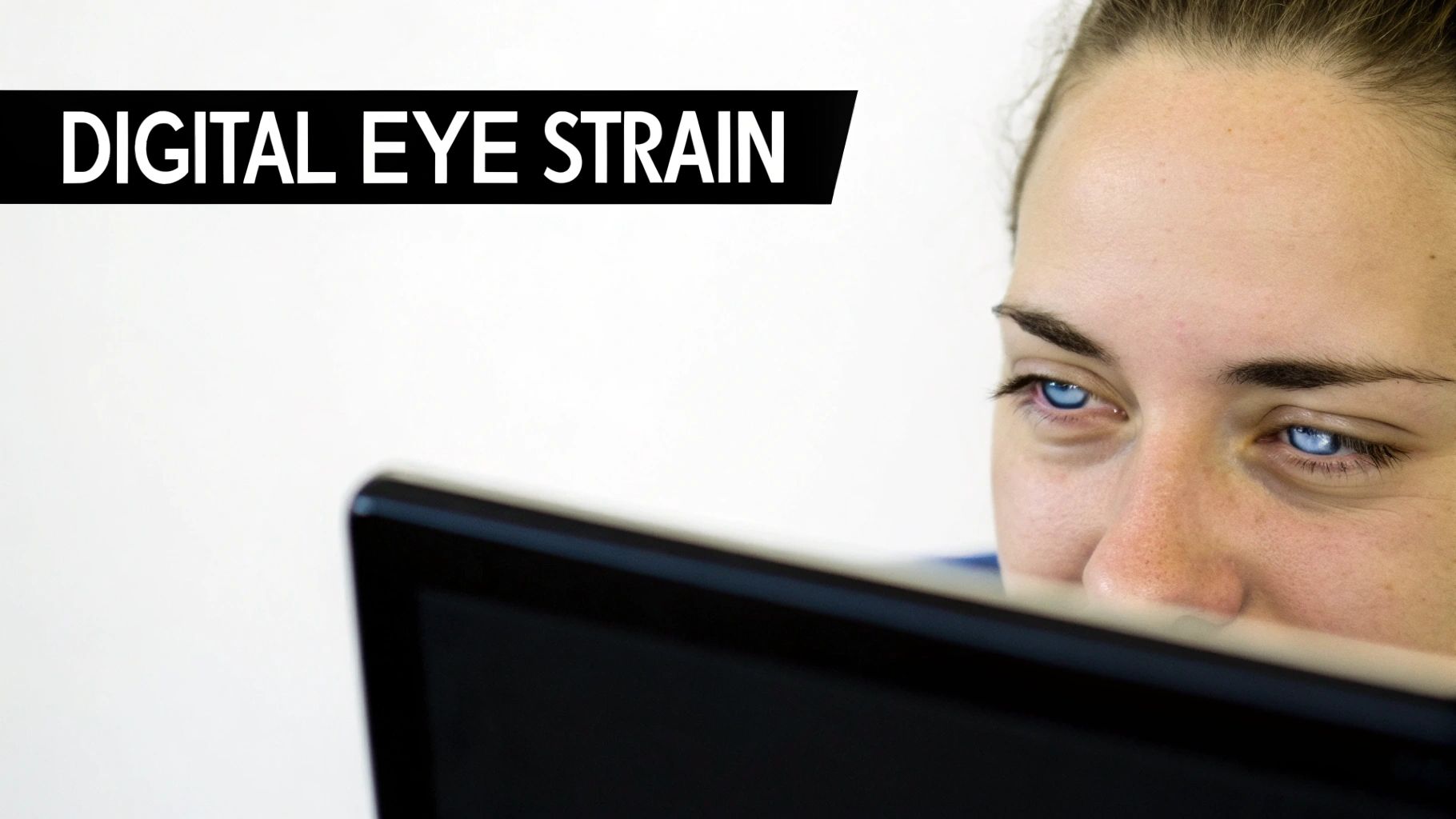
Before we can really get into what blue light glasses do, we need to talk about the problem they're designed to solve. It all starts with blue light—a high-energy, short-wavelength part of the visible light spectrum that’s literally all around us. The sun is our main source of it, and it's fantastic for keeping our internal body clock ticking, making us feel alert and focused during the day.
The problem isn't blue light itself. It's the sheer amount of it we're now exposed to, and how we're exposed. We've parked powerful, artificial sources of blue light—our digital screens—directly in front of our faces for hours on end. This constant, close-up exposure is a massive contributor to a cluster of symptoms we now call digital eye strain, or Computer Vision Syndrome (CVS). This is a crucial aspect of modern eye health and safety.
The Rise of Digital Eye Strain
Take a moment to think about your day. Chances are it involves staring at a computer for work, scrolling on your phone during breaks, and winding down with a tablet or TV at night. All that sustained visual effort adds up, leading to very real, physical discomfort.
This is a feeling most Australians know well. Research shows that, on average, we're glued to our screens for about 5.5 hours every day, a figure that's been climbing for the last decade. This surge in screen time is exactly why there’s so much interest in blue light glasses as a way to manage CVS symptoms.
Interestingly, controlled studies also show that the blue light from our screens is only about 0.04% of what health standards consider safe. This suggests the issue is more complicated than just blue light. Digital eye strain is often a mix of things: screen glare, bad posture, and even just forgetting to blink enough.
Real-World Symptoms You Can Feel
Digital eye strain isn't some vague concept; it's a collection of real, frustrating symptoms that can throw off your entire day. It’s why people are actively looking for solutions to protect their eyes.
Here are some practical examples you might recognize:
- The 3 PM Fade: You're an office worker, and right on cue, your eyes start feeling dry, gritty, and exhausted after hours of staring at spreadsheets.
- The Study Headache: You're a student cramming for exams, and a dull, persistent headache sets in as your eyes fight to stay focused on the text.
- The Gamer's Blur: After a long session, your vision goes a bit blurry, and your eyes feel sore from the intense concentration.
These everyday struggles are the direct result of our eye muscles working way harder than they’re meant to for long stretches. Just like any other muscle in your body, they get strained from overuse. For a closer look at these issues, check out our guide on the symptoms of digital eye strain.
Digital eye strain is the physical cost of our screen-centric lives. It's the tired, gritty feeling in your eyes that reminds you they've been working overtime without a proper break.
Recognising these symptoms is the first step toward relief. While blue light glasses are a fantastic tool, it’s also important to build better screen habits for long-term eye health and safety. Because everyone’s vision is different, we can customize an eye wear package to suit your requirements, making sure you get a solution that truly fits your needs.
What the Research Says About Blue Light Glasses
When you start digging into what blue light glasses actually do, you quickly find two different stories: what people feel when they wear them, and what large-scale scientific studies have managed to prove. It's a bit of a nuanced conversation, so let's break down the evidence to give you a clear, balanced picture.
Plenty of people who try blue light glasses swear by them. They’ll tell you they feel less eye fatigue, get fewer screen-induced headaches, and just feel a general sense of relief after a long day staring at a monitor. This anecdotal evidence is really strong and widespread, which tells us that for many users, the benefits are very real and tangible.
But when we shift gears and look at the hard science, the picture gets a bit more complicated. The current research doesn't fully back up all the big claims you see in marketing, especially when it comes to digital eye strain.
The Scientific Consensus on Eye Strain
Think about that tired, dry, or aching feeling you get in your eyes after hours on the computer. Researchers point out that this is often caused by a whole cocktail of factors. We tend to blink less, the contrast on our screens might be off, and our eyes are constantly working to focus on something up close. Blue light is just one ingredient in this recipe for discomfort.
So, while it feels logical that filtering blue light would fix the problem, major studies have struggled to pinpoint it as the main culprit. A comprehensive Cochrane review, for instance, found pretty limited evidence that these lenses significantly boost visual performance or help with sleep. The review also pointed out that most commercial lenses only filter between 10% and 25% of blue light, an amount that might not be enough to make a clinically significant difference to eye strain.
This doesn't mean the relief you feel isn't real! It just means science hasn't drawn a firm, direct line between blue light and eye strain just yet. In fact, some of that comfort might come from the anti-reflective coating found on most quality lenses. This coating is great at cutting down screen glare, which is a known contributor to eye fatigue.
What About Sleep Quality?
Here’s where the science gets a lot more compelling. The link between blue light and our sleep cycle is much better established. Our bodies have an internal clock, known as our circadian rhythm, which relies on light cues from the environment. Blue light, specifically, acts like a strong signal to our brain that it's daytime, which in turn suppresses the production of melatonin—the hormone that tells our body it's time to sleep.
The theory is simple: by filtering out blue light from screens in the evening, you can prevent this interference and allow your body to prepare for sleep naturally.
This isn't just a theory, either. Several smaller studies have shown that wearing blue light filtering glasses for a few hours before bed can genuinely improve both the quality and duration of sleep.
Here are some practical examples of this in action:
- The Late-Night Student: A uni student cramming on their laptop until midnight wears their amber-tinted glasses. This helps their brain wind down, making it much easier to actually fall asleep once they close the books.
- The Evening Gamer: An avid gamer puts on their blue light glasses for their late-night sessions to avoid feeling wired and buzzed long after the game is over.
- The Bedtime Scroller: Someone who loves to read on their tablet in bed uses the glasses to block the stimulating blue light, letting them relax into sleep.
If you want to get into the nitty-gritty of how different lens technologies work, check out our detailed article on blue light filters.
So, while the jury is still out on reducing eye strain, the evidence for protecting your sleep is much more promising. At the end of the day, it really comes down to your personal experience. If you put on a pair of blue light glasses and feel better, more comfortable, and more rested, that’s a win. Everyone’s eyes and lifestyle are different, which is why we can customize an eye wear package to suit your requirements, making sure you get the perfect solution.
So Why Do Australian Optometrists Still Recommend Them?
With all the scientific back-and-forth, it's a fair question: why are so many optometrists in Australia still suggesting blue light glasses? The answer has less to do with preventing eye disease and more to do with the practical side of eye health and safety—making patients feel more comfortable in their day-to-day lives.
For an optometrist, it often boils down to a professional judgment call. When a patient walks in complaining about headaches, tired eyes, and general discomfort after a long day staring at a computer, the immediate goal is to find a solution that helps. Blue light glasses are a simple, safe, and non-invasive tool that can provide that relief.
A Practical Response to Real Symptoms
An optometrist’s advice is shaped by years of clinical experience, but it’s also guided by the information they have on hand. A fascinating 2023 study on Australian optometrists found they were 3.77 times more likely to prescribe blue-blocking lenses if they believed blue light was a factor in Computer Vision Syndrome.
Interestingly, the research also showed that their recommendations were often influenced by information from lens manufacturers (62%) and official clinical guidelines (57%). This tells us that their decisions are a blend of industry knowledge and professional standards. You can dive into the full study on practitioner perspectives in Australia to learn more.
What this really highlights is that for many eye care professionals, the number one priority is easing the patient's symptoms right now. The glasses are a straightforward way to cut down on screen glare and visual harshness, which are well-known culprits for discomfort.
A Focus on Comfort and Care
At the end of the day, recommending blue light glasses comes from a place of professional care. While the jury is still out on whether screen-emitted blue light causes long-term damage, there’s absolutely no debate that digital eye strain is a real and widespread problem.
Here are a few practical examples of how this plays out in the real world:
- The Office Professional: Someone comes in with those classic end-of-day headaches. An optometrist might suggest blue light glasses to dial down the glare and visual stress, helping to relax the muscles around the eyes.
- The University Student: A student cramming for exams reports blurry vision and trouble focusing. The glasses are offered as a practical tool to make those long study sessions more bearable.
- The Avid Gamer: A gamer complains of sore, tired eyes after a few hours of playing. A lens with an anti-reflective, blue-filtering coating can soften the intense visuals, improving comfort and letting them focus on the game.
It's not always about a hard-and-fast scientific mechanism. Often, it's a practical strategy to improve a person’s immediate comfort and reduce the very real symptoms of digital eye strain.
Here at Prescript Glasses, we get this balance between proven science and practical comfort. That’s why we can customize an eye wear package to suit your requirements, ensuring your lenses are built to tackle your specific symptoms and lifestyle, just as your optometrist would guide.
Choosing the Right Blue Light Glasses for You
So, you’ve decided to give blue light glasses a crack. Great. But now comes the tricky part: finding the right pair for you. It’s not a one-size-fits-all situation. The best choice really hinges on your lifestyle, how much screen time you rack up, and what you’re hoping to achieve.
The biggest thing to get your head around is the lens technology. Some lenses are almost perfectly clear and designed for all-day wear, while others have a noticeable yellow or amber tint. These tinted ones are much more powerful, especially for winding down in the evening. Each type filters a different amount of blue light, making them better suited for different moments in your day.
Comparing Lens Technologies
Let’s break it down so you can make a smart choice. If you’re just looking to cut down on a bit of glare and eye strain during the workday without messing with your colour perception, a clear lens is probably your best bet. But if you’re a serious gamer or a late-night studier wanting to protect your sleep, a stronger, amber-tinted lens is definitely the way to go.
This is pretty much the thought process an optometrist goes through when helping a patient. They connect the dots between symptoms and a solution.
As you can see, specific complaints like headaches or tired eyes often lead practitioners to recommend solutions like blue light filtering glasses to make you feel more comfortable.
To help you visualise the options, here’s a quick comparison of the most common lens types available.
Comparing Blue Light Lens Technologies
| Lens Type | Key Feature | Practical Example | Blue Light Filtering (%) |
|---|---|---|---|
| Clear (BlueRay) | Nearly clear appearance with minimal colour distortion. | All-day office work, casual screen use, graphic design. | 15-30% |
| Amber/Yellow | Noticeable tint for maximum filtering. | Late-night gaming, studying, pre-bedtime screen use. | 50-95% |
| Photochromic | Clear indoors, darkens to sunglasses outdoors. | All-purpose indoor/outdoor use, UV protection. | Variable, adapts to light. |
| Bluecromic | Combines photochromic and blue light tech. | Heavy screen users who also spend time outdoors. | High indoor filtering + UV protection. |
This table should give you a clearer picture of which lens technology lines up with your daily routine.
Essential Features for Eye Health and Safety
Beyond the lens tint, a few other features are absolutely critical for eye health and safety. Don’t skim over these details—they make a huge difference in how well the glasses work and how comfortable they are.
Here's what to keep an eye out for:
- UV Protection: This is non-negotiable. Any decent pair of lenses should offer 100% protection against UVA and UVB rays. It’s fundamental for your long-term eye health, especially if you’ll be wearing them outside.
- Anti-Reflective Coating: Ever get distracted by annoying reflections on your lenses? This coating is essential for cutting glare from your screen and overhead lights. Less glare means less squinting and muscle tension.
- Comfortable and Durable Frames: Let’s be honest, if the glasses aren’t comfortable, you won’t wear them. Look for lightweight materials and a style that sits nicely on your face. You want a pair you can forget you’re even wearing.
Your vision is unique, and finding the right fit is crucial for both comfort and effectiveness. The best blue light glasses are the ones that seamlessly integrate into your daily life.
To dive deeper into our top picks, check out our guide to the best blue light blocking glasses.
Ultimately, the right choice is a personal one. A graphic designer will need clear lenses to keep colours true, while a student pulling an all-nighter will get more out of a stronger filter.
At Prescript Glasses, we can customize an eye wear package to suit your requirements, ensuring you get the exact level of filtering and protection you need. It doesn’t matter if you need prescription lenses or not; we’ll create a personalised pair that becomes an invaluable tool for your visual comfort.
Common Questions About Blue Light Glasses, Answered
Thinking about getting a pair of blue light glasses? It's natural to have questions. Let's clear up some of the most common queries we get, so you can feel confident you're making the right choice for your eye health and safety.
Can I Wear Blue Light Glasses All Day?
Absolutely. For glasses with a light blue light filter—the kind that look almost clear—you can definitely wear them all day. They're designed for general use, helping to soften screen glare and visual harshness without messing with your colour perception. They are perfectly safe for your daily routine.
The exception is for heavily tinted lenses, like those with a strong yellow or amber colour. These are best kept for evening use. Their job is to block a much bigger chunk of blue light to signal to your brain that it's time to wind down. Wearing them during the day could disrupt the natural blue light your body needs to stay awake and alert.
Will Blue Light Glasses Help My Headaches?
While the jury is still out on definitive scientific proof, we hear it all the time: countless people find they get fewer headaches from digital eye strain when wearing them. By cutting down on the harsh glare from screens, the glasses reduce the need to squint, which helps relax the tiny, hard-working muscles around your eyes.
Imagine an accountant staring at spreadsheets for eight hours straight. By late afternoon, that dull, creeping headache often sets in. This is a practical example of a scenario where blue light glasses can make a real difference by improving comfort. Of course, if headaches persist, it’s always a good idea to chat with an optometrist to rule out any underlying vision issues.
Do Blue Light Glasses Protect My Eyes from Damage?
Right now, there isn't any solid scientific evidence to suggest that the blue light from our screens causes permanent eye damage. The real, proven benefit of blue light glasses is all about comfort and reducing strain. They're fantastic for easing the temporary symptoms of digital eye strain, like tired, dry, or irritated eyes.
Think of them less as a shield against long-term eye disease and more as a safety tool to make your screen time more comfortable. The best thing you can do for your long-term eye health is still the classic advice: get regular check-ups with a qualified professional.
Is a Screen Filter Better Than Blue Light Glasses?
Both are great tools, but they shine in different situations. Software filters like 'Night Shift' on your phone or computer are convenient and free, but they only work on that specific device.
Blue light glasses, on the other hand, are the versatile option. They work everywhere, on everything—your work laptop, your personal phone, the TV, and your gaming console. Plus, they have the added perk of reducing glare from other light sources, like those harsh fluorescent lights in the office. It really comes down to your lifestyle and what works best for you.
At Prescript Glasses, we know everyone’s eyes are unique. That’s why we can customize an eye wear package to suit your requirements. Check out our lens options and find the perfect pair for your digital life at Prescript Glasses.