
How to Clean Eyeglasses: Quick, Proven Steps for Crystal-Clear Vision and Eye Safety

The quickest and safest way to clean your glasses is also the simplest. Just rinse them under lukewarm water, add a tiny drop of lotion-free dish soap to your fingertips, lather the lenses and frame gently, rinse again, and dry everything off with a clean microfibre cloth. It’s a foolproof routine that gets rid of oils and grime without damaging your lenses, directly contributing to your eye health and safety.
Why a Smudge-Free View Is Key to Your Eye Health
Before we get into the nitty-gritty of cleaning, let’s talk about why it’s so important for your health and safety. Keeping your glasses pristine isn’t just about seeing clearly; it's a massive part of looking after your eye health and making sure you’re comfortable all day long.
When your lenses are coated in smudges, fingerprints, or dust, they create tiny distortions in the light that reaches your eyes. This forces your eyes to work overtime just to focus through the haze. For a practical example, imagine trying to read road signs at dusk through a dirty car windscreen. Your brain can probably manage it, but it causes significant strain and is far less safe. The same principle applies to your glasses.
The Connection Between Clean Lenses and Eye Comfort
That constant struggle to see properly is a direct cause of eye strain. Over time, it can show up in some really frustrating ways that mess with your day. If you spend hours staring at a screen, for example, dirty lenses can make digital eye strain feel so much worse. The visual "noise" from the smudges puts your focusing muscles into overdrive. You can learn more about the common symptoms of digital eye strain in our detailed guide.
And this strain isn't just a small bother. It can trigger:
- Persistent headaches, often around your temples or behind the eyes.
- Increased sensitivity to light, making bright screens or sunlight feel harsh.
- Blurred or fluctuating vision that makes it hard to maintain focus.
- Dry, tired, or itchy eyes that feel gritty and uncomfortable.
The Impact of Dirty Lenses at a Glance
It’s easy to underestimate how much a little grime can affect you. This table breaks down the direct link between common lens issues and their impact on your vision and health.
| Common Issue | Impact on Vision | Impact on Health & Safety |
|---|---|---|
| Fingerprints & Smudges | Creates glare, blurs text, and reduces contrast. | Forces eye muscles to work harder, leading to eye strain and headaches. Reduced clarity can also compromise safety during activities like driving. |
| Dust & Debris | Scatters light, causing halos around light sources. | Can cause micro-scratches on lenses, permanently impairing vision. Abrasive particles pose a direct physical risk to the lens surface. |
| Oil & Skin Cell Buildup | Causes a hazy or foggy film over the lens. | Creates a breeding ground for bacteria, increasing the risk of skin irritation around the nose and ears, or even serious eye infections. |
As you can see, a quick clean does more than just clear up your view—it protects your eyes and overall comfort.
Hygiene: A Critical Factor for Eye Safety
Beyond just visual strain, hygiene is a massive safety consideration. Your glasses are constantly in contact with your hands and the world around you, picking up oils, skin cells, and bacteria. This gunk tends to build up on nose pads and earpieces, creating a perfect environment for germs to thrive.
For example, if you touch a public door handle and then adjust your glasses, you transfer germs directly to an item that sits inches from your eyes. When you put those glasses on, that bacteria can transfer to your skin, leading to irritation, acne breakouts, or even nasty eye infections like conjunctivitis. A clean lens is a comfortable and safe lens, letting your eyes relax and focus the way they're supposed to.
Proper care is especially crucial in Australia, where around two-thirds of the population wears prescription glasses. Despite how common they are, many of us fall short on proper cleaning. For instance, the 2020 Vision Index Report found that only about 40% of Australians regularly clean their eyewear, which can lead to a serious accumulation of microbes on both lenses and frames. It's clear that better education on cleaning glasses is needed to protect our eye health.
Here at Prescript Glasses, we believe that clear, comfortable vision is non-negotiable. We're here to help you protect both your investment and your health. We can customise an eye wear package to suit your requirements, ensuring you get the absolute best performance from your lenses, every single day.
Putting Together Your Essential Lens Cleaning Kit
Having the right gear on hand makes all the difference between a quick, safe clean and accidentally doing some real damage to your lenses. Let's move past the generic advice and get specific about what you actually need in your eyeglass cleaning toolkit—and just as importantly, what you need to ditch for your eye health and safety.
The absolute cornerstone of any good kit is a high-quality, microfibre cloth. We’re talking about one with a dense weave, designed with ultra-fine fibres that actually trap and lift away oils and smudges instead of just spreading them around. This is a world away from using the hem of your shirt or a paper towel.
While grabbing a paper towel is tempting, those wood fibres are surprisingly abrasive. Over time, they create a network of tiny micro-scratches on your lenses that will eventually make your vision cloudy, compromising your visual safety.
Finding the Right Cleaning Solution
For the best clean you can get at home, your gold standard is wonderfully simple: lukewarm tap water and a single drop of lotion-free dish soap. That’s it. The soap acts as a gentle surfactant, breaking down stubborn skin oils without being harsh enough to damage those delicate lens coatings.
Of course, a specialised lens cleaning spray is a fantastic addition, especially when you're out and about.
- When to Grab a Lens Spray: A dedicated spray is perfect for your desk at work or to keep in your bag. It gives you a quick, effective clean when you don't have access to a sink.
- What to Steer Clear Of: Never, ever use household cleaners. Things like window cleaner, vinegar, or any solution with ammonia or alcohol are far too aggressive. They can strip away protective coatings like your anti-reflective or blue light filtering layers in a heartbeat, which are essential for your visual comfort and safety.
A common mistake is thinking all glass is the same. The complex, multi-layered coatings on your prescription lenses are far more delicate than a windowpane. Using the wrong chemical is a fast track to ruining an expensive pair of glasses.
Creating Your On-the-Go Toolkit
Let's think about a real-world scenario. You're at an outdoor café and a gust of wind coats your glasses in a fine layer of dust. Wiping them dry would be a disaster.
Here’s what your ideal, compact toolkit for your bag or car should include:
- Two clean microfibre cloths: One for daily wiping and a fresh backup in case the first one gets a bit grimy.
- A small bottle of optician-approved lens spray: This is for tackling those tougher smudges that a dry cloth just can't handle and for safely removing dust without a sink.
- A hard-shell case: Not just for your glasses! It’s the perfect spot to keep your cleaning tools protected and dust-free.
This simple setup means you're always ready for a safe, streak-free clean. For more general advice on why it's so important to have the right tools for streak-free results on glass, this guide on cleaning windows like a professional has some great insights.
The need for proper cleaning solutions is only getting bigger. The Australian eyewear market is expanding fast, with volume estimated to hit 80.6 million pieces by 2029. With an average of 1.8 eyewear items per person in 2024, there's a growing need for effective products to protect these investments. You can dive deeper into these Australian eye health statistics. To help with this, we can customise an eye wear package to suit your requirements, which includes finding the best lens types for your lifestyle and giving you the right advice on how to care for them.
Your Foolproof Method for Cleaning Eyeglasses
Let's walk through the simple, repeatable routine that will keep your glasses pristine. This is my go-to method for cleaning eyeglasses safely and effectively, and it guarantees a perfect, streak-free finish every single time without putting your lenses or frames at risk.
Forget the guesswork. This is a process that just works.
The very first thing you need to do—before a cloth ever touches your lenses—is give your glasses a quick rinse. Hold them under a gentle stream of lukewarm tap water. This is a non-negotiable step for safety. It washes away all the abrasive little particles like dust and grit that will absolutely scratch the lens surface if you try to wipe them while dry.
Once they're rinsed, pop a single, tiny drop of lotion-free dish soap onto each lens. You really don't need much at all; any more than that just means you’ll be rinsing forever.
The Gentle Lather and Rinse
Now, using only your fingertips, gently work the soap into a soft lather. Rub it across both the front and back of each lens. Your fingertips provide just enough friction to break down those stubborn oils and fingerprints without applying any damaging pressure.
But don't just stop at the lenses. This is the perfect time to give your entire frame some much-needed attention for better hygiene.
- Nose Pads: Pay special attention here. This is where skin oils, sweat, and makeup love to build up, which can lead to skin irritation or bacterial growth.
- Earpieces (Temples): Make sure to clean the arms all the way to the ends. Hair products and oils often collect in this area.
- Hinges and Crevices: Gently work the lather into the small nooks where the frame meets the lenses to clear out any trapped grime.
This simple visual breaks down the essential tools for this cleaning process.
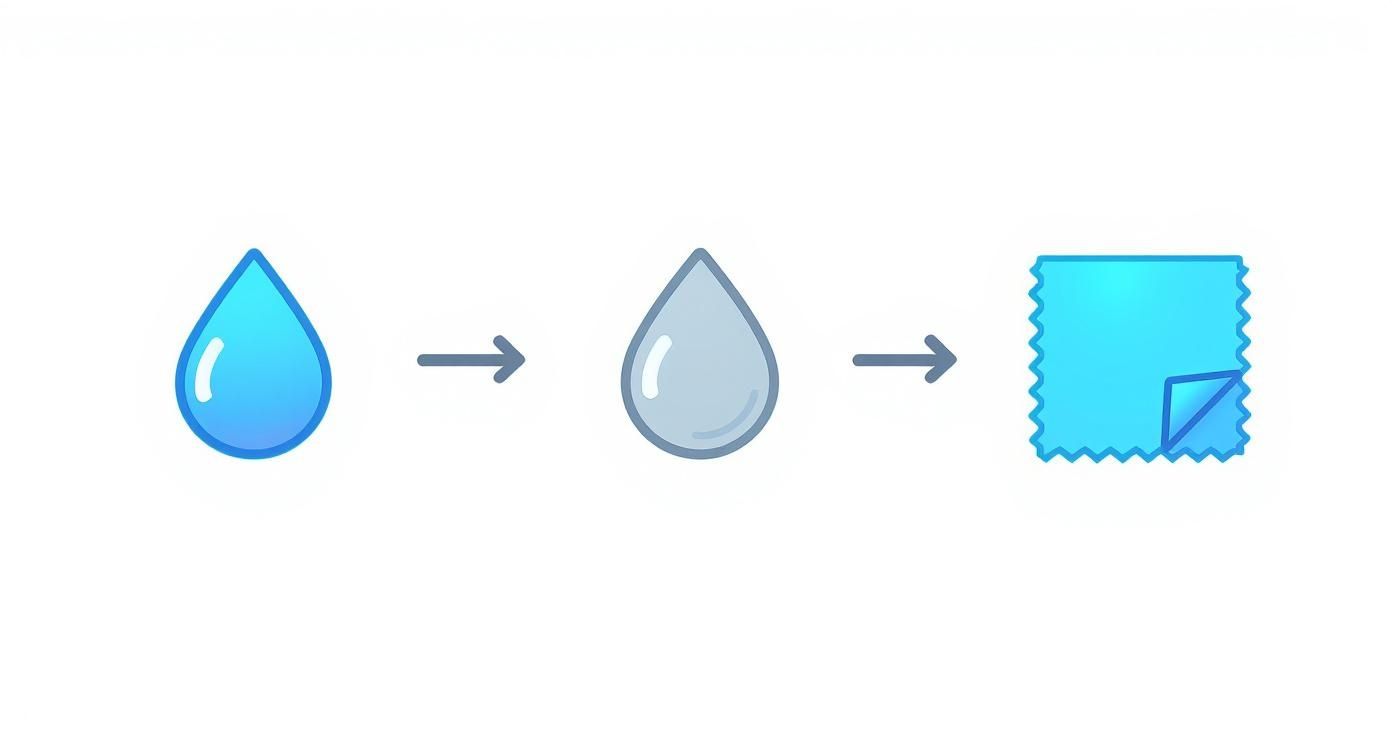
As you can see, it really just comes down to three core things: clean water, a gentle soap, and a dedicated microfibre cloth. You don't need any complex gadgets for a perfect result.
After you've lathered everything up, rinse the glasses thoroughly under that same stream of lukewarm water. You need to get all the soap residue off, as any suds left behind will dry into streaks. Give the glasses a gentle shake to get rid of most of the excess water droplets.
The Critical Drying Process
This final step is just as important as the first. Take a clean, completely dry microfibre cloth—one that hasn't seen a drop of fabric softener—and carefully dry your glasses. The secret here is to blot, not wipe. Use a gentle dabbing motion to absorb the remaining water from the lenses and frame.
Even with a microfibre cloth, rubbing the lenses too aggressively can just drag around any microscopic debris you might have missed, creating those dreaded fine scratches. A soft blot is all it takes for a spotless shine. If you're looking for that same streak-free finish on other glass surfaces around your home, you might find some great tips in professional window cleaning techniques.
A quick but critical note on safety: Never use hot water. High temperatures can cause the delicate coatings on your lenses (like anti-reflective layers) to crack or peel. This damage is known as "crazing," and it's irreversible. Always keep the water temperature mild to protect your investment.
Imagine you’ve just come back from the beach with sunscreen smudges all over your sunnies. Your first instinct might be to grab your t-shirt for a quick wipe. Don't do it. By following this process—rinsing the sand and salt off first, lathering with soap to dissolve the greasy sunscreen, and blotting dry—you'll save your expensive polarised lenses from certain doom.
Safe vs Damaging Cleaning Methods
It's easy to fall into bad habits. Here’s a quick-glance table to keep you on the right track, comparing what you should be using against the common items that can ruin your glasses and risk your eye health.
| Action | Do Use This (Safe Method) | Don't Use This (Damaging Method) |
|---|---|---|
| Washing Agent | Lukewarm tap water and a drop of lotion-free dish soap | Hot water, window cleaner, ammonia, or any other household chemical |
| Drying Material | A clean, dedicated microfibre cloth | T-shirts, paper towels, tissues, or napkins |
| Removal of Debris | Rinse with water first to wash away particles | Wiping the lenses while they are dry |
| Drying Motion | Gently blot the lenses and frame | Rub or wipe aggressively |
Stick to the "Do Use This" column, and you'll keep your glasses in top condition for years.
At Prescript Glasses, we know your eyewear is a crucial part of your daily life. That's why we can customise an eye wear package to suit your requirements, ensuring you not only have the best coatings for your lifestyle but also the know-how to care for them properly.
Cleaning Different Lens Coatings and Types
It’s a common mistake to think all spectacle lenses are the same. They’re not. Modern lenses come with a whole range of specialised coatings that do everything from reducing glare to protecting your eyes, so a one-size-fits-all cleaning method just won’t cut it.
Using the wrong technique can easily strip away these delicate layers, ruining a good pair of glasses and compromising their safety features. It’s all about protecting the advanced tech that helps you see clearly. Knowing what your specific lenses need is the secret to making them last.
Anti-Reflective and Blue Light Filtering Lenses
Lenses with anti-reflective (AR) and blue light filtering coatings are brilliant for cutting down glare from screens and headlights, but they are particularly sensitive to harsh chemicals. Alcohol-based cleaners and ammonia are the absolute worst offenders—they can cause the coating to crack, peel, or get that hazy look known as "crazing."
For these high-tech lenses, stick to the gold standard for safety: lukewarm water and a single drop of lotion-free dish soap. This simple mix is tough on oils and grime but gentle enough that it won't compromise the coating's integrity.
Think of your AR coating like the delicate finish on a high-end camera lens. You wouldn't hit it with window cleaner, would you? The same principle applies here. Gentle care is the only way to keep that view crystal-clear and glare-free.
Polarised and Photochromic Lenses
Polarised sunglasses and photochromic lenses (the kind that darken in the sun, like Transitions) have unique layered structures. You need to be mindful when cleaning them to keep them working properly.
- Polarised Lenses: These are often worn near water or snow, which means they’re magnets for salt and sand. Always rinse them thoroughly with clean, lukewarm water before you even think about wiping. For example, after a day of fishing, your lenses will have salt spray on them. Wiping dry salt crystals across the lens will permanently scratch the surface and the polarising film, ruining their effectiveness.
- Photochromic Lenses: The clever molecules that let these lenses adapt to light are actually embedded right into the lens material. Luckily, this makes them quite durable. The standard soap and water method is perfectly safe and won’t affect their light-adaptive magic. Just be sure to avoid extreme heat, like leaving them on a car dashboard, as that can mess with their performance over time.
If you’re curious about what makes each lens unique, you can dive into the different types of lenses for eyeglasses and see what they offer. This background knowledge really helps you appreciate why a tailored cleaning routine is so important.
Sunglass and Mirrored Coatings
That cool mirrored coating on your sunnies? It's actually a super-thin metallic layer on the outside of the lens, which unfortunately makes it very easy to scratch. The biggest mistake people make is wiping them when they're dry. Any tiny piece of grit or dust gets dragged across that delicate mirror finish, leaving permanent, visible marks.
Just like with polarised lenses, the golden rule for safety is to rinse first, always. After a gentle wash, blot them dry with a clean microfibre cloth. Don’t rub. Blotting is the key to avoiding streaks and fine scratches. Protecting this coating is vital for maintaining both the look and the protective qualities of your sunglasses.
At Prescript Glasses, we know that the right lenses are a critical part of your daily life. That's why we can customise an eye wear package to suit your requirements, making sure you get the perfect coatings for your lifestyle and the know-how to keep them in pristine condition.
Common Mistakes That Can Ruin Your Glasses
Knowing the right way to clean your glasses is only half the story. Just as important is knowing what not to do, because a few common habits can cause some serious, irreversible damage and pose health risks.
The biggest culprit? Using your shirt hem, a paper towel, or a napkin for a quick wipe. It feels harmless, but these materials are surprisingly abrasive. A paper towel, for instance, is just processed wood pulp. Wiping your lenses with it is like grinding tiny, rough fibres across the surface, creating a web of micro-scratches that will permanently cloud your view and compromise your vision safety.
The Dangers of Household Chemicals and Quick Fixes
Another habit that makes opticians cringe is reaching for household cleaners. A quick spritz of window cleaner or a wipe-down with a vinegar solution might seem like a good idea, but these products are loaded with harsh chemicals like ammonia and acetic acid. They’re notorious for stripping away the delicate, multi-layered coatings on your lenses, like your anti-reflective and UV-blocking layers, which are essential for protecting your eyes.
Then there’s the classic ‘hot breath’ method—fogging up a lens before wiping. Your breath simply doesn’t provide enough moisture to properly lubricate the surface. Instead, you end up turning any surface grit into a fine sandpaper, grinding dirt across the lens and doing way more harm than good. If you've ever had to deal with stubborn scratches, you know how frustrating it is. For more on that, check out our guide on how to get scratches out of your glasses.
The core lesson for your safety is simple: lenses are not just glass. They are sophisticated optical instruments with complex coatings. Treating them with care means avoiding shortcuts that can lead to permanent damage.
Hygiene Habits and Their Impact on Eye Health
Poor hygiene habits don't just affect your lenses; they can also pose a direct risk to your eye health. Research into the habits of Australian contact lens wearers found some concerning trends that easily apply to glasses, too. For example, a startling 12% of users rarely wash their hands before touching their lenses.
When you adjust your glasses with unwashed hands, you're transferring bacteria directly onto the frames and lenses. This can lead to skin irritation around your eyes, nose, and ears, or even infections. You can read more about these findings on hygiene and eye health.
Ultimately, steering clear of these common mistakes is the key to maintaining crisp, clear vision and making sure your eyewear lasts as long as it should. We know protecting your investment is important, which is why we can customise an eye wear package to suit your requirements, complete with our best advice on proper care.
Your Eyeglass Cleaning Questions Answered
We've walked through the best ways to get your glasses sparkling, but I know there are always those few specific questions that pop up. So, let’s tackle some of the most common ones I hear, helping you handle those tricky situations and reinforcing the best habits for looking after your specs and your eye health.
How Often Should I Really Clean My Eyeglasses?
For the best vision and hygiene, a proper deep clean with soap and water once a day is the gold standard. I always tell people to make it part of their daily routine, just like brushing your teeth. It’s the only way to stop that gradual buildup of skin oils and everyday grime that can lead to skin irritation or eye infections.
Of course, if you've been working in the garden, worn makeup, or been cooking with oil, you'll probably need an extra wash. For those quick smudges during the day, a clean microfibre cloth is your safest bet.
Can I Use Hand Sanitiser or Rubbing Alcohol in a Pinch?
Honestly, just don't. It’s tempting, I get it, but both hand sanitiser and rubbing alcohol are far too harsh for your lenses. They contain high concentrations of alcohol that can literally strip the delicate coatings—like anti-glare or UV protection—right off your lenses. That kind of damage is permanent and can wreck a perfectly good pair of glasses.
In a real emergency where your glasses are unusable, your safest bet is to find a bathroom. Use lukewarm water and a tiny drop of lotion-free hand soap, then gently dry them with the softest, cleanest cloth you can find. It’s a much safer option that protects your investment and the integrity of your lens coatings.
What Is the Best Way to Clean Grimy Nose Pads?
Ah, nose pads. They're magnets for makeup, sweat, and skin oils, which can get pretty gross and even lead to acne breakouts or skin irritation if not cleaned regularly.
When you're doing your daily soap-and-water clean, grab a dedicated soft-bristled toothbrush. Use it to gently scrub the nose pads and the little crevices around them. This simple trick lifts away all that stubborn buildup without any risk of scratching the frame or lenses, promoting better skin health.
If your nose pads are permanently discoloured or just worn out, pop into your local optician. They can usually replace them for you quickly and for very little cost.
Are At-Home Ultrasonic Cleaners Safe for Glasses?
While the professional-grade ultrasonic cleaners we use in optical shops are fantastic, the at-home models can be a bit of a gamble. The intense vibrations can sometimes loosen the tiny screws holding your frame together or even damage certain lens coatings if the frequency isn't just right, potentially causing a lens to fall out.
For regular, day-to-day care, the manual hand-washing method is both safer and more than effective enough. If you're craving that super-deep, professional-level clean, just ask your local optical shop next time you're nearby—many will do it for you as a quick, and often free, service.
At Prescript Glasses, our goal is to make sure you have a crystal-clear and comfortable view every single day. We know the right eyewear makes all the difference, which is why we can customise an eye wear package to suit your requirements. Explore our lens options and find your perfect pair at https://www.prescriptglasses.com.