Are Blue Light Glasses Worth It? An Evidence-Based Guide

So, are blue light glasses really worth the hype? For most of us, the science is pointing to a clear answer: probably not. The evidence suggests they make little to no difference for digital eye strain or sleep quality.
That familiar feeling of tired eyes, dryness, and headaches after a long day staring at a screen is very real. But it's almost always caused by how you're using your devices, not the blue light itself. For genuine eye health and safety, it's more effective to focus on better habits.
The Verdict on Blue Light Glasses: A Quick Answer
You’ve seen the ads and heard the promises. Blue light glasses are marketed as the ultimate fix for reducing eye strain, stopping screen-induced headaches, and helping you sleep like a baby. It's a compelling story, but once you dig into the science, the picture changes.
The discomfort you feel is a genuine condition called digital eye strain. Think of it like holding a weight in one position for hours on end—eventually, your arm muscles would scream in protest. Your eye muscles experience a similar kind of fatigue from constantly focusing on a nearby screen, often without blinking enough. That blurry vision and dull headache at the end of the workday? That’s your eye muscles telling you they've been overworked. A practical example is a graphic designer who, after hours of pixel-perfect work, experiences a tension headache; this is a direct result of muscle fatigue, not blue light exposure.
What the Research Actually Says
Recent, high-quality studies have put these claims under the microscope. A major 2023 Cochrane systematic review—which is a gold standard in medical research—analysed 17 randomised controlled trials. Their conclusion? Blue-light filtering lenses likely offer little to no real benefit for eye strain, visual performance, or sleep quality when compared to standard lenses. If you want to dive deep, you can read the full research about these blue light findings and see the evidence for yourself.
The real issue for most people isn't the type of light coming from their screens, but the sheer duration and intensity of their screen time. The most effective fix usually involves changing habits, not just changing your glasses.
This is a pretty big gap between marketing and science. To make it clearer, here’s a quick breakdown of the common claims versus what the evidence shows.
Blue Light Glasses Claims vs Scientific Evidence
| Common Claim | What the Science Says |
|---|---|
| Reduces Digital Eye Strain: "Stops tired, sore, and dry eyes from screen use." | Little to no effect. Studies, including the 2023 Cochrane review, found that blue light filters didn't significantly reduce eye strain symptoms compared to non-filtering lenses. The strain comes from focusing and reduced blinking, not blue light. |
| Improves Sleep Quality: "Helps you fall asleep faster by blocking light that disrupts melatonin." | Inconclusive and likely minimal impact. While blue light can affect sleep cycles, the amount from screens is tiny compared to sunlight. Most studies found no meaningful improvement in sleep quality for people wearing blue light glasses. |
| Prevents Eye Damage: "Protects your eyes from long-term damage like macular degeneration." | No evidence. The American Academy of Ophthalmology states there is no scientific evidence that blue light from digital devices causes any damage to the eye. This is a key point for eye health and safety. |
The bottom line from the research is that while marketing focuses heavily on the "dangers" of blue light, science points firmly towards digital eye strain as the real culprit behind our screen-related discomfort.
Now, this doesn't mean all glasses are useless. Some people find that a good anti-reflective coating helps reduce screen glare, which can offer some relief. Everyone's eyes and work habits are different. That’s why we can customize an eye wear package to suit your requirements, focusing on features proven to help your specific situation, rather than just what's trendy.
What Exactly Is Blue Light?
To get to the bottom of the blue light glasses debate, we first need to know what we’re actually talking about. Blue light isn't some weird, artificial byproduct of our digital lives. It’s a completely natural and vital part of the world around us.
Think of the visible light spectrum as a rainbow of every colour the human eye can see. Blue light is simply one of the colours on that spectrum, right next to violet. Its claim to fame is its short wavelength and high energy. But this isn't a bad thing on its own—in fact, the biggest source of blue light we encounter every day is the sun.
That’s right. The same warm, natural sunlight that governs our sleep-wake cycle and lifts our mood is absolutely packed with blue light. It’s the very reason the sky looks blue. Knowing this is crucial, because it completely changes how we should think about our screens.
Putting Screen Exposure Into Perspective
The real conversation isn't about whether blue light exists, but about the timing and dose of our exposure. And when it comes to screens, our fears often blow the actual dose way out of proportion.
Let’s try a practical example. Imagine all the blue light you get from your phone or laptop over a full day is a single drop of water. Now, picture the blue light you soak up during a quick 15-minute walk outside on a sunny day. That’s a full bucket. The difference in volume is just massive.
Even after an eight-hour workday glued to a computer, the total amount of blue light hitting your eyes is a tiny fraction of what you’d get from a short stroll in the sun. This single fact is one of the most important things to grasp when deciding if blue light glasses are for you.
The narrative often paints blue light from screens as a major threat to our eye health, but the science shows that exposure levels are incredibly low compared to our daily dose from the sun.
This doesn't mean your eyes don't feel tired after staring at a screen for hours. It just strongly suggests that blue light itself probably isn't the main culprit behind that feeling of strain.
Blue Light In The Australian Context
Here in Australia, we’re just as glued to our devices as anyone else. From work computers to the smartphones that never leave our side, screens are everywhere. But it’s important to ground this reality in what the science actually says.
Study after study shows that blue light exposure from screens is orders of magnitude lower than what we get from natural sunlight. The British Public Health England team, for example, confirmed that the amount of blue light from screens poses no significant risk to eye health and safety. This mismatch highlights why blue light from our devices might be less of a boogeyman than we've been led to believe, even with our modern lifestyles. You can dig deeper into these findings and the broader context of blue light research.
Ultimately, while the conversation often centres on blocking blue light, your personal needs might be completely different. You might find more relief from an anti-glare coating that cuts down reflections, or perhaps a specific tint to boost contrast. That’s why we can customize an eye wear package to suit your requirements, making sure your glasses are designed to solve your specific comfort issues—whether that involves blue light filtering or another lens technology altogether.
The Real Culprit Behind Your Screen Fatigue
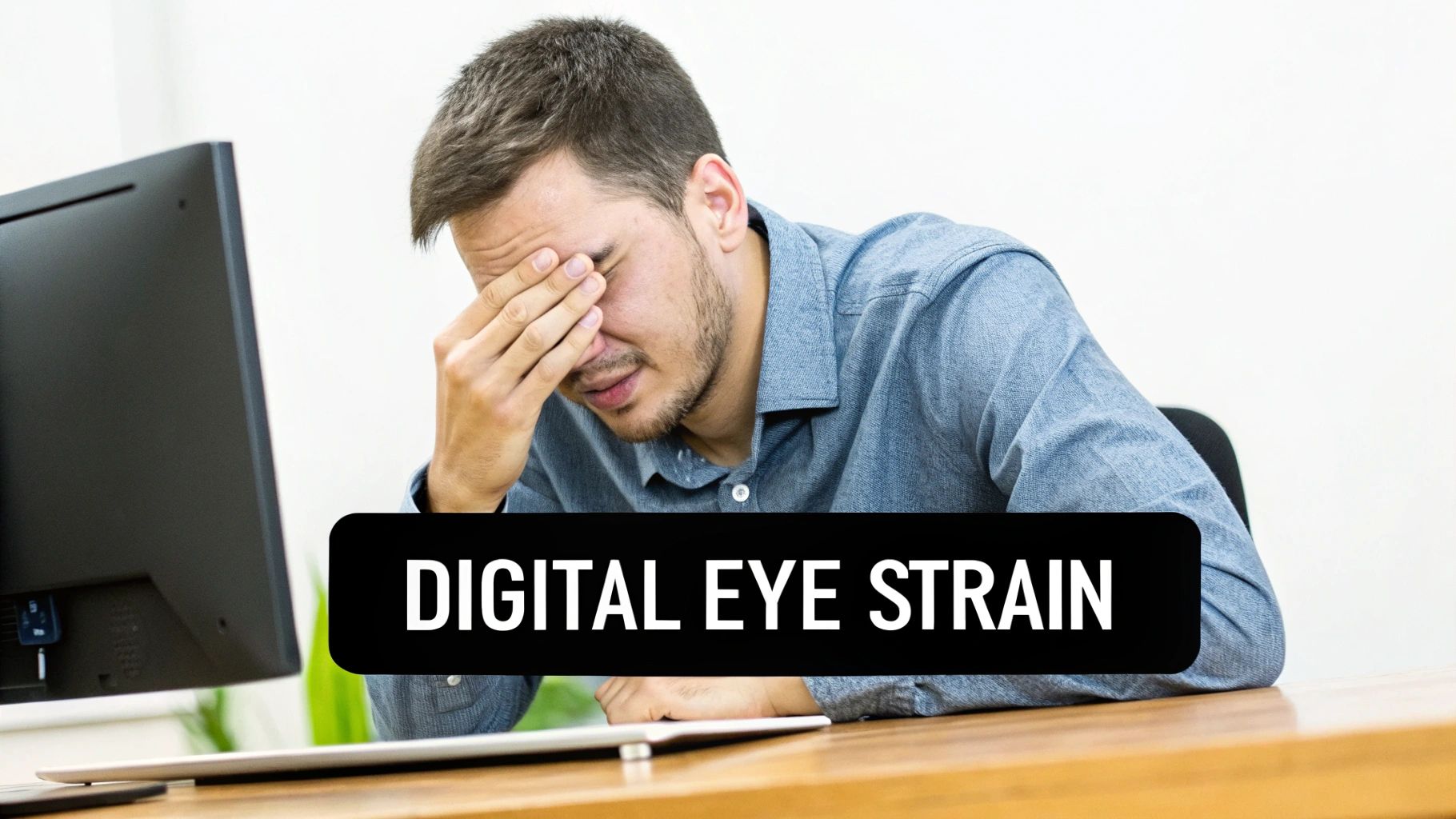
If you've ever wrapped up a long day staring at a screen with gritty, tired, and sore eyes, you're in good company. It’s tempting to blame the bright blue light from our monitors, but the science points elsewhere. The real reason for that end-of-day discomfort is a condition called digital eye strain.
Think of it this way: your eyes are filled with tiny muscles that work tirelessly to focus on things up close. When you lock your gaze on a screen for hours on end, you're essentially forcing those muscles into a static hold—like holding a plank at the gym. It's a non-stop workout with no rest, and eventually, those muscles get exhausted. This is what causes that feeling of strain, and it has surprisingly little to do with blue light itself.
This constant, fixed focus triggers some very real physical responses. You start blinking less often, your eyes dry out, and the muscles that adjust your focus become completely overworked. Those familiar headaches, moments of blurry vision, and general eye discomfort are all direct symptoms of this muscular fatigue.
Unpacking Digital Eye Strain
So, what’s actually going on inside our eyes during a long session at the computer? It’s not just one thing, but a mix of our physical habits and the environment around us. Pointing the finger at blue light is an oversimplification of a much bigger issue. If we’re serious about eye health and safety, we need to get to the root of the problem, not just chase an unproven symptom.
Here are the main things that really contribute to digital eye strain:
- Reduced Blink Rate: When we’re concentrating on a screen, we tend to forget to blink. In fact, our blink rate can plummet by as much as 50%. Blinking is how our eyes stay moist and lubricated, so when we do it less, we get that dry, irritated, gritty feeling. Think about that urge to rub your eyes after finishing a big report—that’s your body crying out for moisture.
- Constant Focusing: Your eyes are built to constantly shift their focus, looking at things near and far. But when they’re locked onto a screen just centimetres from your face for hours, the tiny ciliary muscles that handle focusing get completely worn out. This exhaustion is what leads to blurry vision and headaches.
- Poor Ergonomics: How you sit and where your screen is positioned matters a lot. If your monitor is too high, too low, or angled awkwardly, it forces your eyes and neck into unnatural positions, adding another layer of physical strain. Imagine trying to read a book held right up against your forehead—you'd feel the strain instantly. The same principle applies to your desk setup.
Asking "are blue light glasses worth it?" often misses the bigger picture. A better question is, "How can I reduce the physical strain on my eyes?" This shifts the focus from a simple product fix to building better habits, which is where you'll find real, lasting relief.
The Real-World Impact on Your Eyes
Knowing the mechanics of eye strain is one thing, but spotting the symptoms in your daily life is the key to actually doing something about it. For many of us, these symptoms have become so normal they just feel like part of a "long day at the office."
Take a practical example: a graphic designer who spends eight hours fine-tuning images. They might notice their vision gets a bit fuzzy by the late afternoon. That’s not damage from the screen’s light; it’s temporary muscle fatigue from intense, prolonged focus. Or think of a student pulling an all-nighter for an essay. The tension headache they get isn't from blue light, but from a combination of sustained concentration and poor posture hunched over a laptop. If you want to dive deeper into the full range of issues, our guide on the symptoms of digital eye strain breaks it all down.
If this sounds familiar, it might also be worth looking at your digital habits as a whole. That screen fatigue could be one of several signs you might need a digital detox to give your mind and body a much-needed break. Since the problem is rooted in our behaviour, the solutions should be too. Simple changes to your routine can make a world of difference, often more so than just relying on eyewear. But if you do need glasses, we can customize an eye wear package to suit your requirements, focusing on things like anti-glare coatings that tackle proven issues like screen reflections.
Who Might Actually Consider These Glasses
After looking at the science, it's pretty clear that blue light glasses aren't the magic fix for digital eye strain that some marketing claims they are. The evidence keeps pointing back to things like not blinking enough and staring at one fixed distance as the real problems.
But that doesn't mean we should just write them off completely. The conversation is a bit more nuanced than a simple "yes" or "no".
There are definitely specific situations where the benefits, even if they’re just perceived, might make them a worthwhile choice for some people. Let’s dive into who those people are, not to argue with the science, but to understand the real-world relationship between comfort, perception, and our screen-heavy lives.
High-Intensity Screen Users
Some jobs and hobbies aren’t just about looking at a screen; they’re screen marathons that demand incredible focus. For these folks, any tiny bit of extra comfort can make a huge difference, no matter the scientific reason behind it.
Think about these practical examples:
- Competitive Gamers: A pro gamer’s entire career relies on lightning-fast reflexes and staying locked in for hours on end. They’re not just watching a movie; they’re in a high-stakes, visually intense environment. The anti-glare coating on many blue light glasses can cut down on distracting reflections from monitors and room lighting, which is a real, practical advantage.
- Programmers and Coders: A developer might spend an eight-hour day glued to lines of code, often on a dark background. The very subtle yellow or amber tint in some lenses can boost the contrast and take the edge off bright text. That slight shift in colour tone can genuinely make their eyes feel less tired by the end of the day.
For these users, the conversation isn’t just about filtering blue light. It’s often the other features of the glasses—like glare reduction and a slight tint—that provide a level of comfort they find incredibly valuable.
The real win for intense screen users often comes from the secondary features of the eyewear. An anti-reflective coating or a gentle tint can make a noticeable difference in how comfortable your eyes feel after a long session.
The Power of the Placebo Effect
Never underestimate the power of your own mind. The placebo effect is a real, well-documented thing. If you genuinely believe something is helping you, you’re very likely to feel better, even if the thing itself has no direct physical effect.
That doesn't mean the relief isn't real—the feeling of comfort is absolutely genuine. It just suggests the cause might be more psychological than physiological. For someone who battles screen-induced headaches, the simple act of putting on a pair of glasses they believe will help can lower their anxiety and change how they experience their symptoms.
As a practical example, take a student pulling an all-nighter. They might feel their eyes are less strained with blue light glasses on. Is it the lenses? Or is it because the glasses act as a physical reminder to be more mindful, maybe even prompting them to take a few extra breaks? In that case, the glasses are a psychological cue for better habits, making them feel completely worth it. As many eye care professionals point out, this is often how adults can benefit from blue light glasses—through these very real, subjective comfort factors.
A Focus on Your Personal Needs
At the end of the day, whether you try blue light glasses is a personal call, and it really depends on your own habits and sensitivities. The science tells us they probably won’t fix the root cause of digital eye strain, but your own experience is just as important. The main goal is always to prioritise your eye health and safety by figuring out what works for you.
Maybe you’re just really sensitive to screen glare. Or perhaps you simply find the warmer tone from tinted lenses more comfortable to look at. The trick is to go in with realistic expectations. They aren't a silver bullet, but they could be one small part of a bigger picture that includes better posture, taking frequent breaks, and dialling in your screen settings.
Because everyone is different, having options is key. At Prescript Glasses, we can customize an eye wear package to suit your requirements. This means we can focus on what will actually help you—whether that’s a top-tier anti-reflective coating, a specific lens tint, or a light blue light filter to give you peace of mind.
Strategies That Actually Relieve Eye Strain
Since the evidence suggests blue light glasses aren't the magic bullet for digital eye strain, what actually works? The good news is that the most effective solutions are simple, free, and target the real culprits behind screen fatigue—things like muscle overuse and dryness.
Instead of getting bogged down in blocking a specific colour of light, these strategies address the physical stress our eyes endure during long screen sessions. The best approach for your eye health and safety involves building small, sustainable habits into your day that give your eyes the rest and support they need.
Embrace the 20-20-20 Rule
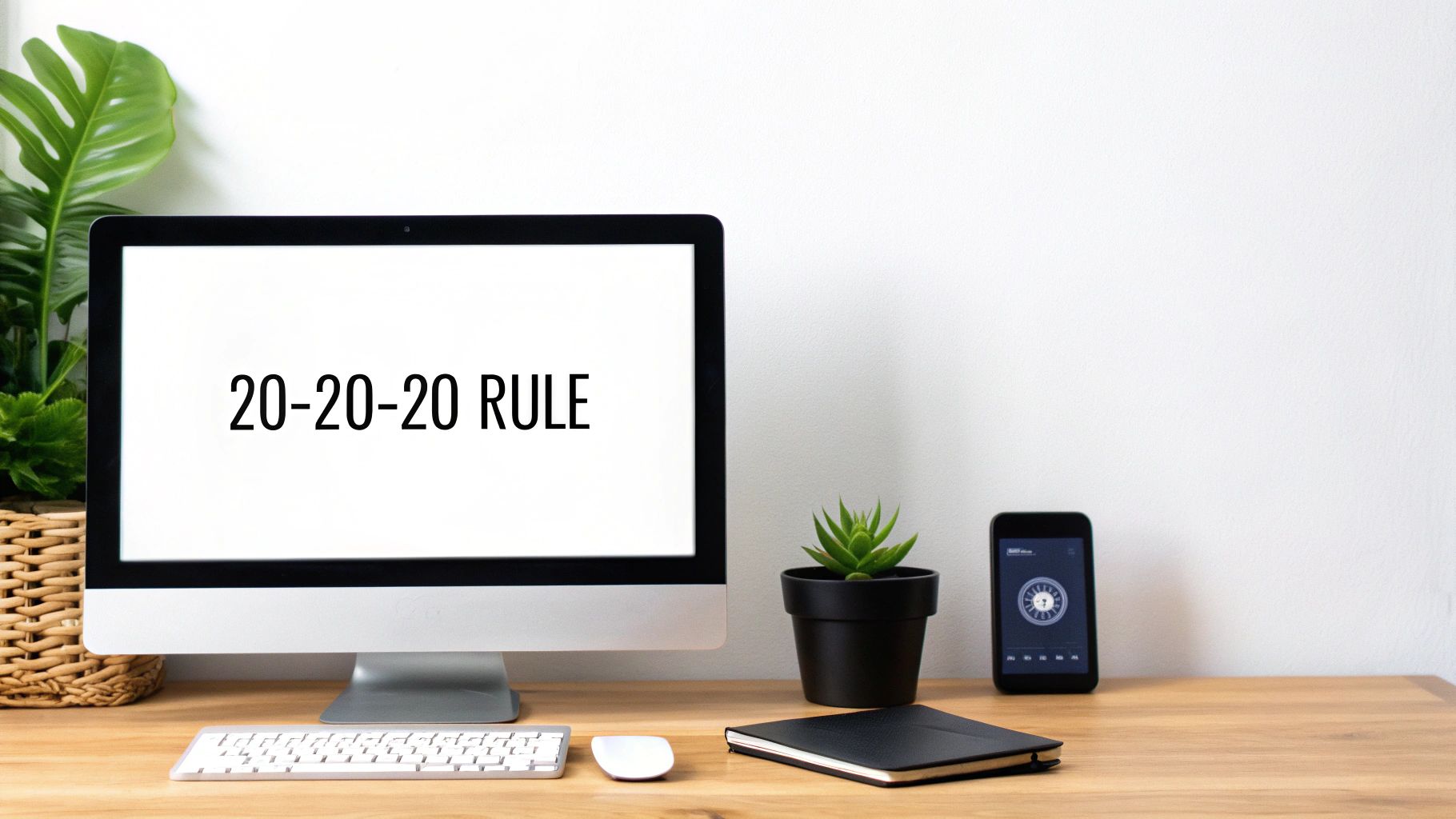
One of the most powerful habits you can build is the 20-20-20 rule. It’s a dead-simple memory aid for a crucial action: giving your eye muscles a scheduled break from close-up work.
Here’s how it works:
- Every 20 minutes of screen time…
- Look at something 20 feet away (about 6 metres)…
- For at least 20 seconds.
That simple action forces your ciliary muscles—the tiny muscles that control your focus—to relax. Think of it like putting down a heavy weight you’ve been holding for a while. That brief pause is often all it takes to reset your focus and prevent the muscle fatigue that leads to headaches and blurry vision.
For a practical example, a software developer could set a recurring 20-minute timer. When it goes off, they can just look out the window at a tree across the street for half a minute before diving back into their code. It’s a tiny interruption that makes a massive difference over an eight-hour day.
Optimise Your Workstation and Environment
Your physical setup plays a huge role in how strained your eyes feel. A poorly organised desk forces your eyes and body to work harder than they need to. A few small tweaks can bring immediate relief.
Here are a few practical adjustments you can make right now:
- Screen Positioning: Place your monitor about an arm's length away. The top of the screen should be at or slightly below eye level, so you’re looking slightly downwards at it. This simple change reduces strain on both your eyes and your neck.
- Reduce Glare: Position your screen to avoid glare from windows or bright overhead lights. If you can’t move your desk, an anti-glare screen filter can be a game-changer—often more effective than blue light filtering for immediate comfort.
- Adjust Ambient Lighting: Your screen shouldn’t be a beacon in a dark room. Make sure the room is comfortably lit to reduce the harsh contrast between your bright screen and a dark environment.
Use Your Device's Built-In Tools
Before you spend a cent on accessories, make sure you're using the powerful, free tools already built into your computer and smartphone. They’re designed specifically to make screens more comfortable.
The most immediate relief often comes from adjusting what’s right in front of you. Lowering screen brightness to match your room’s lighting and increasing text size can reduce eye strain instantly, without any extra cost.
Another fantastic, cost-free tool is your device’s night mode. Features like 'Night Shift' on Apple devices or 'Night Light' on Windows automatically warm up your screen's colours in the evening, which can make nighttime viewing feel much less harsh.
Of course, screen use often leads to dryness because we blink less. For direct relief, understanding the benefits of warm eye compress for dry eyes can be highly effective. It’s another practical step that addresses a direct symptom of digital eye strain.
We've gathered some of the most practical, evidence-based methods for reducing eye discomfort into the table below.
Effective Strategies for Managing Digital Eye Strain
| Strategy | How It Helps | Practical Example |
|---|---|---|
| Blink More Often | Prevents eye dryness by keeping the cornea lubricated. | Put a sticky note on your monitor that says "Blink!" to serve as a constant reminder. |
| Stay Hydrated | Dehydration can worsen dry eye symptoms. | Keep a water bottle on your desk and aim to drink it throughout the day, not just when you feel thirsty. |
| Take Regular Breaks | Gives your entire body—not just your eyes—a chance to reset. | Use your 20-20-20 break to stand up, stretch, and walk around for a minute. |
| Increase Text Size | Reduces the effort your eyes need to exert to read. | Use Ctrl + (or Cmd +) to quickly zoom in on web pages and documents. |
| Use Lubricating Eye Drops | Provides immediate relief for dry, itchy, or gritty-feeling eyes. | Keep a bottle of preservative-free artificial tears handy for when you feel discomfort setting in. |
By focusing on these practical, evidence-based strategies, you're tackling the root causes of digital eye strain directly. While some people wonder are blue light glasses worth it, these habit-based changes offer guaranteed relief. If you still feel you need eyewear, we can customize an eye wear package to suit your requirements, focusing on proven features like anti-reflective coatings that reduce glare and improve visual comfort.
How to Choose Eyewear That Suits Your Needs
If you've weighed the evidence and decided to try a pair of glasses—or you just need a new prescription—the next step is finding the right fit for you. It’s easy to get lost in marketing buzz, but the goal is to find eyewear that genuinely makes a difference to your daily comfort.
It’s about focusing on the features that will actually help you. For some, glare reduction is a much bigger priority than blue light filtering. For others, a slightly tinted lens might be the game-changer they need for those long hours staring at a screen.
Lens Tints: Clear vs Amber
One of the first decisions you'll make is the type of blue light filtering lens you want. They generally fall into two categories, each with its own pros and cons.
- Nearly Clear Lenses: These are the most common lenses you'll find. They’re designed to filter a small percentage of blue light while keeping your colour perception as natural as possible. For a practical example, a graphic designer, video editor, or anyone whose job relies on accurate colours, this is really the only viable option.
- Amber or Yellow-Tinted Lenses: These lenses are much more obvious and block a significantly higher amount of blue light. This aggressive filtering can make everything look warmer, which is a deal-breaker for some. But for a writer or coder staring at black-and-white text all day, the colour shift isn't a problem, and they might even find the warm tone more soothing.
The choice really comes down to what you do every day. Think about your professional needs and visual comfort first.
The most overlooked feature for computer users is often the most beneficial: a high-quality anti-reflective (AR) coating. This coating is specifically designed to minimise glare from screens and overhead lights, which is a proven cause of eye strain.
Why Anti-Reflective Coatings Matter More
While blue light gets all the attention, reflections from screens and lights are a constant source of visual "noise" that forces your eyes to work harder. A good AR coating can offer more noticeable relief from digital eye strain than a blue light filter alone.
As a practical example, think about an office worker sitting under bright fluorescent lights. Their lenses are constantly catching reflections. An AR coating tackles this problem head-on, creating a much clearer and more comfortable viewing experience. This focus on practical solutions is crucial for genuine eye health and safety.
If you're trying to figure out which features to prioritise, our guide to the best blue light blocking glasses can help break down the different options available.
Customising Your Perfect Pair
At the end of the day, the best eyewear is the pair built for your unique situation. There is no one-size-fits-all solution. Your job, your hobbies, and even your personal sensitivity to light all play a part in what will work best for you.
This is why a personalised approach is so important. Your ideal pair might combine a prescription with a top-tier AR coating and just a light blue light filter for peace of mind. Or maybe you need non-prescription glasses with a darker tint for your late-night gaming sessions. The key is having the flexibility to choose.
At Prescript Glasses, we can customize an eye wear package to suit your requirements. By looking at your individual needs, we can build a pair of glasses with the exact lens technology that will give you the most benefit, helping you make a smart investment in your visual comfort.
Your Questions About Blue Light Glasses Answered
Let's cut through the noise and tackle some of the most common questions people have. Making the right call on blue light glasses means getting straight, science-backed answers to your biggest concerns.
Can Phone Blue Light Permanently Damage My Eyes?
This is a huge source of anxiety for many, but the current scientific consensus is pretty clear on this one: there is no evidence that the blue light from our digital screens causes permanent eye damage like macular degeneration.
While you might have seen scary headlines about lab studies on isolated cells, those experiments use incredibly intense blue light that just doesn't compare to real-world use. The amount of blue light coming from your phone is a tiny fraction of what you get from natural sunlight, and our eyes have their own built-in defences. The real conversation around eye health and safety should be about managing digital eye strain, not fearing permanent damage from your screen.
Are Expensive Blue Light Glasses More Effective?
Not always. A higher price tag usually gets you better frame materials, a designer brand name, or a superior anti-reflective coating—which, to be fair, is genuinely great for cutting down glare. However, it’s not a guarantee of better blue light filtering.
A basic, affordable pair can filter blue light just as effectively as a pricey one. The key is to know what you're actually paying for. In many cases, a high-quality anti-reflective coating is a better investment for your day-to-day comfort than the blue light filter itself.
Do I Need Glasses If I Use Night Mode?
For most people, simply switching on your device's built-in night mode is a fantastic, and free, alternative. These software filters warm up the screen's colour temperature, which effectively cuts down on blue light emissions, especially in the evening.
So, what's the difference? It really comes down to consistency. As a practical example, think of someone who works across a desktop, a laptop, and a tablet; a pair of glasses provides a constant filter without you having to fiddle with settings on every single screen. But for casual evening phone use, your device's night mode is a perfectly good and effective tool for the job.
Your vision is unique, and your eyewear should be too. At Prescript Glasses, we can customize an eye wear package to suit your requirements, ensuring you get the perfect combination of prescription, coatings, and tints for your lifestyle. Find your ideal pair at https://www.prescriptglasses.com.