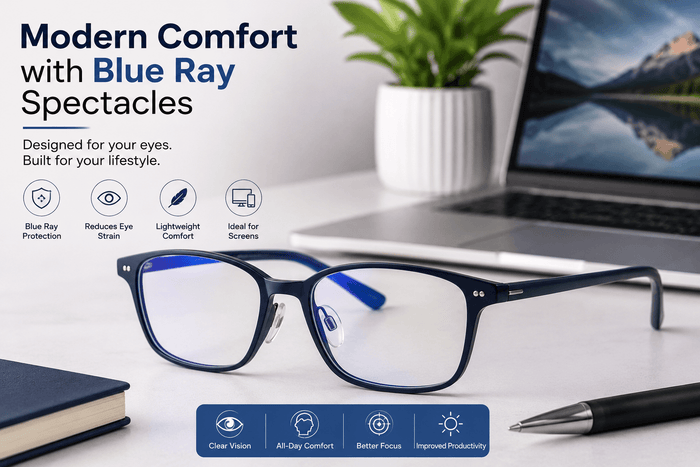
The majority of people tend to spend most of their time on screens. Work emails, video chats, online purchases, and more. Staying up late can cause problems like dry and tired eyes, redness and sometimes headaches.
These are some reasons blue light glasses have become so widely used recently, as they make screen use easier, but it's logical to question their effectiveness. This blog will help you understand the basics behind them in a simple way.
What is blue light?
Blue light is a type of visible light found in the world around us. The most significant source of blue light is the sun. Phones, laptops, tablets, and TVs also emit it, but only in small quantities. When we spend long periods staring at screens close to our eyes, it can cause eye tiredness or redness. It's natural to ask whether blue light causes eye strain. And blue light glasses help to reduce the strain on your eyes.
What does the research say?
The truth is, there's no clear-cut evidence on this. Research has found little evidence that filtering this light reduces eye strain during the day. Eye-care professionals also say that regular exposure to screens isn't known to be bad for the eyes.
But sleep is a different case. Exposure to bright screens right before bed can disrupt the body's sleepy signals in some individuals. It may not seem like a huge effect, but it's where blue-light filtering has the most support for your eyes.
What really causes tired eyes?
In most cases, the type of screen we use matters more than its color. They include:
-
Less blinking: We blink much less when focusing on a screen, so our eyes become very dry.
-
Constant close focus: Constantly viewing an object over a period causes strain to the focusing muscles.
-
Glare and improper lighting: Glare from bright windows and improper lighting increase workload on the eyes.
-
Improper screen positioning: Screens that are too high or too low add extra strain to the eyes.
Simple habits that help
A few small changes make a real difference, and they cost nothing:
-
Every 20 minutes, look at something far away for about 20 seconds.
-
Blink fully and often, especially during long tasks
-
Match your screen brightness to the light in the room.
-
Keep the screen about an arm’s length away from your face
-
Switch on night mode in the evening.
Who may benefit from blue light lenses?
These lenses can still be a sensible choice for some people:
-
Those who work on screens for long hours and want extra comfort.
-
Anyone who uses a phone or tablet late at night.
-
People who like a coating that also helps cut down on reflections.
Think of them as an optional extra, not a cure. If your eyes stay uncomfortable even after you improve your habits, it is wise to visit an optometrist to check for other causes.
Finding the best blue light glasses online
Blue light glasses will not fix every sore eye, but they can help reduce blue light's effect on your eyes. Good screen habits, proper lighting, regular breaks and regular eye checkups do most of the work. The right lenses add a little extra comfort.
If you want a trustworthy place to find blue light glasses in Australia, visit Prescript Glasses, as it is a good place to start. You will find all types of glasses at affordable prices. Find a pair that suits your budget and style. Take your time, look after your eyes, and make screen time a little easier.