How to Get Scratches Out of My Glasses A Practical Guide

We’ve all been there. You put on your glasses, and suddenly, a tiny scratch becomes the only thing you can see. It’s maddening. While the internet is full of so-called "hacks" that promise a quick fix, the reality is that most at-home methods can cause permanent damage, especially to modern lenses with special coatings. Your eye health and safety must always be the priority.
Before you reach for the toothpaste, it’s crucial to understand what you’re working with. The safest approach always starts with knowing your specific lenses and coatings. Trying a risky DIY fix to save a few dollars could end up destroying expensive lens coatings, warping your prescription, and ultimately harming your vision.
Why That Tiny Scratch on Your Glasses Is So Annoying
That little imperfection isn't just a cosmetic issue; it's actively messing with the science that helps you see clearly. For professionals, students, and gamers across Australia, this daily annoyance can shatter concentration, trigger eye strain, and undo the very clarity you paid for.
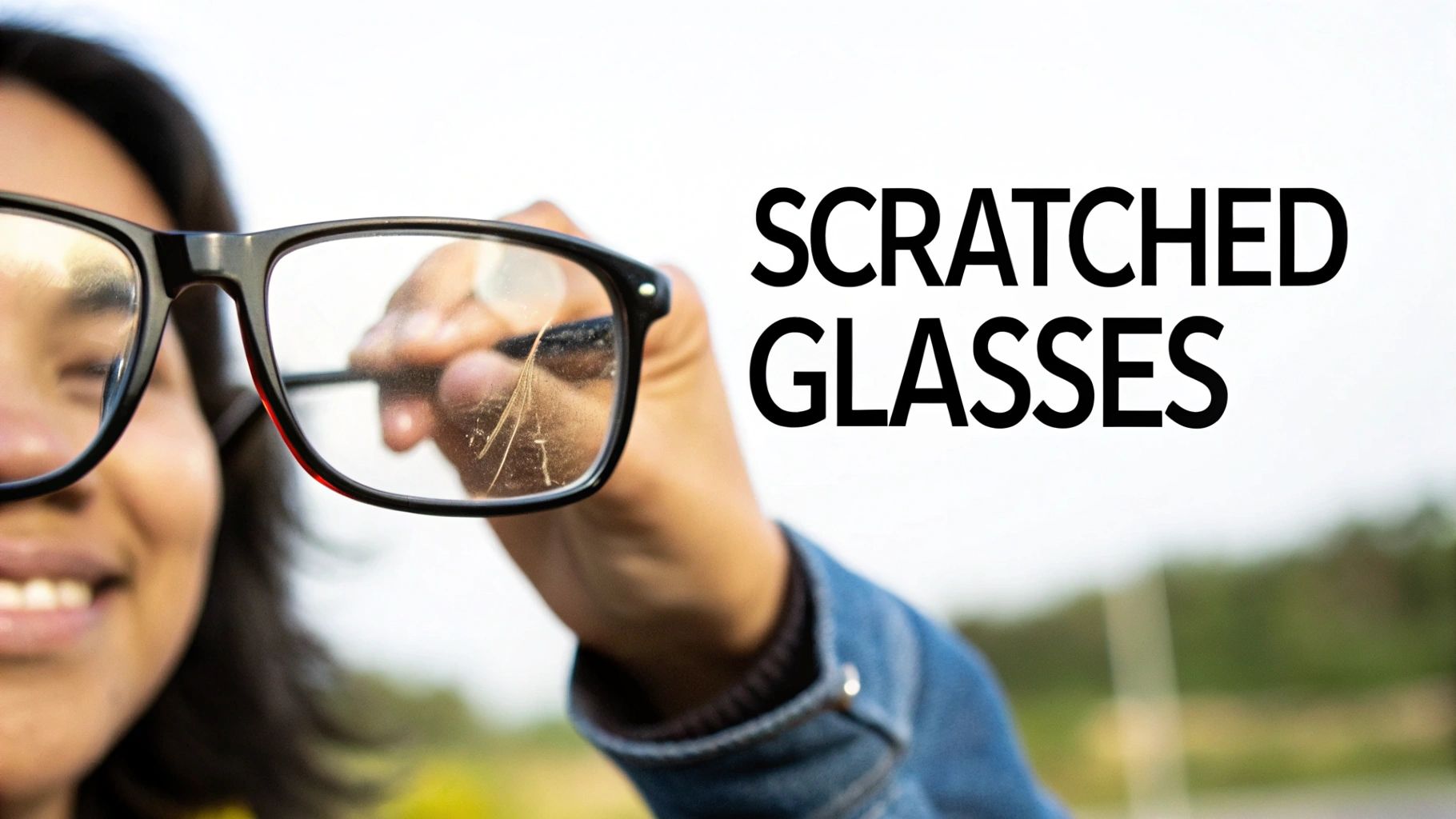
A scratch creates a rough, uneven patch on your lens. Instead of light passing through cleanly to your eye, it hits that patch and scatters in all directions. Your brain interprets this scattered light as a blur or distortion, forcing your eyes to work overtime just to focus.
This guide is designed to cut through the myths. We’ll skip the bad advice about baking soda and focus on safe, practical steps that protect your vision and your investment in good eyewear.
The Real Impact of Scratched Lenses
Trying to live with scratched glasses isn't just irritating—it can have a real impact on your comfort, performance, and overall eye health. Over time, it can lead to physical symptoms you might not even connect to your specs.
- Increased Eye Strain: Your eye muscles are constantly fighting to see past the blemish, which leads to fatigue and that all-too-familiar tired-eye feeling.
- Persistent Headaches: All that extra effort to refocus can easily trigger tension headaches, especially after a long day of reading or staring at a screen.
- Reduced Visual Acuity: Simply put, scratches can interfere with the optical precision of your prescription. This can be particularly dangerous when driving at night, as scratches can cause light from oncoming headlights to flare, dangerously impairing your vision.
And this isn't a rare problem. Informal surveys from Aussie optometry clinics suggest that up to 68% of us with prescription glasses notice scratches within the first year, often from small, everyday mishaps. This is a huge deal, especially when you consider our screen time now averages a whopping 7.2 hours daily, which has also driven a massive demand for coatings like blue light filters. You can learn more about Australian eyewear market trends and see just how common this is.
Here’s the most important thing to remember: your eye health comes first. A risky DIY fix to save a few dollars could end up destroying expensive lens coatings or, worse, compromising your vision—costing you much more in the long run.
We believe in making smart choices. If your lenses are truly beyond repair, we can help you explore your options. With our service, we can customize an eye wear package to suit your requirements, getting you back to seeing the world clearly and comfortably.
Know Your Lenses Before You Touch Them
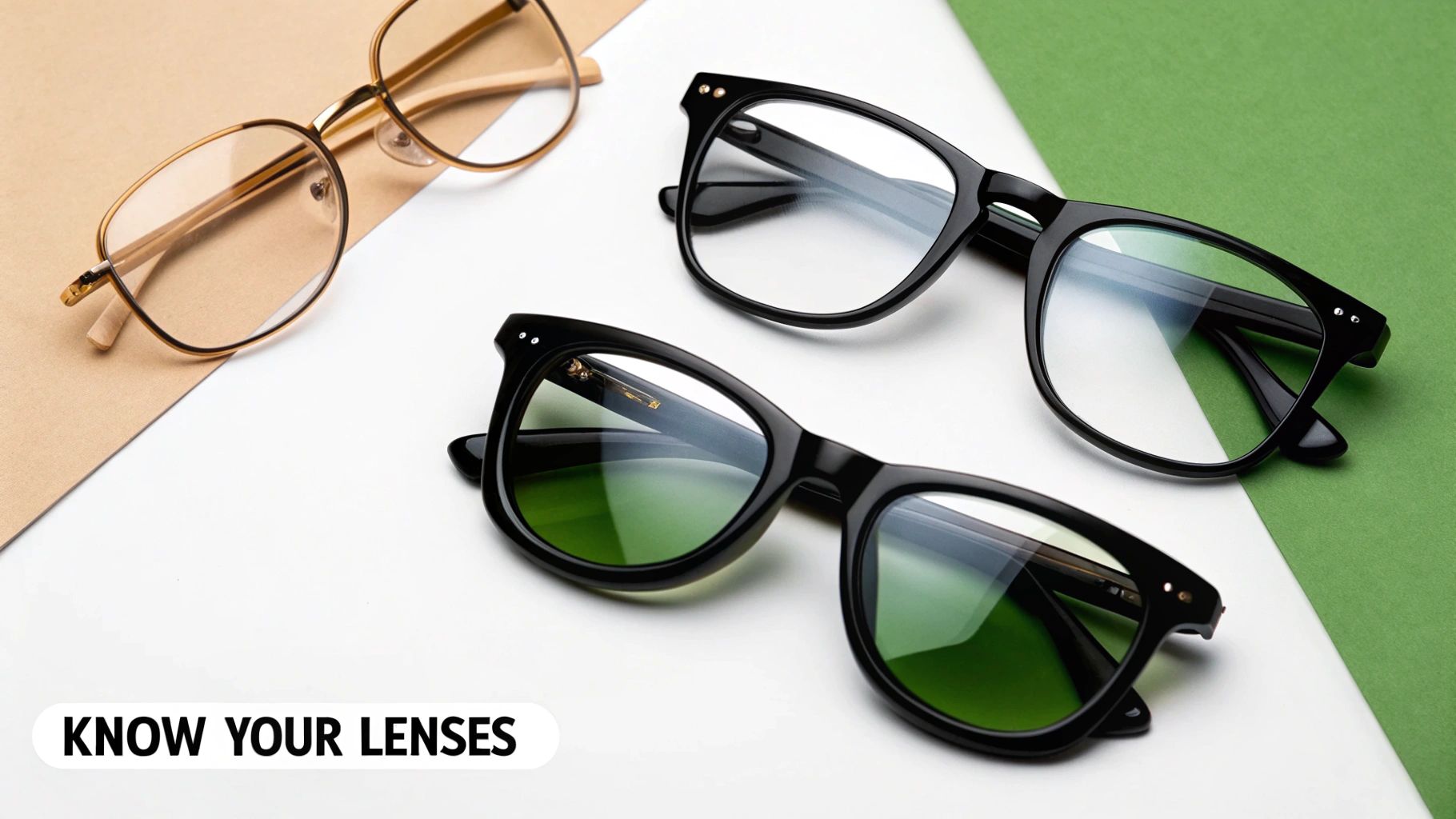
Before you even think about trying to fix a scratch, you need to know exactly what you’re working with. Not all lenses are created equal, and a so-called "fix" for one type can permanently ruin another. This isn't a small detail—it's the most important thing to get right if you want to protect your glasses and your vision.
It might surprise you, but most modern glasses aren't made of actual glass anymore. They're crafted from high-tech plastics chosen for their safety, comfort, and optical quality. And just like different fabrics need different care, each lens material reacts differently to chemicals and abrasion.
The Material Difference
Think of it this way: you wouldn't scrub a wooden dining table with the same cleaner you use on a granite benchtop. That same logic applies directly to your eyeglass lenses.
- Polycarbonate: This is the tough stuff. It’s incredibly impact-resistant, which is why it's the go-to for kids' glasses and safety eyewear. The trade-off? It's a softer material that scratches pretty easily if it doesn't have a solid protective coating.
- Trivex: A close cousin to polycarbonate, Trivex offers similar durability but with superior optical clarity and an even lighter feel. It's a fantastic material, but it shares the same weakness—it’s vulnerable to scratches if the hard coat gets compromised.
- High-Index Plastic: If you have a strong prescription, you likely have high-index lenses. They’re amazingly thin and light, but they can be more reflective and brittle without coatings. An aggressive polish can easily destroy their delicate structure.
Finding out your lens material is step one. Check your original receipt or just ask your optometrist. For a more detailed breakdown, our guide on the different types of lenses for eyeglasses is a great resource.
Crucial Takeaway: Using an abrasive like baking soda on a coated polycarbonate lens is a terrible idea. It will strip away the protective layers, exposing the much softer plastic underneath to a world of new, deeper scratches.
It's All About The Coatings
Modern lenses are more than just a piece of shaped plastic; they're sophisticated surfaces with multiple, micro-thin coatings layered on top. These coatings are what give you the anti-reflective, anti-scratch, and blue light filtering benefits you paid for. They’re also incredibly fragile.
Imagine trying a DIY repair on a pair of premium anti-glare lenses. An internet "hack" might seem to buff out the scratch, but what’s really happening is you're grinding away the entire anti-reflective coating in that spot. This creates a permanent, blurry patch that makes glare worse and is far more distracting than the tiny scratch you started with.
To help you make a safe decision, here’s a quick rundown of how common materials hold up against DIY fixes.
Lens Materials and Scratch Repair Suitability
| Lens Material | Common In | DIY Repair Risk Level | Best Practice |
|---|---|---|---|
| Glass | Older prescriptions, some sunglasses | Medium | Can sometimes be polished by a professional, but DIY methods often create distortion. |
| CR-39 Plastic | Standard, budget-friendly eyeglasses | High | Very soft and easily damaged by abrasive materials. Prone to hazing. |
| Polycarbonate | Kids' glasses, safety & sports eyewear | Very High | The base material is soft; you will almost certainly strip the coatings and ruin the lens. |
| Trivex | Premium, durable eyewear | Very High | Similar to polycarbonate; the risk of destroying the factory hard coat is extremely high. |
| High-Index Plastic | Strong prescriptions (thin lenses) | Extreme | These lenses and their coatings are delicate. DIY attempts are a recipe for disaster. |
As you can see, attempting a home remedy is almost always a losing game with modern lenses.
It’s also helpful to understand a bit about the science behind the coatings themselves. Many modern lens coatings have specific hydrophobic and hydrophilic glass properties that help repel water and oil. Aggressive polishing destroys these carefully engineered surfaces, which is why a one-size-fits-all approach to scratch repair is never the answer.
We get the urge for a quick fix, but your vision is simply too important to risk. At Prescript Glasses, we believe in getting it right from the start. We can customize an eye wear package to suit your requirements, ensuring you have the right lenses and protective coatings to begin with.
Safe At-Home Methods for Minor Surface Scuffs
After wading through a sea of questionable online advice, let's get real about what might actually work for those incredibly faint surface scuffs. I have to say this upfront: we are not talking about deep gouges or any scratch that actually gets in the way of your vision. Your eyesight is priority number one, and trying to fix significant damage at home is a gamble you should never, ever take.
The methods we're about to discuss are only for those tiny, cosmetic marks—the kind you can only really spot when you hold your glasses up to the light just so. Please forget everything you've read about toothpaste or baking soda. These are abrasives, plain and simple. Using them will only create a disaster of thousands of new micro-scratches, permanently wrecking your lenses and any special coatings on them.
The Foundation of Any Attempt is a Flawless Clean
Before you even think about trying to polish a scuff, the lens has to be perfectly, spotlessly clean. Any tiny speck of dust or bit of grit left on the surface will just get dragged around during polishing, creating a bigger mess than you started with. A thorough clean isn't just a suggestion; it's non-negotiable.
And proper cleaning isn't a quick wipe on your shirt. In fact, a huge number of scratched lenses can be traced right back to bad cleaning habits. Data from an Optometry Australia member survey revealed that 42% of client complaints were about scratched lenses, and a massive 65% of those were due to improper cleaning techniques.
For a deep, safe clean that protects your investment, take a look at our complete guide on how to clean your glasses properly. It’s the absolute first step you must take before attempting any kind of repair.
A Gentle Approach to Polishing
Once your lens is pristine, take another look at the scuff. If it’s truly a minor surface mark on a basic plastic lens (one without any special anti-glare or scratch-resistant coatings), your safest bet is a non-abrasive plastic polishing compound. These are made specifically to gently buff plastic without aggressively stripping material away.
Here’s how you’d approach it:
- Apply the Compound: Put a tiny dot of the polish—seriously, no bigger than a pinhead—onto a clean, high-quality microfibre cloth. Never squeeze it directly onto the lens itself.
- Use a Gentle Motion: Using the cloth, gently rub the scuffed area in a slow, circular motion for about 10-15 seconds. Let the weight of your fingers do the work. Don't apply any pressure; you’ll do more harm than good.
- Rinse Thoroughly: Hold the lens under a gentle stream of lukewarm tap water to wash away every last trace of the polishing compound.
- Dry Carefully: Gently pat the lens dry with a separate, completely clean and dry microfibre cloth.
The logic here is similar to how professionals handle other delicate surfaces. The idea is to use an incredibly fine compound to smooth the surface, not to grind it down. You can see similar principles in a professional's guide to polishing delicate items at home, where the focus is on removing microscopic imperfections to restore shine without causing damage.
Practical Example: Let's say your lens has a faint scuff from being placed face-down on a wooden table. After a deep clean, you'd apply that tiny bit of plastic polish to your cloth. Then, with a light, circular motion, you'd treat the lens with the same care you would a delicate camera lens or the face of a high-end watch. The goal is finesse, not force.
This method can sometimes help to fill or smooth out the most superficial of marks, making them a little less obvious. But it won't remove the scratch; it just reduces how visible it is. If the scratch is still there, or worse, if you notice any new haziness, stop immediately. Your optical clarity is everything.
At Prescript Glasses, we can customize an eye wear package to suit your requirements, getting you set up with durable, scratch-resistant lenses from the start to help you avoid this headache altogether.
When You Need to Stop and Call a Professional
Knowing when to throw in the towel on a DIY fix is probably the most critical part of this whole process. It’s easy to get carried away, buffing at a stubborn scratch, hoping for a miracle. But there's a definite point of no return where you're doing more harm than good, risking permanent damage that could mess with your vision.
Here’s a simple, real-world test you can do right now. Gently run your fingernail across the scratch. Does it catch?
If you can feel the groove, even a little bit, that scratch is too deep for any at-home remedy. Full stop.
This isn't about admitting defeat; it's about being smart with your eyesight. Continuing to polish a deep scratch won't remove it. You'll just end up grinding down the surrounding lens and its protective coatings, which can warp the prescription and create a blurry patch you can't get rid of.
The Dangers of Living With Deep Scratches
Just trying to "look past" a major scratch isn't a great strategy. It’s more than just a minor annoyance; your eyes and brain are constantly working overtime to compensate for that visual roadblock. This extra effort can lead to some very real physical problems.
- Persistent Eye Strain: Your eye muscles are in a constant state of adjustment, trying to focus through a flawed lens. This leads to that familiar feeling of fatigue, dryness, and just plain overworked eyes.
- Recurring Headaches: That non-stop effort to see clearly is a classic trigger for tension headaches, especially after you’ve been reading or staring at a screen for a while.
- Compromised Safety: A scratch directly in your line of sight is basically a blind spot. It can cause dangerous glare from oncoming headlights when you're driving at night and can even throw off your depth perception without you realising it.
This decision tree visualises that simple 'fingernail test' to help you decide if a scratch is safe for a DIY attempt.
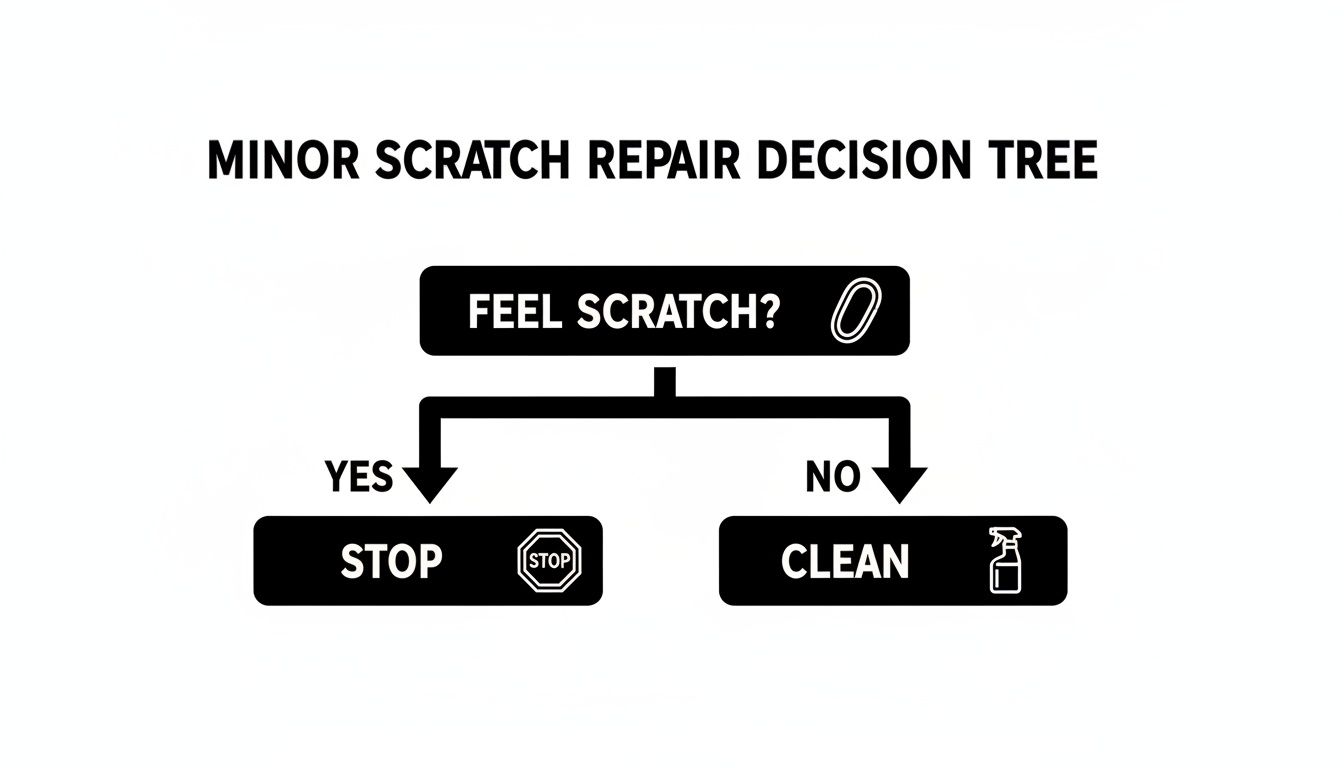
The main takeaway here is that the first and most important step is a physical check. If you can feel the scratch, the only safe move is to stop.
Handing it over to a professional isn’t a failure—it’s the responsible thing to do. Your vision is far too important to gamble on a fix that can't deliver. An optometrist or a dedicated lens replacement service has the right tools and expertise to give you a safe solution that restores perfect clarity.
At Prescript Glasses, we get how vital flawless vision is. We can customize an eye wear package to suit your requirements, making sure you get high-quality, durable lenses that put your eye health first.
The Best Long-Term Solution For Clear Vision
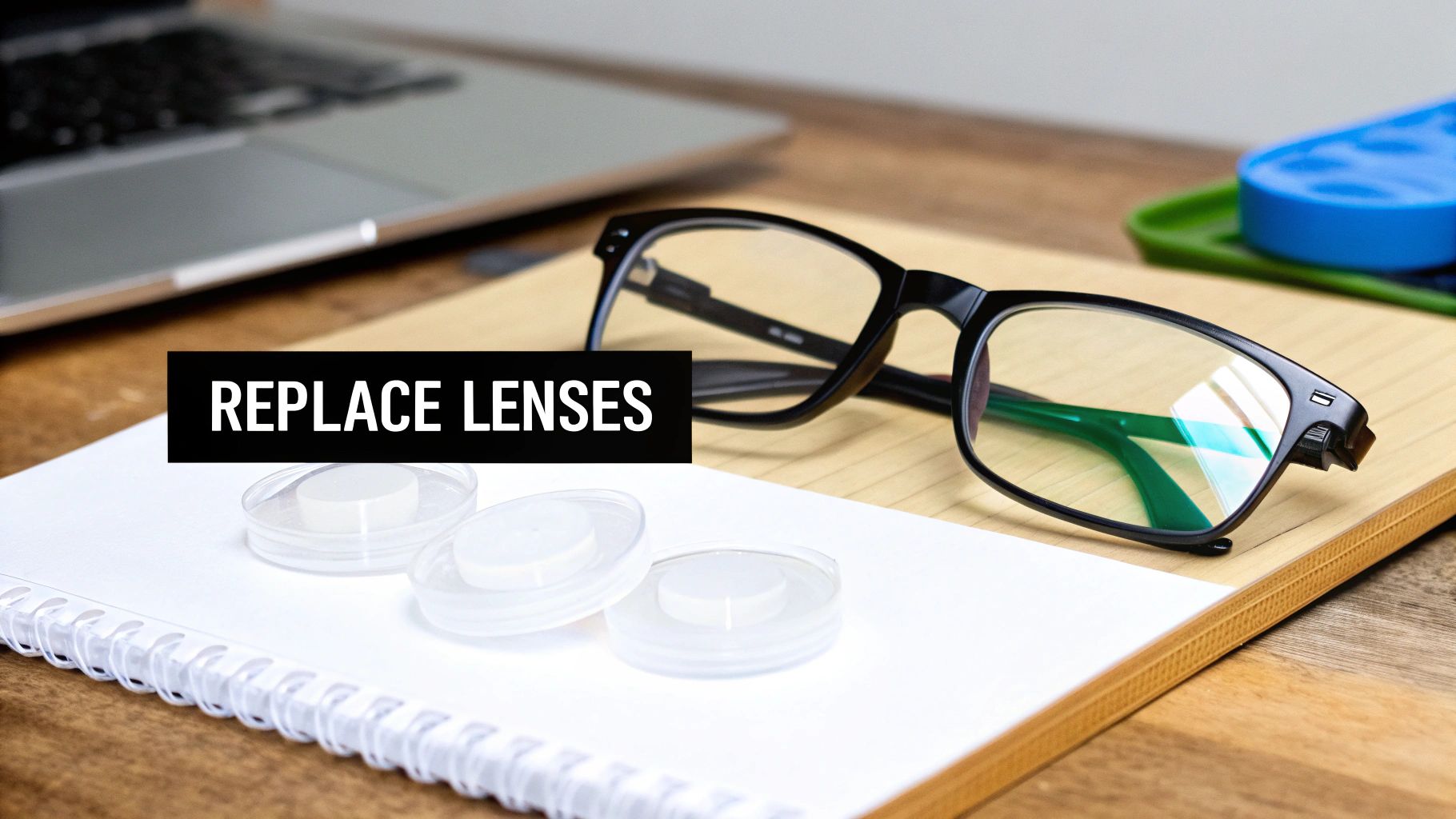
When you’ve tried every trick in the book and that scratch is still staring back at you, it’s time to stop looking for a temporary fix and consider a permanent one. Let's be honest, the safest and most reliable way to get your vision back to crystal clear is to replace the lenses.
This isn't about tossing your favourite frames. It's about giving them a new lease on life with a pair of fresh, flawless lenses.
This approach cuts straight to the chase. It completely sidesteps the risks of DIY repairs and the frustration of polishing a scratch that just won't budge. Instead of wrestling with a problem, you get precision-crafted lenses with modern, durable coatings right from the start. Your eye health and vision are never compromised.
Upgrading Your Vision and Durability
Think of replacing your lenses as an opportunity for an upgrade. Lens technology is constantly improving, so you can choose options that are a much better fit for your current lifestyle than your old ones were.
With a service like Prescript Glasses, the whole process is incredibly straightforward. You get to keep the frames you already know and love while we fit them with a brand-new set of lenses, tailored perfectly to your prescription.
We've put together a detailed guide on replacing lenses in your current glasses that shows just how simple it is. It walks you through every step so you know exactly what your options are.
The real advantage here is peace of mind. You’re not just getting clear lenses; you’re getting optically perfect lenses with factory-applied coatings that protect against future scratches, annoying glare, and harmful UV rays.
Customising Lenses for Your Lifestyle
Everyone’s eyes are different, and so are their daily routines. A university student staring at textbooks all day has very different visual needs from a professional on back-to-back video calls, or a gamer who needs lightning-fast reactions.
We believe your eyewear should work for you. That’s why we can customize an eye wear package to suit your requirements, ensuring you get the perfect setup for what you do every day.
Here are a few ways you can tailor your new lenses to your life:
- For Heavy Screen Users: If you're a student or office professional, our BlueRay lenses are a game-changer. They’re designed to filter out the harsh blue light from digital screens, helping to cut down on eye strain and fatigue.
- For Indoor and Outdoor Use: Our Photocromic lenses adapt on the fly. They automatically darken when you step into the sunlight and lighten again when you're indoors, giving you seamless vision no matter where you are.
- For Gamers: You need absolute clarity. Lenses with a high-quality anti-reflective coating can eliminate distracting glare from your screen, helping you stay focused and react faster during those long gaming sessions.
Investing in high-quality replacement lenses is a proactive move for your vision. Even minor scratches can reduce your vision clarity by 10-15%. With scratch incidents on the rise from simple home cleaning mistakes, starting fresh with durable, well-coated lenses just makes sense. Plus, considering that proper care can extend the life of your lenses by an average of 18 months, choosing quality from the get-go is a very wise investment.
Common Questions About Scratched Glasses
We get asked all the time about fixing scratched glasses. Let's tackle some of the most common questions and myths out there, because when it comes to your vision, getting the right advice is everything.
Can An Optician Buff Out Scratches From My Glasses?
It’s a fair question, but the short answer is almost always no. Professional optical labs won't buff lenses, and for good reason. The buffing process grinds down the lens surface, which can easily warp the precise, custom curvature of your prescription. Even a tiny change can lead to distorted vision, headaches, and eye strain.
Even more critically, buffing completely strips away all the advanced coatings you paid for. Your anti-glare, UV protection, and even the original scratch-resistant layers would be gone for good. This doesn't just reduce the performance of your glasses; it can compromise your eye health. For any scratch deep enough to feel with your fingernail, replacement is the only truly safe option.
Will Toothpaste Really Remove Scratches From Glasses?
This is one of those internet "hacks" that does far more harm than good. Please, don't try it. Toothpaste is abrasive—that’s how it cleans plaque off your teeth, which are incredibly hard. Your spectacle lenses, especially plastic ones, are much softer.
Using toothpaste is like taking fine-grit sandpaper to your lenses. You won’t remove the original scratch; you’ll just add thousands of tiny new micro-scratches all over the surface. The result is a permanently hazy or foggy lens that’s impossible to see through clearly, especially in bright light. You'll destroy your coatings and end up with much worse vision than before.
Your eyesight is too precious to risk on a five-dollar tube of toothpaste. The damage it causes is irreversible and will just mean you need to replace the lenses anyway.
How Can I Prevent My Glasses From Getting Scratched?
Honestly, prevention is the best medicine. A few simple habits can make a massive difference in keeping your vision crystal clear.
- Always Use a Hard Case: This is the golden rule. If your glasses aren’t on your face, they belong in their case. Tossing them in your bag, putting them in a pocket, or leaving them on a countertop is the number one way scratches happen.
- Clean Them the Right Way: Stick to a dedicated lens cleaning spray and a clean microfibre cloth. Never, ever use the corner of your shirt, a paper towel, or a tissue. These materials feel soft, but their fibres can trap abrasive dust particles that will grind right into your lens coatings.
Is An Anti-Scratch Coating Worth The Extra Cost?
One hundred percent, yes. Think of an anti-scratch coating as a bodyguard for your lenses. It’s a hardened, transparent layer that dramatically boosts their durability against the bumps, drops, and scrapes of daily life.
While no lens is completely scratch-proof, this coating provides an essential shield that can be the difference between a minor scuff and a deep, vision-blocking gouge. It's one of the best investments you can make to extend the life and clarity of your glasses.
At Prescript Glasses, we know that clear, comfortable vision isn't a luxury—it's essential. If your lenses are past the point of no return, let us help you find the perfect replacements. We can customise a complete eyewear package to fit your needs, making sure you get the durable, high-quality lenses you deserve. Explore your options at https://www.prescriptglasses.com.