The Complete Guide to Reading Glasses with Blue Light Filter

So, what exactly are reading glasses with a blue light filter? Think of them as a two-in-one solution for our screen-heavy lives. They give you the magnification you need to read text clearly, while also filtering out a portion of the high-energy blue light beaming from your digital devices.
This combo is a game-changer for reducing digital eye strain, making screen time far more comfortable, and even helping to support better sleep. For anyone who spends their days bouncing between a computer, smartphone, or tablet, they’re pretty much an essential bit of kit. For instance, a graphic designer who needs magnification for detailed work can wear these glasses to see pixels clearly while simultaneously protecting their eyes from the monitor's blue light during a long project.
Your Essential Guide to Digital Eye Comfort
Welcome to the definitive guide on protecting your eyes in a world that’s always switched on. We’re here to demystify reading glasses with a blue light filter, breaking down how they work and why they've become such a vital accessory. We'll get into the science of blue light, how it affects your eyes, and how the right pair of glasses can make a real difference to your eye health and safety.
Let's face it, our reliance on digital devices isn't going anywhere. From office work and online classes to late-night gaming sessions and endless social media scrolling, screens are a constant. All that exposure can lead to a cluster of symptoms we now call "digital eye strain."
Understanding the Need for Protection
Ever finished a long day at the computer with tired, dry, or itchy eyes? Maybe some blurred vision or a nagging headache? You're not alone. These issues often pop up because the high-energy visible (HEV) blue light from screens scatters more easily than other types of light, forcing our eyes to work overtime just to stay focused.
A huge part of this guide is about focusing on eye health and safety. We'll give you practical, easy-to-digest insights into protecting your vision, from understanding the tech in the lenses to spotting the signs that you could really benefit from filtered glasses. A practical example is noticing that your eyes feel gritty and tired after a two-hour video conference, a clear signal that they are struggling with screen exposure.
By filtering out some of this intense light, these specialised glasses help your eye muscles relax, improve contrast, and simply make staring at a screen feel more comfortable. This isn't just about feeling better right now; it's about building sustainable habits for long-term eye wellness.
As we stare at screens more and more, it's worth knowing where all that blue light is coming from.
Common Sources of Digital Blue Light Exposure
Here's a quick look at the devices we use every day and how they contribute to our overall blue light exposure.
| Device Source | Typical Daily Exposure (Hours) | Primary User Group | Potential Effects |
|---|---|---|---|
| Computers/Laptops | 6-9+ | Professionals, Students | Headaches, blurred vision, focus fatigue |
| Smartphones | 3-5+ | Nearly Everyone | Sleep disruption (especially with night use), dry eyes |
| Tablets | 2-4 | Students, Readers, Kids | Digital eye strain, neck and shoulder pain |
| Televisions | 2-4 | General Entertainment | Can disrupt melatonin if watched late at night |
| Gaming Consoles | 1-3+ | Gamers, Hobbyists | Intense focus leading to reduced blinking and dry eyes |
Understanding these sources helps paint a clearer picture of why managing our exposure is becoming so important for daily comfort and long-term eye health.
Who Can Benefit Most
Whether you're a professional clocking long hours, a student cramming for exams, a dedicated gamer, or just can't put your phone down, this guide is for you. We’ve got advice tailored for different lifestyles to help you see how a simple change in eyewear can boost your focus and well-being.
- Professionals: An accountant staring at spreadsheets all day can use these glasses to fend off those afternoon headaches and keep their focus sharp.
- Students: A uni student pulling an all-nighter with digital textbooks can reduce eye fatigue and support a healthier sleep cycle before a big exam.
- Gamers: A competitive gamer can enjoy less glare and sharper visual clarity during long sessions, which can improve both performance and comfort.
While the right glasses are key, you can also consider additional device screen protection with anti-glare features to round out your digital comfort strategy. At the end of the day, your vision needs are unique, which is why we explain how we can customise an eye wear package to suit your requirements, ensuring you find the perfect fit.
What Is Blue Light and How Does It Affect Your Eyes?
To really get why reading glasses with a blue light filter have become so essential, we first have to talk about what blue light actually is. Picture the light all around you as a rainbow-like spectrum of colours. Blue light is the high-energy, short-wavelength slice of that spectrum. You can think of it as the espresso shot of visible light—powerful and intense.
Now, not all blue light is the enemy. The sun is our biggest natural source, and it's crucial for keeping us awake, alert, and focused during the day. It’s what helps set our internal body clock, or what scientists call our circadian rhythm. The real issue is the constant, up-close exposure we get from the artificial blue light beaming from our digital devices—our phones, laptops, and tablets.
This constant stream of artificial light is like a non-stop digital buzz for our eyes and brain. Our eyes are pretty good at blocking some harmful light, like UV rays, but they just aren't built to filter the intense, direct blast of blue light from screens we hold just centimetres from our face.
The Science Behind Digital Discomfort
Because blue light has such high energy and a short wavelength, it scatters much more easily than other colours of light. This scattering creates a kind of visual "noise" that dulls contrast and makes it tougher for our eyes to focus. To make up for it, our eye muscles have to work overtime, which is a massive reason so many of us suffer from digital eye strain.
This is where the conversation around eye health and safety really kicks in. That constant muscular effort can show up in a few uncomfortable ways that many of us have just started to accept as a normal part of being online.
Some of the most common signs include:
- Dry, irritated eyes because we blink less when we’re concentrating on a screen.
- Recurring headaches, especially those that creep up in the afternoon after hours of computer work.
- Blurred vision or finding it hard to focus after you look away from your device.
- A feeling of fatigue that just seems way out of proportion to what you’ve actually done that day.
Take, for example, an office worker who gets a dull headache almost every day around 3 PM. They might chalk it up to stress or not drinking enough water. But it could very well be the built-up effect of eight hours staring at a monitor, with their eyes battling the constant glare and flicker of blue light.
How Blue Light Impacts Your Sleep
The link between blue light and sleep is probably its biggest impact on our overall well-being. When you’re exposed to blue light in the evening, it can hit the brakes on your body's production of melatonin—the hormone that gives your body the signal that it's time to wind down and go to sleep.
Think about a student cramming for an exam late into the night on their laptop. That bright screen is basically shouting at their brain to stay awake and alert, even though it's long past their natural bedtime. When they finally switch it off, their mind is still buzzing, making it hard to fall asleep and seriously reducing the quality of their rest. This can kick off a vicious cycle of tiredness and relying on caffeine, which only hurts concentration and health even more.
Filtering blue light, especially in the couple of hours before you go to bed, can help protect your natural melatonin production. It's a simple adjustment that allows your body to stick to its intended sleep-wake cycle, leading to deeper, more restorative sleep and better energy the next day.
This is exactly where reading glasses with a blue light filter come in as a practical and highly effective solution. They act as a shield, selectively blocking a portion of this high-energy light before it ever reaches your eyes. By turning down that digital buzz, they help ease immediate issues like eye strain and headaches, all while supporting your long-term wellness by promoting healthier sleep patterns. Our mission is to create the perfect eyewear for you, which is why we can customise an eye wear package to suit your requirements, making sure you get the right kind of protection for your unique lifestyle.
Why Screen Users Need Specialised Eyewear
Let’s be honest, a one-size-fits-all approach to eyewear just doesn’t cut it anymore. Your eyes face a totally different set of demands when you’re chasing a win in a video game versus when you're absorbing lecture notes or staring down a deadline. Each activity is unique, and your vision needs are too.
That's where specialised eyewear, like reading glasses with a blue light filter, comes into the picture. They’re designed to tackle these specific challenges head-on. Focusing on your eye health and safety isn’t just about feeling better; it’s about performing better and making your daily digital life more comfortable. The right glasses can turn your devices from a source of strain into a powerful tool for success.
Enhanced Performance for Gamers
For gamers, it all comes down to visual performance. Victory can hinge on split-second decisions, unwavering focus, and the stamina to get through long sessions without burning out. But the intense, high-energy blue light and glare blasting from gaming monitors can lead to serious eye strain, slowing down your reaction times and forcing you to tap out early.
This is exactly where specialised eyewear gives you a competitive edge. By filtering out a portion of that harsh blue light, these glasses sharpen visual contrast, making enemies or crucial in-game details pop against any background.
Think about a competitive gamer in a fast-paced shooter. Cutting down screen glare means less squinting and clearer sightlines, whether they’re in a dimly lit dungeon or a bright, open field. This helps reduce eye fatigue, letting them stay locked in and maintain peak concentration for longer. It’s all about enhancing performance when it really counts.
Increased Productivity for Professionals
Most professionals spend the better part of their day—often eight hours or more—glued to a computer screen. This digital marathon is a recipe for eye strain, which often shows up as those frustrating afternoon headaches, dry eyes, and a noticeable dip in productivity. It can make focusing on detailed tasks, like combing through spreadsheets or drafting reports, feel almost impossible.
Take an accountant during tax season, for example. They spend hours poring over dense financial data on a screen. Reading glasses with a blue light filter can soften the harsh glare, making the numbers clearer and easing the constant workload on their eye muscles. This simple adjustment can help stave off tension headaches and keep their focus sharp all day, directly boosting their accuracy and efficiency.
There’s a growing awareness around digital wellness in Australia, and it’s driving demand for protective eyewear. The local market is booming, projected to hit US$2.89 billion in revenue by 2025. It’s a big deal for professionals and other heavy screen users, especially when you consider that blue light exposure contributes to sleep disruption in 60% of users and eye strain in over 50%.
Improved Focus for Students
Modern education is powered by digital tools. Students are constantly switching between laptops for lectures, tablets for research, and smartphones for group projects. Late-night study sessions lit only by the glow of a screen are practically a rite of passage, but this can be a real problem for concentration and overall health.
The blue light from these devices can throw your natural sleep cycle out of whack, making it tough to unwind after a cram session. Imagine a student prepping for final exams, reading digital textbooks for hours into the night. Without any protection, their eyes get tired, their focus drifts, and the information just doesn’t seem to sink in. Worse, the poor sleep that follows can wreck their memory recall the next day.
By popping on a pair of blue light filtering glasses during these study marathons, students can ease eye fatigue and protect their body's melatonin production. This helps them stay focused on their work and, just as importantly, get the restorative sleep they need to ace their exams. If you're curious about the science behind it, our guide on whether blue light glasses are worth it breaks it all down.
Your daily routine is unique, and so are your visual needs. Whether you're gaming, working, or studying, the right eyewear is a cornerstone of performance and comfort. Acknowledging this is the first step toward better eye health.
Because every lifestyle is different, we can customise an eyewear package to suit your requirements. Once we understand how you use your screens, we can help you find the perfect lens and frame combination to support your vision and turn eye health into your personalised tool for success.
How to Choose the Perfect Lens for Your Lifestyle
Picking the right lens for your reading glasses with a blue light filter shouldn’t be a chore. It’s really just about matching the tech to your daily grind. Think of it like choosing the right pair of shoes—you wouldn’t wear hiking boots to a board meeting, right? The same logic applies here.
Your day-to-day routine is the biggest clue to what your eyes need. Once you get the hang of what each lens type does, you can find a pair that not only feels great but fits right into your life without you even noticing. Getting this right is a huge part of our approach to eye health and safety.
The Dedicated Digital Shield: BlueRay Lenses
If your day is dominated by screens, BlueRay lenses are your specialist tool. These lenses are built with one job in mind: filtering the blue light that bombards you from screens to cut down on digital eye strain and that annoying glare. They’re for anyone putting in serious hours on a computer, gaming, or just scrolling.
Take a software developer, for example, who stares at lines of code for eight to ten hours a day. Their eyes are locked onto a bright, busy screen. BlueRay lenses can soften that harshness, making the screen easier on the eyes and helping to fend off those tension headaches that creep in by late afternoon.
This map helps visualise how different screen users have different needs.
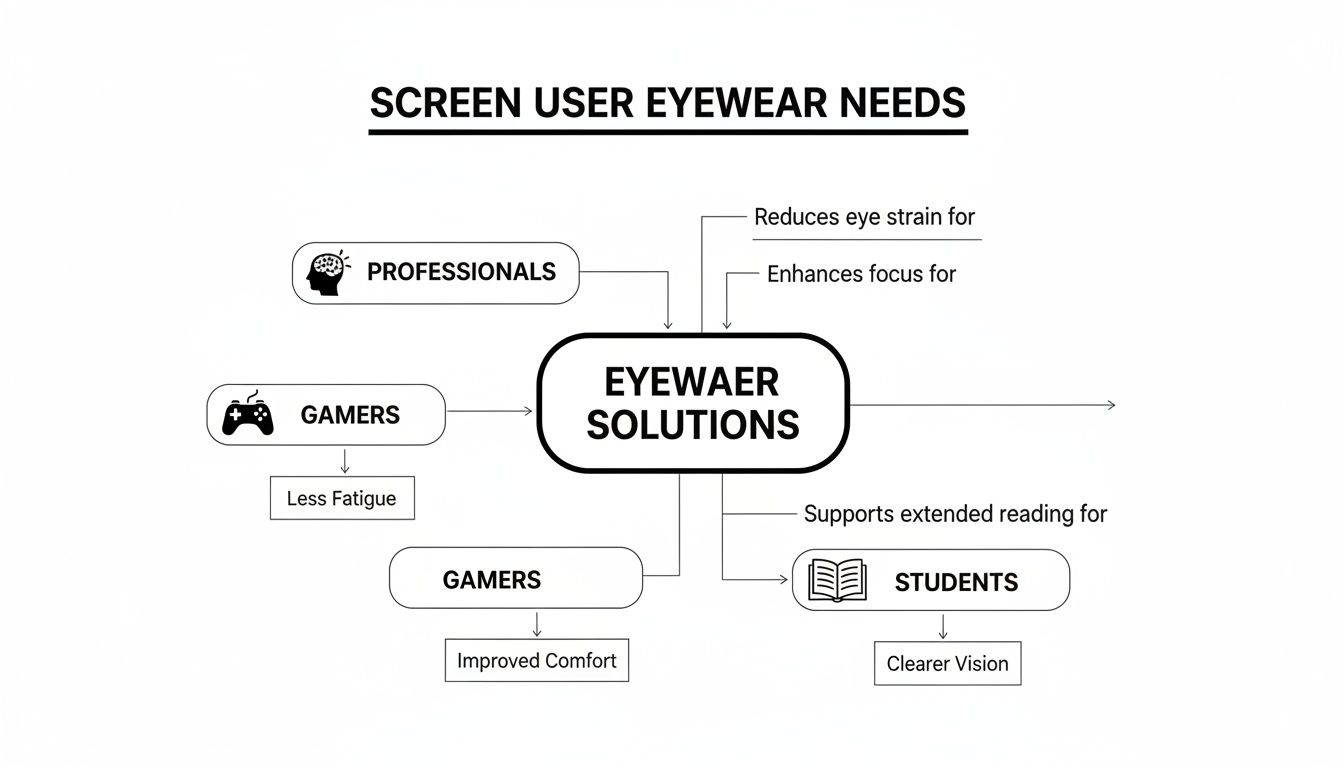
The main takeaway? While everyone benefits from filtering blue light, the specific problems—like headaches for office workers or tired eyes for gamers—are best solved with a lens designed for that exact situation.
The All-in-One Adaptive Solution: Photochromic Lenses
Ever wished your glasses could just adapt to your surroundings instantly? That’s exactly what Photochromic lenses do. They’re perfectly clear when you're indoors but automatically darken the second you step into UV light, turning into sunglasses on the fly.
These are an absolute lifesaver for anyone who’s constantly moving between indoors and out. Think of a real estate agent: they're in the office doing paperwork one minute, then driving to appointments and showing properties in the bright sun the next. Instead of juggling reading glasses and sunnies, Photochromic lenses offer one simple, elegant solution.
The Ultimate Hybrid: Bluecromic Lenses
But what if you need the digital protection and the sun protection? That's where Bluecromic lenses come in. They combine the clever adaptive tech of Photochromic lenses with the screen-savvy filter of a BlueRay lens. It's the ultimate hybrid for a life that’s anything but predictable.
A university student is a perfect example. They might spend their morning in a sunny lecture theatre, their afternoon studying on a laptop in the library, and their evening scrolling on their phone. Bluecromic lenses have them covered at every step, filtering blue light from devices while also protecting their eyes from UV rays when they walk across campus.
Classic Options: Clear and Sunglass Lenses
Sometimes, the simplest solution is the best one. Our Clear lenses offer straightforward prescription correction, and you can always add a blue light filter if you need it. They're a classic, no-fuss choice for people who mainly need help with reading.
On the flip side, dedicated Sunglass lenses give you maximum protection from the sun with your prescription built right in. They’re perfect for driving or long days outdoors, offering top-tier glare reduction and UV blocking. When weighing up your options, you might find it useful to check out retailers like Visiondirect, especially if you can get a Visiondirect student discount.
The perfect lens is the one you don't have to think about. It should work for you, enhancing your vision and comfort so you can focus on what matters most in your day.
Because everyone's day is different, we can customise an eyewear package to suit your requirements. Whether you need a hardcore digital shield, an all-day adaptive lens, or a bit of both, we can put together a solution that fits your life perfectly. For a deeper dive into the tech behind these lenses, check out our guide on the different types of lenses for eyeglasses.
Finding Your Custom Fit and Frame Style
Nailing the perfect fit for glasses online is much easier than you might imagine. A great pair of reading glasses with a blue light filter won’t just protect your eyes; they’ll also feel great and look sharp. It all starts with your prescription—the bedrock of clear vision and a crucial part of your overall eye health.
We’ve made it simple to upload a current prescription from your optometrist or other qualified eye health professional. This is the most important step, as it guarantees your new lenses are crafted to your exact needs for the best possible comfort and vision correction.
Submitting Your Prescription with Confidence
Uploading your script is a breeze. We’ll just need a few key details to get your custom lenses started.
- Sphere (SPH): This number is the main strength of your lens, correcting for either nearsightedness or farsightedness.
- Pupillary Distance (PD): This is simply the distance between your pupils. Getting it right is crucial for centering the lenses perfectly in the frame, which is the secret to comfortable, strain-free vision.
Using accurate info from a recent eye exam is non-negotiable for eye health and safety. It ensures your glasses will be a help, not a hindrance. Once your prescription is sorted, you can move on to the fun part: picking out frames you absolutely love.
How to Find Your Perfect Frame Size
A comfortable fit is just as important as the right prescription. If you're constantly pushing your glasses back up your nose or feeling a pinch behind your ears, you just won't wear them. The easiest shortcut to finding your size is to check the measurements on a pair of glasses you already own and find comfortable.
Have a look inside the temple arm for a series of three numbers. It will look something like 52-18-140.
- The first number, 52mm, is the lens width.
- The second, 18mm, is the bridge width (the bit that sits on your nose).
- The third, 140mm, is the temple arm length.
Using these numbers as your guide makes choosing a new frame that fits just as well a piece of cake. This simple trick takes all the guesswork out of buying glasses online.
The goal is to find eyewear that feels like it was made just for you. A great fit means you can wear your glasses for hours without discomfort, allowing you to focus on your tasks without distraction.
As our lives become more screen-focused, the demand for protective eyewear in Australia is on the rise. In fact, Australia's slice of the Asia Pacific anti-blue light glasses market was valued at $38.73 million in 2025, with a projected growth rate of 9.89%. It just goes to show how many of us are making vision and comfort a top priority. You can dig into more data on the anti-blue light glasses market to see the full picture.
Matching Frames to Your Face Shape
Finally, let’s talk style. The right frame shape can really highlight your best features and show off your personality. While there are no hard-and-fast rules, a few general guidelines can point you in a flattering direction.
Practical Examples for Face Shapes:
- For a Round Face: To create a bit of definition, try frames with sharp angles, like rectangular or square shapes. They add contrast and can help your face appear longer and slimmer.
- For a Square Face: You can soften a strong jawline with round or oval frames. The gentle curves provide a nice balance to angular features.
- For an Oval Face: You've hit the jackpot! This versatile face shape works well with almost any style, from bold, geometric frames to classic cat-eyes.
- For a Heart-Shaped Face: Look for frames that are wider at the bottom, like aviators or styles with more weight on the lower half. This helps create a sense of balance.
At the end of the day, these are just suggestions. The most important rule is to choose glasses that make you feel fantastic. Because everyone's style and needs are different, we can customise an eyewear package to suit your requirements, making sure your new glasses are a perfect match in every single way.
Your Questions About Blue Light Glasses, Answered
We get a lot of great questions about how reading glasses with a blue light filter work and who they're for. It makes sense—you want to be sure you're making the right choice for your eyes. To clear things up, we've put together some straightforward answers to the questions we hear most often.
Can I Get Blue Light Glasses Without a Prescription?
Absolutely. This is one of our most common questions, and the answer is a definite yes. You don't need a prescription to protect your eyes from digital screens.
Many people with perfect vision still get huge benefits from blue light filtering, especially those who spend hours gaming, studying, or working on a computer. Think of it as preventative care for your eyes. For anyone staring at a monitor all day, a non-prescription (or "plano") lens with our BlueRay filter offers all the protective perks without changing your natural sight.
Will Blue Light Glasses Change How I See Colours?
This is a valid concern, especially for creatives or anyone whose work relies on colour accuracy. While some older, lower-quality lenses had a very obvious yellow tint that would throw colours off, modern lens technology is far more advanced.
Our filters are engineered for maximum clarity and colour neutrality. You might notice a very slight warming effect when you look at a bright white screen—that's just the filter doing its job—but it’s subtle. It won’t significantly impact how you see colours in your day-to-day life, so you get top-tier protection without sacrificing a true-to-life view.
How Do I Know Which Lens Is Right for Me?
The best lens for you really comes down to your daily routine and lifestyle. There's no single "best" option, only what's best for you.
For instance, if you're an office worker spending most of your day staring at a computer, our dedicated BlueRay lens is a fantastic choice for targeted, indoor protection. But if you're constantly moving between your desk and the outdoors, a Bluecromic lens offers that brilliant, adaptive convenience, transitioning seamlessly with you.
The goal isn't to find the "best" lens on the market, but the best lens for your life. Your daily habits are the key to choosing a pair that truly supports your eye health.
Because everyone’s day looks a little different, we can customise an eyewear package to suit your exact requirements, ensuring you get a solution that fits your life perfectly.
It’s no surprise that Australians are increasingly reaching for non-prescription options as a first line of defence against digital eye fatigue. The local market revenue is projected to hit $711.982 million, with an impressive CAGR of 10.141%. This just goes to show the growing demand from gamers, students, and professionals who want protection without a prescription. You can discover more insights about the non-prescription glasses market and see the trend for yourself.
Ready to find the perfect pair of glasses designed for your digital life? At Prescript Glasses, we combine quality frames with advanced lens technology to protect your eyes and keep you comfortable. Upload your prescription and let us build the ideal eyewear for your needs.