How to Polish Glasses for Crystal-Clear Vision and Eye Health

Giving your glasses a quick polish is about more than just wiping off a smudge. It's a simple ritual that involves a pH-neutral soap, lukewarm water, and a clean microfiber cloth to gently lift away oils and debris without harming your lenses. Think of it as the key to keeping your vision sharp, protecting your investment, and safeguarding your eye health.
Why Polishing Your Glasses Is Crucial for Eye Health and Safety
For most of us, glasses are a constant companion, but we often forget just how important it is to keep them truly clean. It’s not just about a clearer view—it’s a fundamental part of your eye health and safety. Smudges, dust, and fingerprints create a hazy film that forces your eyes to work harder, which can lead straight to digital eye strain, fatigue, and even those nagging headaches.
Picture a student cramming for exams or a professional jumping between video calls all day. The constant, subtle struggle to see through a grimy lens puts a real strain on the eye muscles. This is especially true if you’ve invested in advanced lens coatings. A dirty lens can actually get in the way of how well BlueRay or Bluecromic filters work, reducing the very protection you paid for and increasing your risk of eye fatigue.
The Hidden Impact of Neglected Lenses
The link between clean lenses and eye comfort is massive. Here in Australia, a staggering 56.7% of the population—that’s around 14.4 million people—live with one or more long-term eye conditions, making clear vision a top priority. A proper daily polish can extend the life of your lenses by up to 30% and stop those tiny micro-scratches that slowly dull your view.
For gamers and anyone glued to their smartphone, smudges can make blue light exposure even worse. For example, a layer of skin oil can scatter the light entering your eye, forcing your eye muscles to constantly readjust focus, leading to headaches. One study even found that people who didn't regularly polish their lenses reported 40% more headaches. You can dive deeper into the data on Australian eye health trends to see the bigger picture.
A polished lens isn't a luxury; it's a necessity. It ensures your eyes get the clear, unobstructed visual information they need to function without strain, which directly impacts your well-being and productivity.
Protecting Your Investment
Modern eyewear is a pretty sophisticated bit of tech. Whether you have photochromic lenses that adapt to sunlight or anti-reflective coatings that cut down glare, you've invested in features designed to improve your visual safety and comfort. Not polishing them correctly is like driving a high-performance car with a dirty windscreen—you’re just not getting the full benefit.
- Maintains Coating Integrity: Harsh cleaning methods can strip away those delicate coatings, but a proper polish keeps them intact.
- Ensures Optimal Performance: Clean lenses let features like blue light filters and anti-glare coatings do their job properly, protecting your eyes.
- Extends Lens Lifespan: Regular, gentle cleaning prevents the buildup of corrosive stuff like skin oils and sweat.
Ultimately, learning how to polish glasses the right way is a non-negotiable skill for any wearer. We can customise an eye wear package to suit your requirements, making sure you have the right lenses and coatings for your lifestyle. By adopting a simple daily polishing routine, you’re not only protecting your eye health and boosting your visual comfort but also making sure your eyewear serves you well for years to come.
The Everyday Ritual for a Flawless Polish
Learning how to polish your glasses doesn't have to be some complicated chore. Think of it as a quick, daily ritual—one that takes your view from blurry and distracting to perfectly clear. Getting into this simple habit is the best way to look after your eyewear and keep your vision sharp.
The secret to a perfect polish actually starts before you even touch your lenses. First things first: wash your hands thoroughly with soap and water. This is a critical safety step. You want to get rid of any natural oils, dirt, or lotions that can easily transfer to your lenses and create those stubborn, hard-to-remove smudges.
With clean hands, give your glasses a gentle rinse under a stream of lukewarm tap water. This little step is surprisingly important—it washes away any loose dust or gritty particles that could scratch your lenses when you start wiping. Just be sure to avoid hot water, as extreme temperatures can damage sensitive lens coatings over time.
A smudged lens isn't just annoying; it can genuinely lead to visual discomfort and strain.
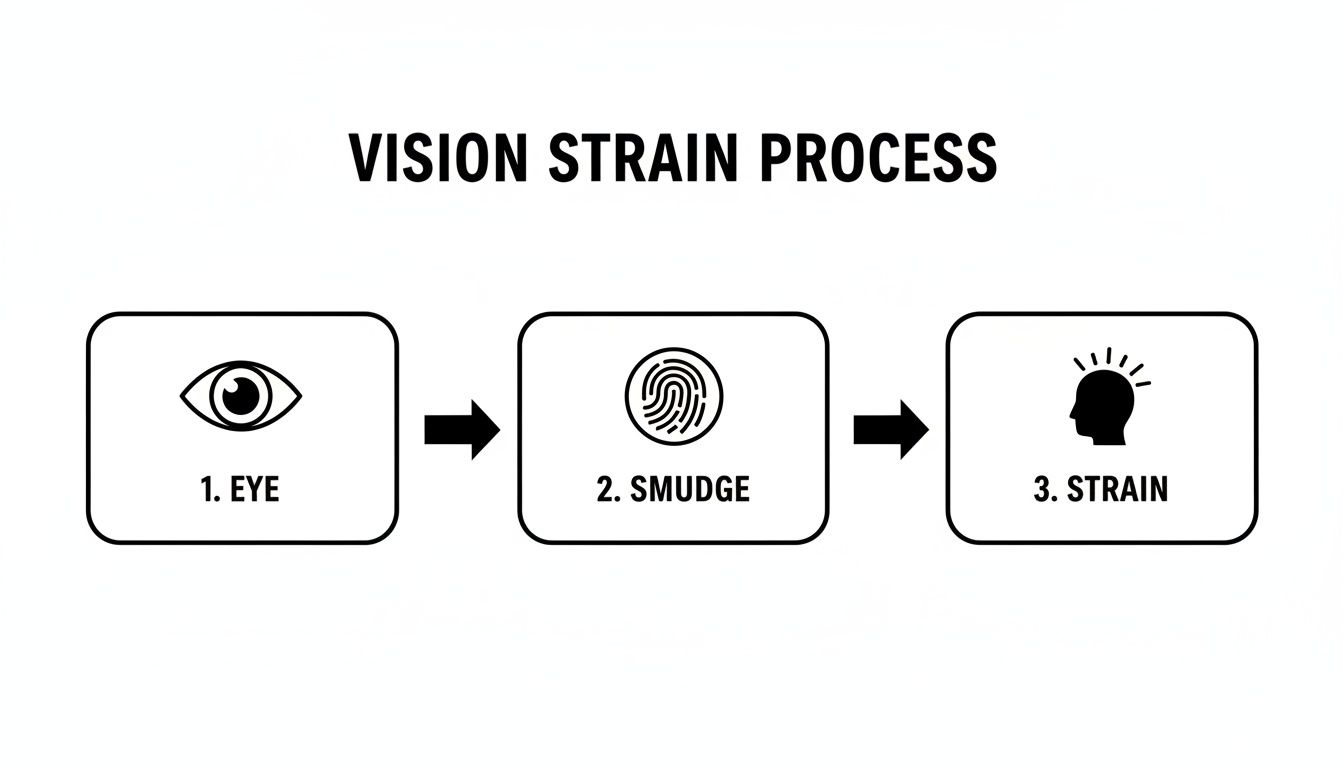
As you can see, ignoring a simple polish directly contributes to the eye strain and headaches that so many glasses-wearers are familiar with.
The Gentle Cleanse
Once you've rinsed off the surface debris, it's time to deal with the grime. Put a single, tiny drop of a pH-neutral, lotion-free dish soap onto each lens. It’s crucial to use this specific type of soap, as it's designed to cut through grease and oil without harsh additives that can strip away protective coatings like anti-reflective or blue light filters.
Gently rub the soap over both sides of the lenses and the entire frame. Don't forget the nose pads and earpieces, as that’s where oil and sweat really build up. After a few seconds, rinse everything thoroughly under lukewarm water again until all the soap is gone. Even a tiny bit of leftover soap can leave streaks, undoing all your hard work.
If you'd like a more in-depth look at the entire cleaning process, feel free to check out our detailed guide on how to properly clean eyeglasses.
The Final Polish
Now for the most important part: polishing your glasses to a perfect, streak-free shine. Gently shake the frames to get rid of most of the water droplets. Then, grab a clean, dry microfiber cloth to carefully wipe down the lenses and frame. I can't stress this enough—the cloth must be clean. A dirty one will just smudge dirt and oil right back onto your lenses.
Pro Tip: Whatever you do, don't use your t-shirt, a paper towel, or a tissue to wipe your glasses. These materials might feel soft, but their fibres are actually quite abrasive. Over time, they create thousands of tiny micro-scratches that build up into a permanent haze, impairing your vision for good.
Daily Glasses Polishing Do's and Don'ts
Here’s a quick-reference table to help you nail the perfect polish every time and avoid common mistakes that can ruin your lenses.
| Do This for Crystal-Clear Lenses & Eye Safety | Avoid This to Prevent Damage |
|---|---|
| Use a dedicated microfiber cloth. | Wiping with your shirt, paper towels, or napkins. |
| Clean with lukewarm water and a drop of pH-neutral soap. | Using hot water, which can damage coatings. |
| Rinse away dust and debris before wiping. | Cleaning with household glass cleaner (e.g., Windex). |
| Wash your microfiber cloth regularly. | Using soaps with lotions or harsh chemicals. |
| Store glasses in a protective case. | Leaving them lens-down on a surface. |
Following these simple rules makes a huge difference in the longevity and clarity of your eyewear. It’s a small habit with a big payoff.
This simple ritual has a massive impact, especially in Australia, where spectacles revenue is a staggering USD 3,780.3 million in 2024. For the 42% of adults who are gamers or the 85% who use smartphones for over three hours daily, an unpolished lens can amplify glare by 50%. A consistent routine restores 100% of anti-reflective properties, prevents up to 25% vision loss from scratch accumulation, and cuts down on residue by 92% compared to just using a t-shirt.
To make this a seamless part of your day, try setting up a dedicated ‘glasses care station’.
- For the Student: Keep a small bottle of lens cleaner and a fresh microfiber cloth on your desk. For example, polish your glasses right after lunch before starting an afternoon study session to reduce eye strain.
- For the Professional: Stash a cleaning kit in your work drawer. A quick clean before a big presentation can make a world of difference to your focus and confidence.
- For the Gamer: Have your supplies right next to your gaming setup. Polishing your lenses before a long session is just as important for performance as having a clean monitor.
By working these simple steps into your daily life, you’ll ensure your eyewear continues to give you the crisp, clear vision you paid for. We can customise an eye wear package to suit your requirements, making sure you get the best possible performance from your investment.
Caring for Specialised and Coated Lenses
Specialised lens coatings are the real workhorses of modern eyewear. They’re constantly on the job, cutting down glare, blocking harsh blue light, and even shifting tint with the sun. But these advanced layers—like anti-reflective, BlueRay, or Photochromic coatings—are much more delicate than standard lenses and need a bit more finesse when it comes to polishing for optimal eye health.
Think of it like the high-performance finish on a luxury car. You wouldn't take a scouring pad to the paintwork, and the same logic applies here. Using the wrong products or a rough technique can literally strip away the technology that keeps your vision crisp and comfortable.
Tailoring Your Technique for Different Coatings
Not all lens coatings are built the same, so each type has its own set of rules. For example, a gamer who relies on their expensive Bluecromic lenses could accidentally ruin them with a single swipe of an alcohol-based wipe. That one little mistake can strip off the very coating that protects their eyes during those long gaming sessions.
Here are a few real-world examples for different lens types:
- Photochromic (Transitions) Lenses: Always let these lenses transition fully back to their clear state indoors before you start cleaning. Trying to polish them while they’re still dark can interfere with the chemical reaction, potentially shortening their lifespan.
- Anti-Reflective (AR) Lenses: These coatings are brilliant for killing glare, but they are smudge magnets. The secret is an alcohol-free cleaner and a squeaky-clean microfibre cloth to avoid turning a small smudge into a streaky disaster.
- Sunglass and Polarised Lenses: If you’ve just come from the beach, sunscreen and saltwater are your biggest enemies. Give your sunnies a rinse with fresh, lukewarm water right away. This dissolves the tiny salt crystals and oily residue before you even think about polishing them.
If you’re curious about the tech behind your eyewear, our guide on the different types of lenses for eyeglasses is a great place to dig deeper.
The Right Tools and Methods for Eye Health and Safety
What you use to clean your glasses is just as crucial as how you do it, especially when you’re trying to protect your lens coatings. The goal is simple: get rid of the grime without causing new problems like scratches or chemical damage. This directly impacts your eye health by making sure your vision stays clear and your lenses do what they were designed to do.
For our Prescript Glasses customers—from gamers logging 25+ hours weekly to professionals on endless Zoom calls—knowing how to polish glasses correctly is vital. It’s what preserves the 98% blue light filtration efficiency of our lenses, a benefit that can plummet by 35% from scratches alone.
Using alcohol-free cleaners is a non-negotiable; studies have found they prevent 65% of coating degradation compared to typical household sprays. Your technique also matters. Always hold your frames by the edges and polish each lens from the centre outward for about 15-30 seconds. This simple method gets you 95% streak-free results.
A common mistake is treating all lenses the same. Specialised coatings require specialised care. Ignoring this can turn a significant investment into a blurry, ineffective piece of plastic, compromising your visual safety.
For those interested in advanced protective measures, learning about things like a ceramic coating for glass can offer some interesting parallels. While it's not a standard treatment for eyewear, the principles of protecting delicate, high-clarity surfaces are very relevant.
A Custom Approach to Long-Term Care
Your daily grind dictates the kind of abuse your glasses put up with. A construction worker’s specs face a whole different set of challenges than an office manager’s. That's why a one-size-fits-all approach to cleaning and polishing just doesn't cut it for specialised lenses.
To keep your glasses performing at their best, you need a care routine that fits your lifestyle. We can customise an eye wear package to suit your requirements, which includes not just finding the right lenses but also giving you the know-how to maintain them for the long haul. By adopting these careful polishing habits, you ensure your eyewear remains a powerful tool for clear vision, not a source of frustration.
Dealing With Scratches and Scuffs
Every glasses wearer knows that sinking feeling—the moment you spot the first scratch on your pristine new lenses. It’s tempting to jump online for a quick fix, but when it comes to scratch repair, a healthy dose of realism is your best friend. The hard truth is that most "hacks" you see floating around the internet can do far more harm than good, creating a real risk to your eye health.
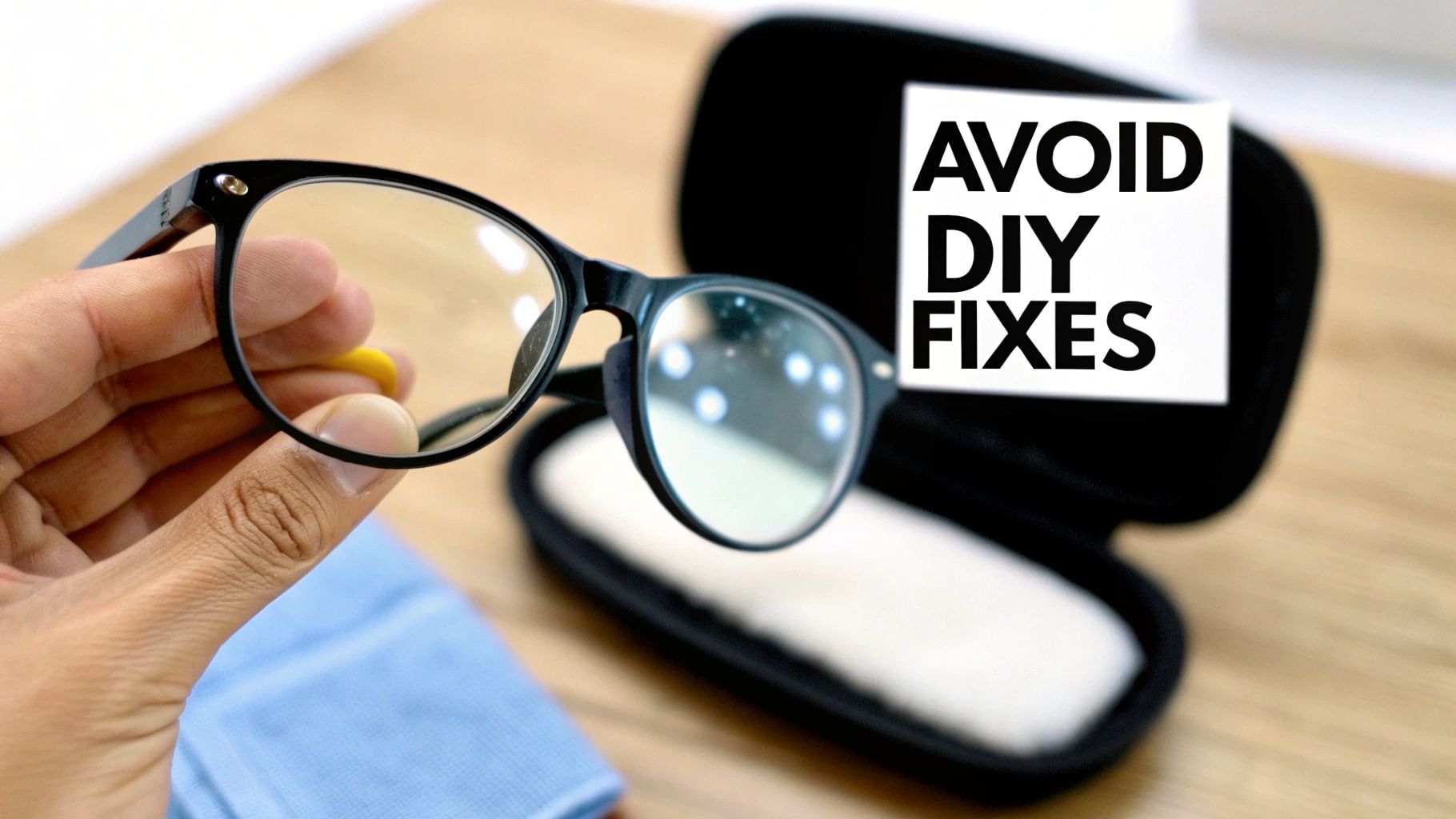
First up, you need to know what you’re dealing with. Is it a minor surface scuff or a deep scratch? A scuff might just be a tiny imperfection on the lens coating that you only notice in certain light. A scratch, on the other hand, is a physical groove in the lens material itself—you can often feel it if you run a fingernail gently over the surface. You can't truly polish out a scratch, but knowing the difference helps you figure out what to do next.
The Problem With DIY Scratch Repair Myths
Viral videos and old household tips are notorious for promoting dangerous DIY methods that can permanently ruin your lenses. The two most common culprits are toothpaste and baking soda, both of which are incredibly abrasive. While they might seem to "buff out" the scratch, they’re actually creating a disaster on a microscopic level.
Picture this: a student is cramming for exams and gets distracted by a scratch on their BlueRay lenses. In a moment of frustration, they whip up a paste of baking soda and water, as suggested by an online tutorial. After rubbing the lens vigorously, the original scratch might look a bit faded, but the entire lens is now covered in a permanent, hazy fog that impairs their vision.
Why does this happen? Abrasive materials like toothpaste don’t actually fix the scratch; they just create thousands of new micro-abrasions all around it. This process effectively sands down and destroys the delicate anti-reflective and blue light filtering coatings, making your specialised lenses useless.
This kind of damage is irreversible. It severely compromises your visual clarity and forces your eyes to strain even harder just to focus, creating a significant eye health risk. For a more detailed look at what works and what doesn't, you can learn more about how to get scratches out of glasses from our expert guide.
Knowing When to Call It Quits and Get Professional Help
Sometimes, you just have to wave the white flag to protect your vision. If a scratch is deep, sits directly in your line of sight, or if you’ve already tried a DIY fix that backfired, it's time to stop. Trying to polish out a significant scratch will only make the damage worse and can lead to eye strain, headaches, and distorted vision.
Your eye health and safety should always come first. Here’s when it's definitely time to opt for a lens replacement instead of a risky repair attempt:
- The Scratch Distorts Your Vision: If the mark is in your central field of view, your brain has to constantly work around it, causing significant strain.
- The Coatings Are Visibly Damaged: See any peeling, haziness, or weird swirling patterns on the lens surface? That means the protective coatings are compromised.
- Multiple Scratches Have Piled Up: Even tiny scratches add up. Over time, they create a cumulative effect that reduces the overall clarity and performance of your lenses.
Protecting Your Vision Is the Real Goal
At the end of the day, living with a damaged lens isn't just an annoyance—it's a risk to your eye health. A compromised lens can alter how light enters your eye, which can lead to long-term visual discomfort. While replacing your lenses does come with a cost, it’s a crucial investment in maintaining clear, comfortable, and safe vision.
The best strategy is always prevention. But when damage happens, making an informed choice is key. Resisting the temptation of a quick fix and opting for a professional solution ensures your eyewear continues to do its job properly. We can customise an eye wear package to suit your requirements, ensuring you get durable, high-quality lenses built to handle the rigours of your daily life, whether you're a gamer, a professional, or a student.
Proactive Habits for Long-Lasting Lenses
The best way to learn how to polish glasses is to avoid needing to fix deep scratches in the first place. Honestly, shifting from a reactive mindset to proactive care is the real secret to keeping your lenses pristine for years. A few simple, consistent habits are far more effective than any miracle scratch-repair myth out there.
This is all about building a few small routines into your day. Think of it this way: a busy professional habitually tosses their glasses onto their desk at the end of the day. A few weeks of that, and they start noticing the lenses are covered in tiny, distracting scuffs from sliding around. A couple of tiny adjustments to their daily habits could have prevented all of it.
Make Your Case a Non-Negotiable
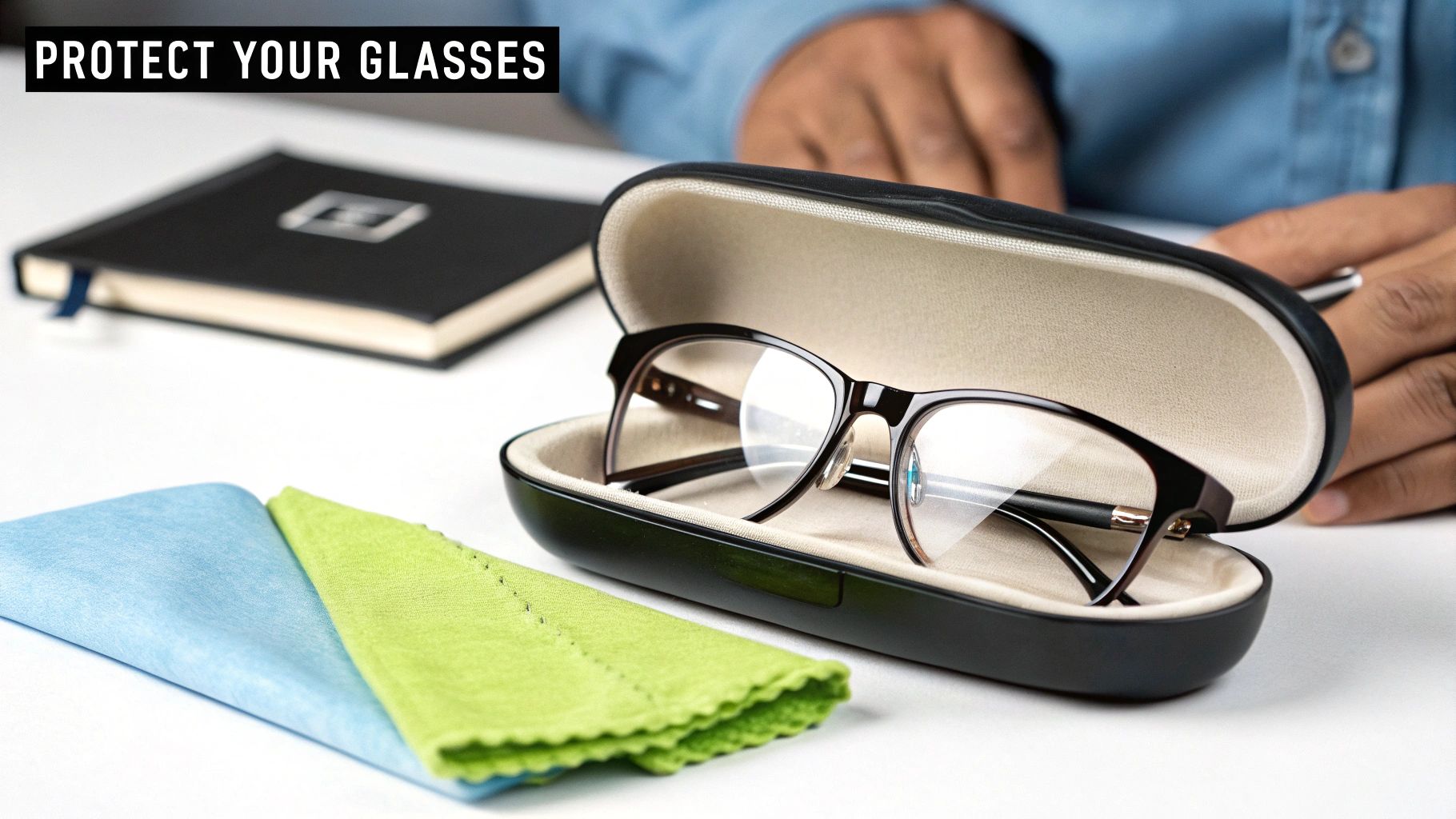
Your glasses case isn't just an accessory—it's the single most important tool you have for preventing damage. A good hard-shell case is your best defence against bumps, drops, and the pressure of being squashed in a bag or backpack.
Make it a simple rule: if your glasses aren't on your face, they belong in their case. No exceptions. This little habit is crucial for your eye health, too. For example, a bent frame can alter the focal point of your prescription, causing unnecessary eye strain. Damaged frames or lenses can mess with the fit, compromising their alignment and how they protect your eyes. It's a good idea to regularly inspect your eyewear for issues like loose hinges or little chips as part of this routine.
Master the Lenses-Up Rule
When you do need to set your glasses down for a moment, always place them with the lenses facing upward. Setting them lenses-down is just asking for scratches from any stray grit or rough texture on the surface. This simple move takes zero extra effort but makes a world of difference over time.
On a similar note, always use two hands to take your glasses off. It might feel natural to whip them off with one hand, but doing so puts uneven stress on the arms. Over time, this can bend the frame out of alignment, making them uncomfortable and slightly altering how you see through your prescription lenses.
A protective case is your first line of defence. Studies on protective equipment in various fields show that proper storage is fundamental to maintaining integrity and extending lifespan. Your glasses are no different.
Creating a Protective Ecosystem
Beyond just how you handle your glasses, think about the environment you keep them in. You can complement your polishing routine with proactive measures to shield your lenses, much like how people apply a hydrogel screen protector to their phones. The principle is exactly the same: stop the scratch before it even happens.
Here are a few actionable habits you can start today:
- Designate a "Safe Zone": Have one specific spot at home and at work where your glasses always go. This could be a soft cloth on your nightstand or a dedicated stand on your desk. It completely removes the risk of them getting knocked over or crushed.
- Avoid Extreme Temperatures: Never, ever leave your glasses on a car dashboard on a hot day. The intense heat can warp plastic frames and wreak havoc on delicate lens coatings, causing them to peel or crack.
- Keep a Microfibre Cloth Handy: Stash a clean cloth in your case, your car, and your desk drawer. This ensures you're never tempted to use the corner of your shirt or a paper napkin for a quick—and damaging—wipe-down.
These small habits add up to create a powerful defence against everyday wear and tear. When you invest in quality eyewear, we can customise an eye wear package to suit your requirements, ensuring you have the right protective gear from day one. By taking these simple preventative steps, you'll make polishing a breeze and keep your glasses performing flawlessly.
Common Questions We Get About Polishing Glasses
Even when you mean well, questions always come up in the day-to-day care of your glasses. Getting straight, practical answers is the key to building good habits that protect your vision and your investment in quality eyewear. Let's tackle some of the most frequent questions we hear about polishing glasses.
The idea is to get beyond just wiping away a random smudge and into a proper routine that puts your eye health first. A consistent, correct approach ensures your lenses—especially those with fancy coatings—keep doing the job they were designed for.
How Often Should I Really Be Polishing My Glasses?
This is a big one, and the answer really depends on your lifestyle. For the best clarity and to keep annoying fingerprints and oils away, a light daily polish with a clean microfibre cloth is a fantastic habit to get into. Think of it as hitting the reset button on your vision each morning.
A deeper clean, however, using lukewarm water and a tiny drop of lens-safe soap, is something you should aim for every two or three days.
- For Gamers and Office Professionals: If you’re staring at screens for hours on end or work in a dusty place, a daily deep clean is your best bet. This stops oils and tiny particles from building up, which can slowly eat away at your lens coatings.
- For Casual Wearers: If you only wear glasses for reading or driving, a deep clean every few days is usually more than enough to keep your lenses in top shape and stop grime from getting comfortable.
Can I Just Use Regular Dish Soap or Hand Soap?
You need to be careful here. While a very simple, pH-neutral dish soap without any lotions, sanitisers, or harsh additives can work if you're in a bind, it's a bit of a gamble. So many common soaps contain ingredients that will leave a stubborn film on your lenses or, even worse, start to damage the delicate coatings.
Your safest bet, always, is a cleaning solution made specifically for eyeglasses. These formulas are designed to be tough on grime but gentle on those anti-reflective and blue light filtering layers, protecting the tech you paid for.
Is It Ever Okay to Use My Shirt in a Pinch?
We get it. It’s so tempting when you’re out and about and spot a smudge. But please, we strongly advise against it for your own eye health. Even the softest t-shirt you own has abrasive fibres that act like super-fine sandpaper on your lenses.
Every single time you wipe your glasses with your shirt, you create thousands of permanent micro-scratches. Over time, these tiny abrasions build up into a visible haze that permanently ruins your vision and can’t be polished away.
On top of that, your clothes pick up dust, skin oils, and all sorts of gunk throughout the day. Wiping your lenses with your shirt just grinds that contamination directly into the surface, which can cause even bigger, more noticeable scratches. Keeping a dedicated microfibre cloth in your car or bag is a much safer—and more effective—habit.
Do Special Coatings Change How I Polish Them?
Absolutely. This is probably the most critical thing to remember for your eye safety. Those anti-glare, BlueRay, Bluecromic, and photochromic coatings are amazing pieces of technology, but they aren't bulletproof. Using the wrong stuff can strip these coatings right off, making them completely useless.
Never, ever use cleaners that contain alcohol, ammonia, vinegar, or bleach. These harsh chemicals are notorious for dissolving the very coatings designed to protect your eyes and make your vision sharper. For example, using a cleaner with ammonia can cause the anti-reflective coating to bubble and peel, creating a distorted view. The rule is simple: stick to gentle, alcohol-free sprays and a pristine microfibre cloth. This simple discipline will protect the integrity of your lenses and is a non-negotiable for your visual health and safety.
At Prescript Glasses, we believe that premium eyewear deserves premium care. We can customise an eye wear package to suit your requirements, from high-performance frames to advanced lens coatings, ensuring you have everything you need for crystal-clear vision. Protect your investment by learning more at https://www.prescriptglasses.com.